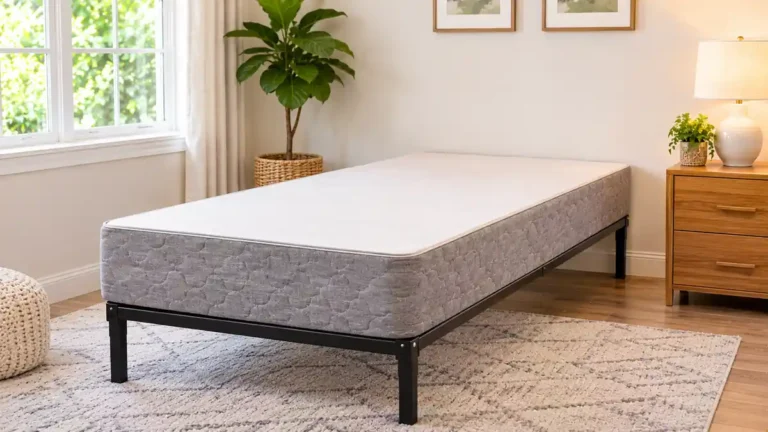
Japanese Floor Mattress (Shikibuton): Thickness, Sizes, Airing, Care and Who It Suits
Quick answer: a Japanese floor mattress, called a shikibuton, is a thin, flexible mattress laid on the floor or on tatami mats at night and folded and stored in the morning. It is usually about 2 to 4 inches thick. It needs regular airing to prevent mold and dust mites.
This article is part of our mattress buying guide, where you can compare related options.
The Japanese floor mattress is a very different kind of bed from the thick spring mattresses most Americans know. It sits on the floor, folds away and turns a bedroom into a flexible room. People look at it for small apartments, guest rooms, minimalist homes and travel-friendly setups. It is not for everyone, and it needs care. This guide explains what a shikibuton is, how it differs from a Western futon, its thickness and size, what it is made of, how to air and clean it, how to store it and how to choose. This is not medical advice.

What Is a Japanese Floor Mattress?
In Japan, bedding is traditionally set out at night and put away in the morning. The set includes a shikibuton (the mattress that goes under you), a kakebuton (a comforter that goes over you) and a makura (a pillow). The shikibuton is the “floor mattress.” Wikipedia notes that futons must be aired regularly to prevent mold and keep mites away. The traditional bed is laid on tatami mats, a woven straw floor covering, but modern versions go on wood floors, rugs or a low platform.
Shikibuton vs Western Futon
The Western futon is often a thicker folding mattress on a frame that converts from sofa to bed. The Japanese shikibuton is thinner, lighter and meant to be folded and put away or aired. Wikipedia describes a shikibuton as usually 2 to 3 inches (5 to 8 cm) thick, and says if more thickness is needed, shikibutons are layered.
| Feature | Japanese shikibuton | Western futon |
|---|---|---|
| Thickness | About 2 to 4 inches | Often 6 to 8 inches |
| Frame | None, laid on floor | Often a folding frame |
| Daily routine | Put away or aired | Stays out |
| Weight | Lighter | Heavier |
The Western comparison figures are general knowledge and not from the search, so treat them as rough.
Thickness: What the Sources Say
Wikipedia: usually 2 to 3 inches (5 to 8 cm). One futon retailer: traditional ones are 3 to 4.5 inches. A Canadian retailer guide: about 5 to 10 cm (2 to 4 inches). A Tokyo government store lists one product with a finished thickness of 10 cm or more.
Another vendor article compares 3-inch and 4-inch shikifutons. The range is roughly 2 to 4 inches, with 4 inches being a common upgrade for comfort. A thicker one gives more cushioning on hard floors. A thinner one folds smaller. If you are heavy, a side sleeper or have sore hips, a thicker mattress or an extra layer may feel better, but I cannot give medical advice on that. Talk to a doctor if you have back or joint problems.
Sizes
A traditional shikibuton is about the size of a Western twin. Vendors list US-style sizes such as Twin (about 39 by 75 inches) and Queen (about 60 by 80 inches). The Tokyo store notes the finished futon may end up around 10 cm shorter after the cotton is inserted, and small size changes can occur with temperature and humidity. Check the exact size on each product page. For standard sizes of Western mattresses, see the twin mattress dimensions guide.
Materials and Fill
Common fills include cotton, wool, latex and sometimes blends. Examples in the search included a wool and latex shikibuton from an organic brand. Cotton is firm and breathable but compresses over time. Wool adds warmth and wicks moisture. Latex adds bounce. I found no independent comparison of fill types, so rely on the maker’s description and reviews.
Covers matter too. Removable, washable covers protect the mattress and make care easier.
Why People Choose One
Key points: small spaces. It can be put away to free the floor; minimalist style. No frame or box spring; guest bedding. Easy to store in a closet; firm sleeping surface. Some people prefer a firmer feel. This is personal; portability. Light enough to move; lower cost than many beds.
Who May Not Like It
People who want a plush, thick bed. Those who find getting up from the floor hard. People with mobility limits or joint pain, who should ask a doctor first. Damp or humid homes without good airing habits. Anyone who will not put it away or air it.
How to Air and Care for a Shikibuton
Airing is the key to a healthy futon.
- Remove the cover first. Vendors note that leaving the cover on hinders the effect of airing and sunning.
- Air it regularly. Advice varies: one vendor recommends airing and sunning at least monthly, another suggests weekly airing to release moisture and prevent mold.
- Hang or lay it in a dry, breezy place. Many people use a balcony rail or a drying rack. Check the maker’s guidance about direct sun for your fill.
- Give it a quick shake before folding.
- Fold it (a triple fold is a common method) and store it in a closet.
- Wash the cover per the label.
- Spot clean stains. Do not soak the fill unless the label says it is washable.
Do not leave it on the floor all day in a damp room. A tatami or breathable mat underneath helps.
Storage
Key points: fold it in three and place it in a closet; use a breathable storage bag, not airtight plastic, for long storage; keep it off a damp floor; add a dehumidifier or moisture absorber in humid homes; rotate or flip the mattress periodically.
Mold and Mites
Because the mattress sits on the floor, moisture can get trapped. Check for musty smells, dark spots or dampness. If you see mold, stop using the mattress and follow the maker’s cleaning advice or replace it. People with allergies or asthma should ask a doctor and take extra care with airing.
Setting Up a Floor Bed
Key points: use a tatami mat, a breathable bed mat or a low slatted base for airflow; keep it away from cold, damp walls; add a pillow and comforter; keep the room ventilated; consider a mattress topper for extra cushion. See the mattress topper guide.
What are the main strengths and weaknesses?
On the plus side: saves space when folded; light and portable; affordable; minimalist look.
How to Choose a Japanese Floor Mattress
Decide your use: daily bed or guest bed. Choose the thickness: 3 to 4 inches is common for daily use. Choose the size. Choose the fill and check the care instructions. Check the cover is washable. Plan airing and storage. Check the return policy. Consider a mat or base for airflow. Read reviews.
What mistakes should you avoid?
A few common mistakes are worth avoiding: leaving it on the floor without airing; airing with the cover on; buying a very thin one for daily use without testing; storing it in airtight plastic; putting it on a damp floor; ignoring the maker’s sun advice.
Frequently Asked Questions
What is a Japanese floor mattress called?
A shikibuton, often sold as a shikifuton or Japanese futon.
How thick is a Japanese floor mattress?
Usually 2 to 4 inches.
How often should I air it?
Advice ranges from weekly to at least monthly. Air it more in humid homes.
Can I sleep on it every night?
Many people in Japan do. Comfort is personal. If you have back or joint problems, ask your doctor.
How do I stop mold?
Air it regularly, keep it off damp floors and store it in a breathable space.
What size should I buy?
Twin for one person, queen for two. Check the exact dimensions.
Conclusion
A Japanese floor mattress is a light, simple and flexible way to sleep. It suits small spaces and minimalist homes, but it needs regular airing and a dry place to rest.
Pick a thickness you can live with, plan your storage and airing routine and read the maker’s care guide. If comfort or health is a concern, talk to a doctor before switching.
Related guides
 Folding Mattress: Tri-Fold Foam Thickness, Sizes, Density and Who It SuitsA folding mattress is a foam mattress that folds into thirds so you can store it in a closet or carry it.…Read more →
 Adjustable Mattress Guide: Which Mattress Types Work on Adjustable Bases (Foam, Latex, Hybrid) and What to CheckQuick answer: most foam, latex and many hybrid mattresses work on an adjustable bed base. Casper rates memory…Read more →
 Inflatable Mattress Guide: Air Bed Height, Built-In Pumps, Leaks, Weight Capacity and CareQuick answer: an inflatable mattress, or air bed, is a mattress you fill with air for guests, camping or…Read more →
 Floor Pillows Guide: Sizes (20 to 32 Inches), Fill Types, Meditation Cushions, Covers and CleaningQuick answer: floor pillows are large cushions for sitting on the floor. A 24 inch square suits living room…Read more →