Green Velvet Couch Guide: Colors That Match, Durability, Fading, Stains and Cleaning
A green velvet couch is the sofa that makes a living room look designed. The color is rich, the fabric catches light and the whole piece feels luxurious but alive. Green is a neutral in disguise: it works with wood, brass, white, navy and many other colors. Velvet adds depth. Together they make a couch that is bold without being loud.
This article is part of our sofa and couch buying guide, where you can compare related options.
But velvet is also a fabric with quirks. It shows marks, it can crush and fade and it asks for a little care. This guide explains how to style a green velvet couch, which colors to pair with it, what the sources say about durability and fading, how to clean spills, how to think about pets and kids and what to check before you buy. The search for this topic returned mostly scraped, repetitive wiki pages, so the sourced information is thin and I rely on general design knowledge where I say so. I also found nothing about sage green specifically.

Why Green Velvet?
A rich, saturated color. Emerald and forest green read as luxurious. One result mentions emerald as a deep hue that suits velvet well. Works as a neutral. Green sits well with browns, creams, whites and metals. Depth from the pile. Velvet changes shade with the light and the direction of the pile. Soft, cozy feel. A natural color. It brings the outdoors in.
See the green couch guide for green sofas in general, and the curved sofa and sofa set guides for shape and layout.
Colors That Go With a Green Velvet Couch
Several palettes: Navy or gold for a timeless look. Contrasting violet or orange for a bold statement. Mustard, blush pink or white cushions with gold or brass metal accents. Earthy tones like warm browns, terracotta and muted golds.
General design knowledge to add: cream and warm white walls let the couch stand out; natural wood (walnut, oak) adds warmth; black metal adds contrast; rust and caramel leather pair beautifully. See the leather chair guide; soft pinks and peaches feel fresh; light gray keeps it modern; layered greens for a monochrome look.
Choose throw pillows in complementary colors and textures. See the pillow covers and bolster pillow guides.
| Pairing | Mood |
|---|---|
| Navy and gold | Classic, elegant |
| Blush pink | Soft, modern |
| Mustard | Warm, retro |
| Terracotta and brown | Earthy, natural |
| Violet or orange | Bold |
Styling Ideas
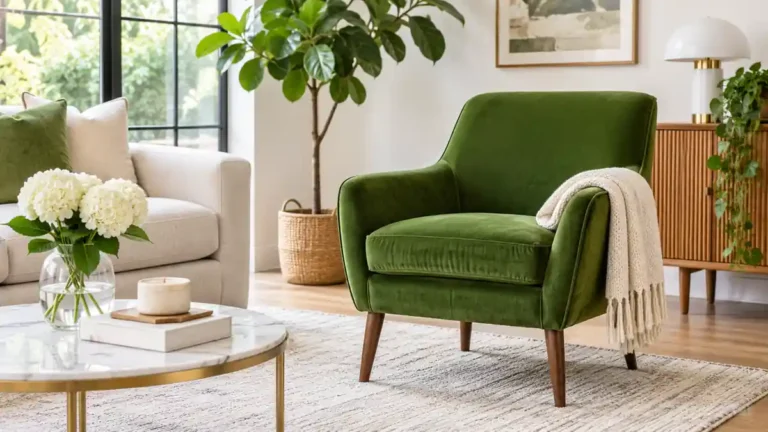
Key points: add a rug in a neutral or soft pattern. See the washable area rugs guide; use brass or wood side tables. See the C table, couch table and wood coffee table guides; hang art with warm tones; add plants, which echo the green; layer lighting with a warm lamp; mix textures: linen, wool and leather; keep walls simple; place a floor mirror to bounce light. See the floor mirror guide.
Durability and Fading
One says velvet resists fading in direct sun. Another advises keeping green velvet out of direct sunlight because it will fade over time. Both can be partly true: some synthetic velvets resist fading better than natural ones, but all dyed fabric can fade in strong sun. Keep the couch out of direct sunlight if you can, and use curtains or UV-filtering film.
Several sources call velvet and linen stain-resistant performance fabrics for high-traffic use, but “velvet” covers many fabrics, from cotton velvet to polyester and performance velvet. Check what yours is made of. Performance velvet is made to resist stains and wear. See the white couch guide for performance fabric notes.
General notes (not from the sources): Pile can crush where people sit. Brushing or steaming can restore it. Pressure marks are normal and can be smoothed. Rub count (Martindale or Wyzenbeek) measures durability. Higher is better.
Cleaning and Stains
Blotting spills right away with a clean, dry cloth and avoiding harsh chemicals. For spot cleaning, one suggests a mild dish soap and distilled water solution, tested on a hidden area first.
Steps:
- Blot immediately. Do not rub.
- Check the cleaning code on the tag (W, S, WS or X).
- Test any cleaner on a hidden spot.
- Use a mild soap and distilled water if the tag allows.
- Blot with a clean cloth and let it dry.
- Brush the pile gently in one direction once dry.
- Call a professional for tough stains.
Maintenance: Vacuum with a soft brush attachment. One low-quality page suggests weekly vacuuming and professional cleaning every 6 to 12 months. Treat those intervals as a loose guide. Rotate cushions. Avoid water-based cleaners on S-coded fabrics.
Pets and Kids
Choosing a stain-resistant velvet that can handle repeated washings if you have pets or children. They do not address claw snags or pile wear, which are common concerns with velvet and pets. From general knowledge: Claws can pull or mark velvet. Trim nails and use scratching posts. Pet hair clings to velvet. Use a lint roller or rubber glove. Choose performance velvet for kids and pets. Use throws on spots pets like. Consider darker greens, which hide stains better than light shades.
If you have a very active pet, consider a different fabric. See the leather couch and sectional couch covers guides.
Sage Green (Not Covered)
The search did not return anything on sage specifically. From general knowledge, sage is a softer, grayer green that feels calm and works well with natural wood, cream and soft whites. It shows fewer marks than very pale colors but can show dust.
Choosing a Green Velvet Couch
Choose the shade: emerald, forest, olive or sage. Check the fabric: performance velvet if you have kids or pets. Check the cleaning code and care instructions. Check the frame and cushions. See the sofa set and cloud couch dupe guides. Check the size and shape. See the curved sofa, love seat and L-shaped couch guides. Check rub count if listed. Plan placement away from sun. Read reviews with photos. Check the warranty.
What are the main strengths and weaknesses?
On the plus side: rich color and texture; cozy and soft; works with many palettes; a statement piece. On the downside: shows pressure marks and pet hair; can fade in sun; needs gentle cleaning; cheap velvet can wear; pets can snag it.
What mistakes should you avoid?
A few common mistakes are worth avoiding: placing it in direct sun; using harsh cleaners; rubbing stains; buying non-performance velvet for kids and pets; ignoring the cleaning code; not brushing the pile.
Frequently Asked Questions
What colors go with a green velvet couch?
Navy, gold, mustard, blush pink, terracotta and warm browns are common pairings.
Does green velvet fade?
Keep it out of direct sun to be safe.
How do I clean a green velvet couch?
Blot spills right away, test a mild soap and distilled water solution on a hidden spot and brush the pile once dry.
Is velvet good with pets?
Choose stain-resistant velvet.
Is a green couch hard to match?
No. Green acts like a neutral with wood, cream and metals.
How often should I clean it?
Vacuum regularly and spot clean spills. One low-quality source suggests professional cleaning every 6 to 12 months.
Conclusion
A green velvet couch gives a living room color, richness and comfort. Pick a shade you love, choose performance velvet if your home is busy, keep it out of direct sun and treat spills fast.
Style it with warm metals, natural wood and layered textures. With simple care, a green velvet couch can be the star of your room for years.
Related guides
 Velvet Couch Guide: Cleaning Codes (W, S, SW, X), Performance Velvet, Pets, Crushing and CareQuick answer: look at the cleaning code on your velvet couch s tag: W means water-based cleaning, S means dry…Read more →
 Green Couch Styling Guide: Rugs, Walls, Pillows and Color PairingsA green couch is a bold and calming choice. Green connects to nature, so it feels relaxed, and it works in a…Read more →
 Fainting Couch: What It Is, Real History, Myths and How to Use One TodayA fainting couch is a long, narrow couch with a raised end, made for reclining with the legs up. It was popular…Read more →
 Green Accent Chair: Shades, Fabrics and Colors That Go With ItA green accent chair works as a color anchor or as a quiet neutral, depending on the shade. Emerald and deep…Read more →