Lounge Chair: Types, Sizes, Seat Height and How to Choose
A lounge chair is built for comfort. It’s the chair you sink into with a book, a cup of tea or a good movie. It’s wider and deeper than a dining chair, and often reclines a little. A good one makes a corner of the room feel like a retreat.
This article is part of our accent chairs, recliners and seating guide, where you can compare related options.
A lounge chair is a relaxed, cushioned seat designed for long periods of sitting. It often has a deeper seat, a gently angled back and supportive arms. People also use the term “accent chair” for a chair that adds style to a room. The two overlap, so the terms can be confusing.
This guide explains the difference between a lounge chair and an accent chair, the main types, typical sizes and seat heights, materials and how to choose one for your living room. You’ll also find a comparison table and answers to common questions.
Lounge Chair vs Accent Chair
The main difference is purpose. One seller describes lounge chairs as wider, deeper and more thickly cushioned, built for long periods of comfort. Accent chairs mainly add visual interest to a room. Typically, a lounge chair is wider and deeper than an accent chair and has a thicker cushion.
Back angle is another difference. One retailer notes that an accent chair usually has a straight back, while lounge chairs have a reclined back or can adjust to a lounging position.
Other sources treat the terms as overlapping. “Lounge chair” describes how the chair is used, mainly for relaxing. “Accent chair” describes its decorative role in the room. A single chair can be both.
| Feature | Lounge chair | Accent chair |
|---|---|---|
| Main purpose | Comfort and relaxing | Style and visual interest |
| Seat | Deeper, thicker cushion | Often shallower |
| Back | Reclined or angled | Often straight |
| Size | Larger | Smaller to medium |
Types of Lounge Chairs
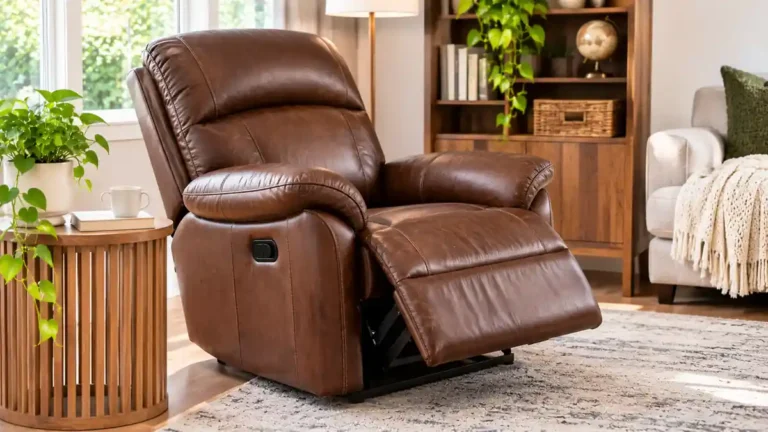
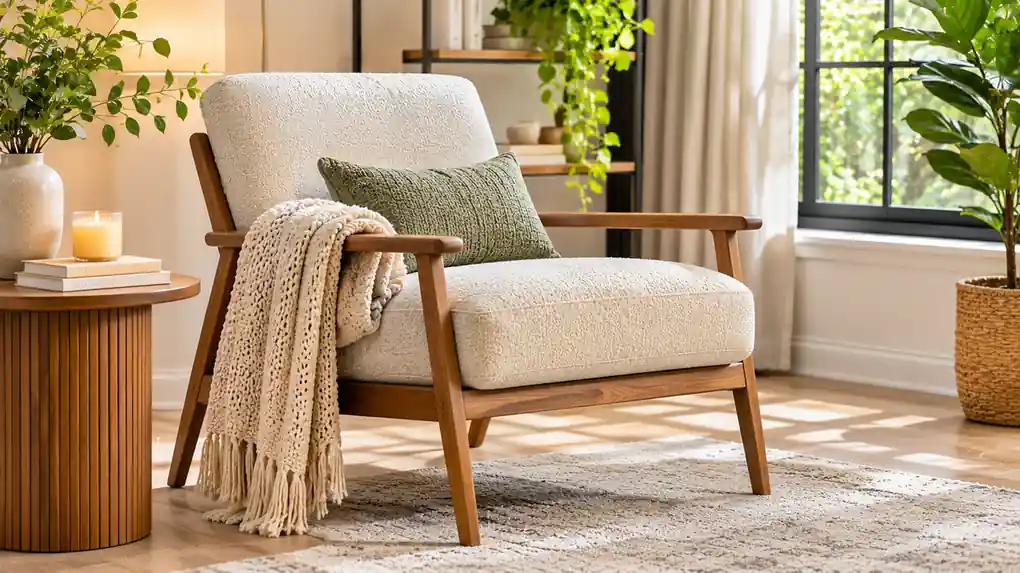
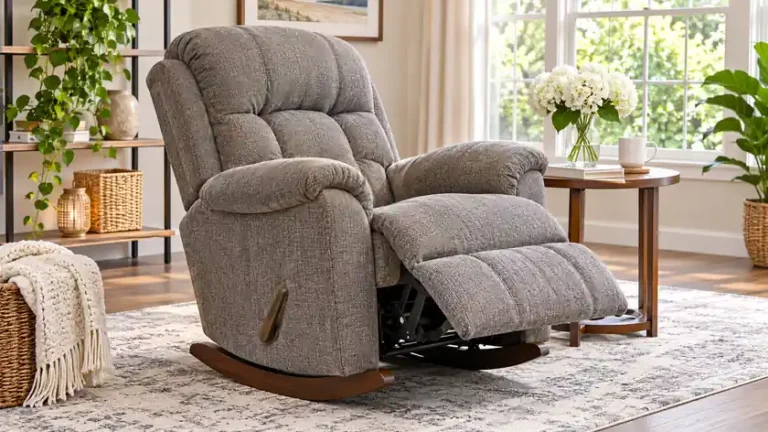
Club chair: a deep, low chair with a rounded back and sturdy arms. It feels cozy and traditional. Wingback chair: has tall sides at the head that act as “wings.” It offers head and neck support. Recliner: a lounge chair that reclines with a footrest. Some are manual and some are powered. Swivel lounge chair: turns so you can face a TV or a conversation without getting up. Barrel chair: a rounded, curved back that wraps around you. Mid-century modern lounge chair: clean lines, wood frames and often angled legs. Chaise-style lounge: a longer chair with a leg support. Papasan or egg chair: round, bowl-shaped chairs with a casual look. Outdoor lounge chair: made for patios and gardens, with weather-resistant materials.
Lounge Chair Sizes and Seat Height
One reference puts lounge chairs at 12.5 to 17 inches (32 to 43 cm), and another puts accent chair seats at 16 to 20 inches. A design guide suggests a seat height of 16 to 18 inches and a depth of 18 to 22 inches generally suits most adults.
Another guide suggests that the best seat height creates a 90-degree angle at your knees when you sit. This depends on your height. Try to sit in the chair or check the manufacturer’s measurements.
For room size, one retailer advises that the size of an accent chair should align with the scale of your room and existing furniture. For a 12 by 12 foot room, it suggests keeping the chair width near 32 inches at most. This is a guide, not a rule.
Measure your space and the chair, including the width, depth and height. Allow room for reclining or swiveling. Check the doors, halls, elevators and stairs for delivery.
Materials and Upholstery
Fabric: comes in many colors and textures. Choose a tight weave for durability. Leather and faux leather: wipes clean and ages well. Real leather costs more. Velvet: soft and rich-looking. It can show marks and needs gentle care. Suede or microsuede: a soft touch. It can stain and may need a protectant. Linen and cotton blends: casual and breathable, though they wrinkle. Wood, metal and rattan frames: frame material changes the chair’s look and weight.
Think about who uses the chair. Pets and kids call for durable, stain-resistant fabrics. A chair in a sunny spot should have fabric that resists fading.
How to Choose a Lounge Chair
Decide how you’ll use it. Reading, TV, napping, conversation? Measure the space. Include walking room and clearance for reclining. Check the seat. Height and depth should fit your body. Your feet should reach the floor. Test the support. Look for good back and arm support. A high back helps with upper-body support. Pick a swivel if needed. A swivel base helps you face the TV or the room. Choose the upholstery. Based on comfort, care and your household. Check the frame. Hardwood or metal frames last longer than thin particleboard. Match your style. Color, shape and legs should suit your room. Check delivery. Measure doors and halls. Read the return policy. Comfort is personal.
Where to Place a Lounge Chair
Put it where you’ll actually use it. A common spot is next to a sofa or across from it, forming a conversation area. A chair near a window with good light is ideal for reading. In a bedroom, it can sit in a corner as a place to relax.
Leave walking space around it. Add a small side table within reach, and a lamp if you plan to read. A pair of chairs can face each other, and a single chair can angle toward the TV or the room’s center.
Care and Cleaning
Vacuum the chair weekly. Rotate or fluff the cushions if they’re removable. Blot spills right away with a clean cloth. Follow the care tag for cleaning codes. For leather, use a gentle cleaner and conditioner. Keep the chair away from direct sunlight and heat sources.
What mistakes should you avoid?
A few common mistakes are worth avoiding: choosing by looks only (a chair that looks great but feels uncomfortable won’t get used); ignoring scale (a big chair in a small room feels crowded); forgetting about legroom (depth matters for tall people); skipping the test (if possible, sit in the chair before you buy); overlooking the fabric (delicate fabrics may not suit a busy home).
Frequently Asked Questions
What is a lounge chair?
A comfortable, cushioned chair made for relaxing, usually with a deeper seat and a gently angled back.
What’s the difference between a lounge chair and an accent chair?
A lounge chair focuses on comfort and is usually bigger and deeper. An accent chair focuses on style. The terms overlap, and one chair can be both.
What is the standard seat height of a lounge chair?
A design guide suggests 16 to 18 inches for most adults, while another reference lists lounge chairs lower, at 12.5 to 17 inches. Check each model’s measurements.
How big should a lounge chair be for my room?
It depends on your space. One retailer suggests a chair width of about 32 inches at most in a 12 by 12 foot room. Measure your room and leave walking space.
What is the most comfortable lounge chair type?
It depends on you. Club chairs and recliners offer deep comfort. Wingback chairs give head support. Swivel chairs add flexibility.
Can a lounge chair be used outdoors?
Only if it’s made for outdoor use, with weather-resistant materials. Indoor chairs can be damaged by sun and rain.
Conclusion
A lounge chair is about comfort first and style second. Look for a seat depth and height that fit your body, a back that supports you and fabric that suits your household.
Measure your room, think about how you’ll use the chair and check the frame and cushion quality. The right lounge chair becomes a favorite spot for reading, relaxing or watching a movie.
Related guides
 Lounge Chairs Guide: Indoor Chaise Lounge Sizes, Seat Height, Materials and ClearanceQuick answer: indoor lounge chairs, especially chaise lounges, run about 58 to 68 inches long, 25 to 32 inches…Read more →
 Club Chair: What It Is, Typical Sizes, Leather Styles and Club Chair vs ArmchairA club chair is a deep, low-backed, heavily upholstered lounge chair, traditionally covered in leather. One…Read more →
 Barrel Chair: Dimensions, Styles, Swivel Options and How to Place OneA barrel chair is an upholstered armchair with a rounded, curved back that wraps around the sitter like the…Read more →
 Sleeper Chair Guide: Sizes, Comfort, Sleeper Chair vs Sofa Bed and How to ChooseA sleeper chair is a chair by day and a small bed by night. It fits in rooms where a sofa bed would be too big:Read more →