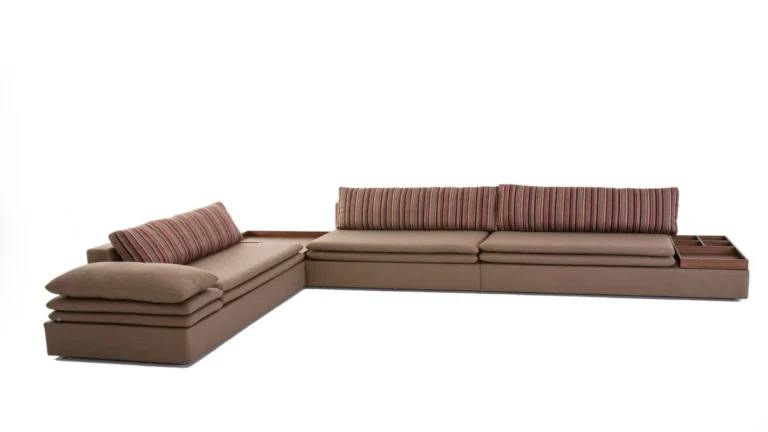
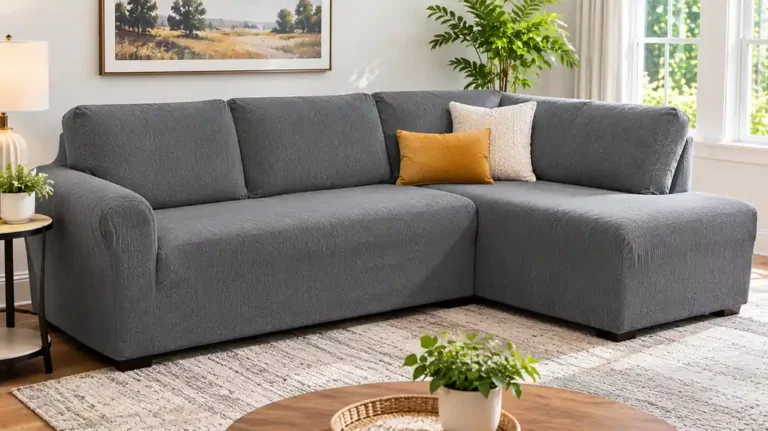
L-Shaped Couch: Left vs Right Chaise, Sizes and How to Choose
An L-shaped couch gives you the seating of a big sofa and the stretch-out space of a chaise. It fits neatly into a corner, seats a crowd and works as a gathering spot for movie nights. But it’s also a big purchase, and picking the wrong side or size can make a room feel awkward.
This article is part of our sofa and couch buying guide, where you can compare related options.
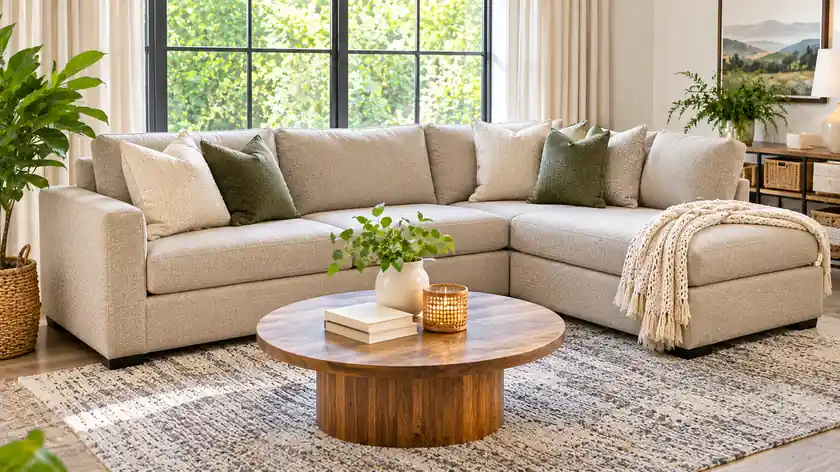
An L-shaped couch, also called an L-shaped sectional, is a sofa made of two sections that form the letter L. One side is the main sofa. The shorter side is the chaise or return. Some are one piece, and others are modular pieces you can connect in different ways.
This guide explains how left and right orientation works, how to measure your room, what features to look for and which fabrics suit busy homes. You’ll also find a comparison table, a checklist and answers to common questions.
Types of L-Shaped Couches
Sectional with chaise: a sofa with a long chaise on one end, so you can stretch out your legs. Corner sectional: an L shape with a corner piece joining two sofa sections of similar length. Reversible sectional: the chaise or short arm can be moved from one end to the other. Wayfair notes that the shorter arm of these L-shaped sectionals can be moved, which lets you switch orientation later. Modular sectional: separate pieces that you can arrange as an L or in other shapes. Sleeper sectional: includes a pull-out bed in one section. Reclining sectional: some seats recline for extra comfort. Storage chaise: a chaise with hidden storage inside.
Left vs Right: Which Way Should the Chaise Face?
This is where many buyers get confused. Orientation is described as left-facing or right-facing, but stores don’t always use the same convention.
Most retailers define it by standing in front of the sofa. Crate & Barrel says a piece is right-arm-facing when the arm is on your right as you look at it. Another retailer, Povison, notes that most brands define left or right while you’re facing the sofa, not sitting on it. Valencia describes the chaise on the left when you’re seated looking forward, which is the opposite convention.
Before you order, check the product page or ask the seller which convention they use. Look for a diagram or a photo.
To choose a side, think about your room. The chaise should not block a doorway, a walkway or other furniture like a coffee table or TV cabinet. One retailer advises that if the chaise needs to extend toward the left without blocking a walkway, you should choose a left-facing chaise. Consider where you want the focal point, such as the TV or a window, and where people will walk.
If you aren’t sure, a reversible model gives you flexibility. It’s useful if you rent or might rearrange later.
How to Measure for an L-Shaped Couch
Povison recommends measuring the wall, the chaise length, the coffee table space and the walking paths so the sectional does not block the room.
- Measure the walls. Note the length of both walls where the L will sit.
- Measure the couch. Get the total length of each side, the depth and the height.
- Plan the floor. Tape the L shape on the floor and walk around it.
- Leave walking space. Keep paths clear. Many people leave about 30 to 36 inches for main walkways. That’s a planning guide, not a rule.
- Check the coffee table space. Leave room to reach it from the couch.
- Check windows, vents and outlets. Don’t block them.
- Measure the delivery path. Doors, halls, stairs and elevators. Modular pieces help.
In general, L-shaped sectionals are more flexible and easier to fit into average-sized living rooms than U-shaped ones, which need significantly more floor space. Specific dimension charts were not in the sources, so rely on each product’s listing.
Fabrics and Materials
Polyester and microfiber: durable and easy to clean. Wayfair suggests durable fabrics like microfiber or polyester for families with kids or pets. Performance fabrics: made to resist stains and wear. Leather and faux leather: wipes clean, but can feel warm or sticky in summer. Real leather costs more. Velvet: soft and rich, but shows marks and attracts hair. Linen and cotton blends: casual and breathable, though they wrinkle and stain more easily. Chenille: cozy, but can snag on claws.
The frame matters as much as the fabric. Kiln-dried hardwood frames are strong and long lasting. Particleboard frames can crack. Check the cushions, too. High-density foam holds its shape longer. Feather and down-alternative fillings feel softer but need fluffing.
| Fabric | Best for | Watch out for |
|---|---|---|
| Microfiber | Pets, kids | Can attract static |
| Performance fabric | Busy homes | Cost |
| Leather | Easy cleaning | Heat, scratches |
| Velvet | Luxe look | Marks |
| Linen blend | Casual rooms | Wrinkles, stains |
Features Worth Considering
Key points: removable covers make cleaning easier; deep or standard seats. Deep seats feel relaxed but can be hard for short people; reclining seats add comfort; USB ports are handy for charging; storage chaise gives hidden space; sleeper function turns the couch into a bed; washable cushion covers help with spills.
How to Choose an L-Shaped Couch
Measure your room. Walls, paths and delivery route. Decide on orientation. Left, right or reversible. Choose the type. Chaise, corner, modular or sleeper. Pick the fabric. Match your household. Check the frame and cushions. Hardwood frame, high-density foam. Check the seat depth and height. Make sure you’re comfortable. Think about the extras. Storage, recline, sleeper. Read reviews. Look for comments on comfort after months of use. Check the warranty and return policy. A large couch is a major purchase. Plan the layout. Where will the TV, table and rug go?
What mistakes should you avoid?
A few common mistakes are worth avoiding: ordering the wrong side (confirm how the store defines left and right); not measuring the delivery path (large pieces can get stuck); overfilling a small room (the chaise can crowd a coffee table or block a walkway); choosing fabric for looks only (a light fabric may not suit pets and kids); skipping the frame check (a weak frame can sag).
Frequently Asked Questions
What is an L-shaped couch?
A sofa with two sections joined in an L shape, often with a chaise on one end.
How do I know if I need a left or right chaise?
Choose the side that keeps the chaise out of walkways and doorways. Check how the store defines left and right, since conventions differ.
Are L-shaped couches good for small rooms?
They can be, if you measure carefully. L-shaped sectionals are generally easier to fit into average rooms than U-shaped ones.
What is the best fabric for an L-shaped couch with kids or pets?
Durable fabrics like microfiber, polyester or performance fabric are common recommendations.
Can I move the chaise to the other side?
On reversible models, yes. Check the product description.
How do I clean an L-shaped couch?
Vacuum often, blot spills right away and follow the care tag. Removable covers make cleaning easier.
Conclusion
An L-shaped couch gives your living room generous seating and a comfy chaise. Measure your room and the delivery path, choose the right orientation for your layout and pick a fabric that suits your household.
Check how the store defines left and right before you order, and look for a strong frame and good cushions. With careful planning, an L-shaped couch can become the favorite spot in your home.
Related guides
 U Shaped Couch Guide: Dimensions, Room Size Needed, Walkway Clearance, Pros, Cons and DeliveryQuick answer: a U shaped couch is a large sectional with two arms and a middle section that wraps around a…Read more →
 Fainting Couch: What It Is, Real History, Myths and How to Use One TodayA fainting couch is a long, narrow couch with a raised end, made for reclining with the legs up. It was popular…Read more →
 Deep Couch: Seat Depth (23-27+ Inches), Who It Suits and How to ChooseA deep couch has a seat that measures about 23 inches or more from front to back. One retailer guide puts…Read more →
 Couch Table Guide: Sofa Table Height, Width, Depth and Walkway SpaceWhen people search for a couch table, they often mean one of two things: a narrow table that sits behind the…Read more →