
Storage Ottoman: Sizes, Weight Capacity, Uses and How to Choose
A storage ottoman is a footrest, a seat, a small table and a hidden closet in one. You can flip the lid and tuck away blankets, toys or remotes. In a small living room or bedroom, it’s one of the most useful pieces you can own.
This article is part of our accent chairs, recliners and seating guide, where you can compare related options.
A storage ottoman is an upholstered box or bench with a hollow interior and a lid. Some lids lift off, and some hinge. Ottomans come as cubes, rectangles, rounds and benches, in fabric, leather and faux leather.
This guide explains sizes, weight capacity, lids and trays, fabric choices, how to use an ottoman in different rooms and what to check before you buy. You’ll also find a comparison table, a checklist and answers to common questions.
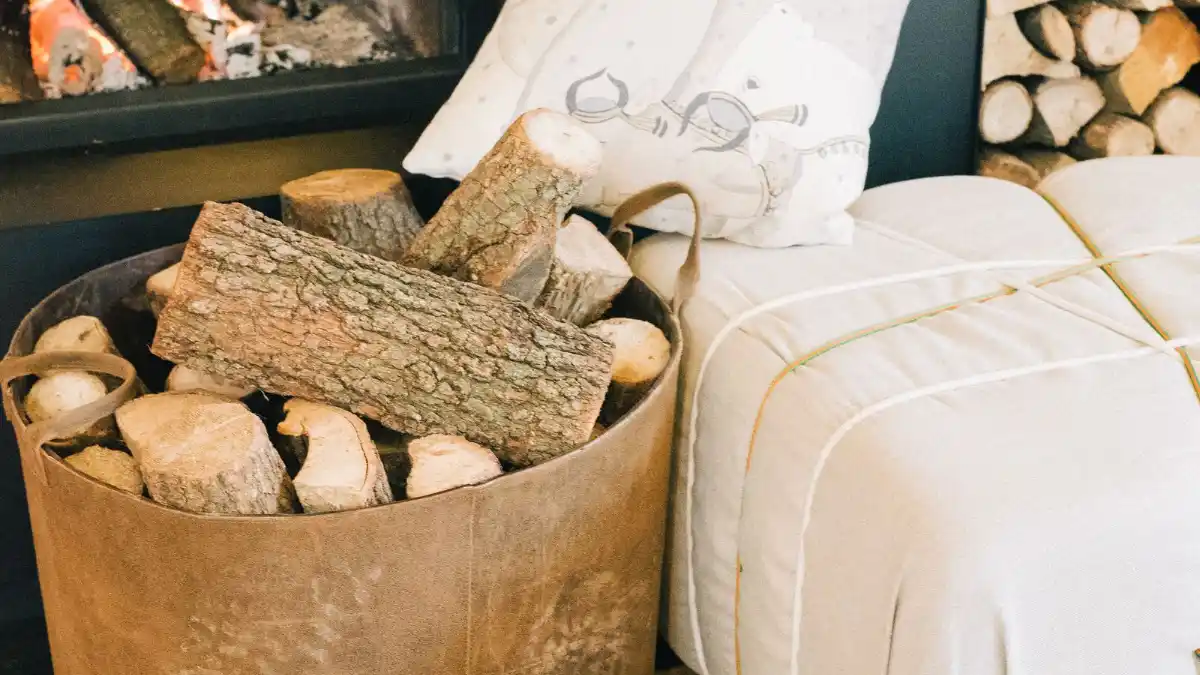
Types of Storage Ottomans
Cube ottoman: a small square seat or footrest. Compact cubes are available, such as a 17 by 13 by 13 inch model. Rectangular ottoman: works as a footrest, a coffee table or an extra seat for a group. Round ottoman: soft shape, good for tight spaces and kids’ rooms. Storage bench: longer and lower, used at the foot of the bed or in an entryway. One guide notes that a 43-inch width provides ample surface area for use as a bench in entryways. Tufted ottoman: classic and decorative. Lift-top ottoman: the top opens, and some rise to table height for use. Tray-top ottoman: comes with a flat tray on top to make it a table. Folding ottoman: collapses flat for storage and moving. A dorm guide says a bench folds flat for move-in day. Sectional or modular ottoman: part of a larger sofa set.
| Type | Best for | Watch out for |
|---|---|---|
| Cube | Small spaces, footrest | Limited storage |
| Rectangle | Coffee table, seating | Takes more room |
| Round | Kids, tight spots | Less flat surface |
| Bench | Entryway, bedroom | Needs space |
| Folding | Dorms, moving | Less sturdy |
Weight Capacity
Capacity varies widely. One guide says most storage ottomans can hold between 200 and 600 pounds. Another suggests 250 pounds minimum for a single adult, and 500 pounds or more if two people will sit on it at once. A Joybuy guide warns that the rating often applies only to a static, evenly distributed load, not the dynamic stress of daily use.
Ratings of about 150 kg (roughly 330 pounds) are described as a good benchmark for a storage stool that will be regularly used for seating. Lower-capacity models are better suited as a footstool with storage. Always check the manufacturer’s stated limit, and ask whether it applies to seating.
Don’t overload the interior. Heavy items in a hollow box can strain the frame.
Size and Storage Volume
The dimensions decide whether an ottoman works in your space. Measure the spot where it will go, and leave walking room.
Storage capacity is usually listed in liters. Consider what you want to store. One guide notes that a thick wool blanket requires more space than a few magazines. For blankets and pillows, look for a larger interior. For remotes and magazines, a small ottoman is enough.
Check the interior dimensions, not just the outside. Walls and padding reduce usable space. Some ottomans have a removable divider, which helps organize items. One listing mentions a removable divider in a 43-inch storage bench.
Lid and Hinge Options
Removable lid: lifts off completely. Easy access, but you need a place to set the lid. Hinged lid: stays attached. Look for safety hinges that prevent the lid from slamming, especially if you have kids. Soft-close hinge: lowers the lid slowly. Tray lid (flip-top): reversible, with a cushion on one side and a tray on the other.
Check that the lid sits flat and doesn’t wobble.
Fabric and Frame
Most ottomans have sturdy MDF (medium-density fibreboard) panels, according to one source. Look for a solid frame and strong joints. Wood frames feel sturdy.
Fabrics include: linen. Common, casual and breathable; velvet. Soft and rich, but more delicate than other fabrics; leather and faux leather. Wipes clean and suits family rooms; microfiber. Stain-resistant and good for pets; cotton blends. Easy to care for; performance fabric. Made to resist stains.
Choose a fabric that matches your sofa and your household.
How to Use a Storage Ottoman
Living room: use it as a coffee table with a tray, a footrest or extra seating. Store throws, game controllers and remotes inside. Bedroom: place a bench at the foot of the bed for extra sheets and blankets. Entryway: a bench holds shoes, scarves and gloves. Kids’ room: store toys and stuffed animals. Choose soft corners and a safe lid. Home office: hide papers and supplies. Dorm or small apartment: use it as a seat, a table and a closet. Guest room: extra seating, plus a place for spare pillows.
How to Choose a Storage Ottoman
Decide how you’ll use it. Footrest, seat, table or storage? Measure the space. Choose the shape and size. Check the weight capacity for seating. Check the interior volume. Pick the lid type. Hinged or removable, soft-close for families. Check the frame and joints. Choose the fabric. Match your style. Read reviews for notes on sagging and assembly.
Care and Cleaning
Vacuum the surface and seams regularly. Blot spills quickly. Use a cleaner suited to the fabric. Check the care tag. Leather and faux leather can be wiped with a damp cloth. Velvet needs gentle care. Avoid overloading the lid or sitting on a lid that isn’t rated for it. Keep ottomans out of direct sunlight to prevent fading.
What mistakes should you avoid?
A few common mistakes are worth avoiding: ignoring the weight rating (a lid may not hold an adult); not measuring the interior (it may be smaller than you think); choosing the wrong lid (slamming lids can pinch small fingers); overstuffing (it can strain the frame); forgetting about the fabric (delicate fabrics can show wear quickly); buying one that’s too tall or too short (compare with your sofa seat height).
Frequently Asked Questions
What is a storage ottoman?
An upholstered box or bench with a hollow interior and a lid, used as a footrest, seat or small table with hidden storage.
How much weight can a storage ottoman hold?
Many hold 200 to 600 pounds, according to one guide, but ratings vary. Check whether the rating applies to seating.
Can I use a storage ottoman as a coffee table?
Yes, especially with a tray on top. Make sure the height suits your sofa.
What size storage ottoman should I buy?
It depends on your space and use. Compact cubes are about 17 inches wide, and benches can be 43 inches or more. Measure your room.
How do I clean a storage ottoman?
Vacuum, blot spills and use a cleaner suited to the fabric. Follow the care tag.
Are storage ottomans safe for kids?
Choose models with soft-close or safety hinges, and don’t let children climb inside.
Conclusion
A storage ottoman adds seating, a surface and hidden storage to almost any room. Choose a size and shape that fit your space, check the weight capacity if you plan to sit on it and pick a lid and fabric that suit your household.
With the right ottoman, clutter disappears, and you gain an extra seat or table whenever you need one.
Related guides
 Round Ottoman Guide: Diameter (30 to 48 Inches), Height Rules, Trays, Storage and Walkway FitQuick answer: a round ottoman is a padded round seat or coffee table. A 30 inch diameter works in front of…Read more →
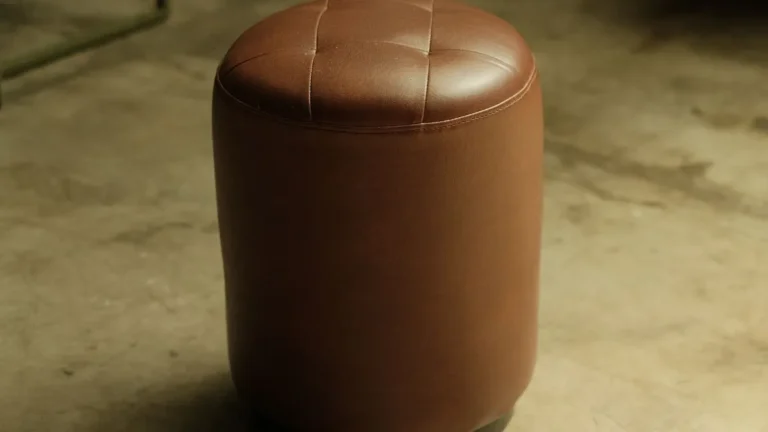 Leather Ottoman Guide: Genuine vs Faux, Top-Grain, Hybrid Labels, Storage, Tray Tops and CareQuick answer: a leather ottoman is a padded footrest, seat or table covered in leather. Top-grain leather is…Read more →
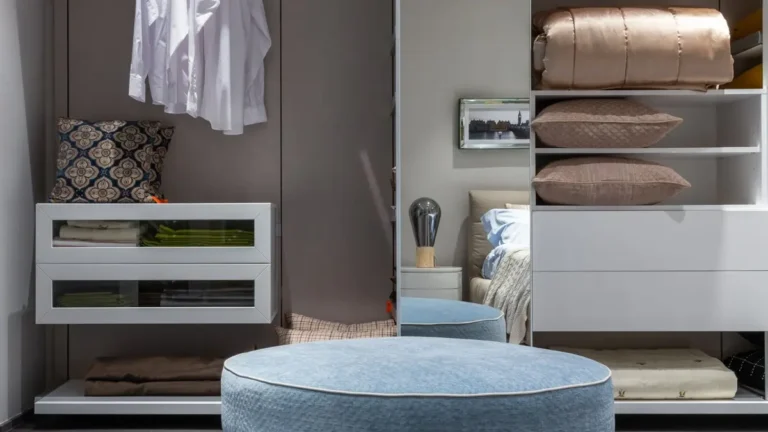 Pouf Ottoman Guide: Sizes, Bead vs Foam Fill, Leather Covers, Uses and CareQuick answer: a pouf ottoman is a soft, cushioned stool without a frame. It works as a footrest, extra seat or…Read more →
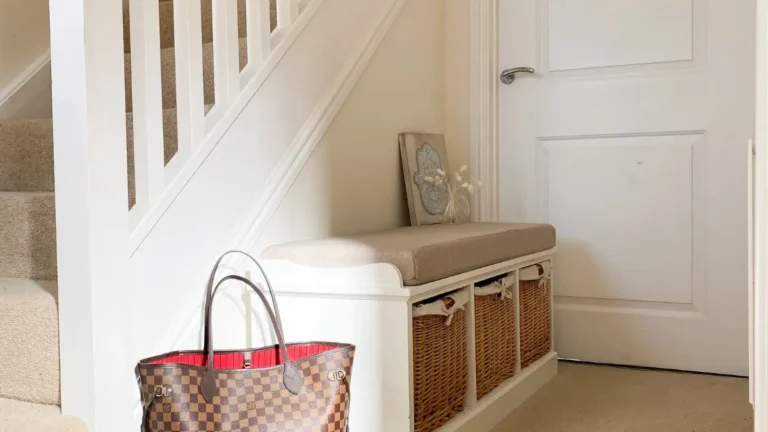 Bench with Storage Guide: Entryway and Bedroom Sizes, Seat Height, Weight Ratings and Safety HingesQuick answer: a bench with storage gives you a seat and a hidden compartment. Most entryway and bedroom models…Read more →



One Comment