
Leather Recliner Guide: Top Grain vs Bonded Leather, Power vs Manual, Care and Durability
A leather recliner is the chair many people picture when they think of comfort: you sink in, lean back and put your feet up. It is also one of the pieces of furniture where quality varies the most. Two chairs can look the same in photos, and one will last fifteen years while the other peels in three. Knowing a few facts about leather types, mechanisms and frames helps you spend wisely.
This article is part of our accent chairs, recliners and seating guide, where you can compare related options.
A leather recliner is a chair upholstered in leather, with a mechanism that tilts the back and raises a footrest. It may be manual (a lever or handle), power (a motor and button) or a rocker-recliner that also rocks. This guide explains the leather grades, power and manual mechanisms, how to judge frame and cushion quality, how to care for leather and how to choose.

Leather Types: What the Labels Mean
Leather quality is the biggest factor in how a recliner looks and wears.
Full-grain leather: the top layer of the hide with the natural surface intact. It is the most durable and develops a patina, but it is also the most expensive and is not always used on furniture. Top-grain leather: the top layer, lightly sanded and finished for a more uniform look. One guide calls top grain the gold standard for comfort and durability. It is the usual recommendation for a recliner. Top-grain leather generally needs less frequent conditioning than lower-grade leathers, and its coating makes it easier to clean. Genuine leather: a broad term. It is real leather, but often from the lower layers of the hide. Quality varies, so check the details. Split leather: made from the lower layers of the hide, often finished with a coating. Less durable than top grain. Corrected-grain leather: top-grain that has been sanded and embossed to hide flaws. It looks uniform. Natural top-grain leather shows subtle, irregular variations, whereas corrected leather looks perfectly uniform. Bonded leather: made from leftover scraps bonded together with polyurethane resin. Its main appeal is price. One source reports that in high-contact areas it tends to peel or flake within a few years of daily use. Bonded leather is not as durable as genuine or top-grain leather. Faux leather (PU or vinyl): not real leather. Easy to clean but can crack or peel over time.
| Type | Durability | Look | Cost |
|---|---|---|---|
| Full-grain | Highest | Natural patina | Highest |
| Top-grain | High | Smooth, consistent | High |
| Genuine/split | Medium | Varies | Medium |
| Bonded | Low | Uniform | Low |
| Faux | Low to medium | Uniform | Low |
Where Leather Matters Most
Some makers use top-grain leather only on the surfaces you touch, such as the seat, back and arms, and use split or bonded leather on the back and sides. One source treats that as acceptable because those areas get little wear. Another says to always look for top-grain or genuine leather on seating surfaces and armrests. Ask the seller exactly which parts are real leather.
Manual vs Power Mechanisms
Manual recliner: uses a lever, handle or push-back action. It has fewer parts to fail, needs no power and usually costs less. Some require effort to open. Power recliner: uses a motor and a button or switch. It reclines smoothly, often has multiple positions and can add features like a heated seat, massage, USB ports or a power headrest. It needs an outlet or a battery pack, and it costs more. Rocker-recliner: rocks gently and reclines. Popular in nurseries. Wall-hugger recliner: slides forward as it reclines, so it needs only a few inches of clearance from the wall. Lift chair: a power recliner that tilts forward to help you stand. Often used by people with mobility challenges. Ask a doctor or therapist if you have specific needs.
I could not find sourced guidance on whether power or manual mechanisms are more durable. Power units add cost and electrical parts, so check the motor and warranty separately.
Frame and Cushions
A leather cover is only as good as what is under it.
Frame. Solid hardwood or kiln-dried wood frames last longer than thin particleboard. Ask what the frame is made from. Joints. Corner-blocked, glued and screwed joints are sturdier than staples. Springs. Eight-way hand-tied or sinuous springs support the seat. Cushions. High-density foam or foam wrapped in fiber resists sagging. The sources I found did not give foam density numbers, so ask the seller. Mechanism. Steel, not plastic, parts are better. Test the action smoothly. Warranty. Look for a clear warranty on the frame, mechanism, motor and leather.
Sizing and Fit
Sit in the recliner if you can.
Seat height. Your feet should rest on the floor when upright. Seat depth. You should have a small gap behind your knees. Back height. A high back supports your head. Width. Check arm width and seat width. Weight capacity. Check the rated capacity. Reclined size. Measure the room needed when fully reclined. A standard recliner needs 12 to 30 inches behind it, depending on the type. A wall-hugger needs less. Footrest length. Tall people need a long footrest.
Measure the room, the doorway and the path. See the oversized chair and living room chairs guides.
Care and Cleaning
Leather lasts longer with care.
Dust regularly with a soft cloth. Wipe spills fast with a clean, damp cloth. Use a leather cleaner made for your leather type. Test on a hidden spot. Condition leather a few times a year, following the maker’s advice. Top grain needs it less often than lower grades. Keep away from sunlight and heat. Sun fades and dries leather. Keep pets’ claws away. Avoid harsh chemicals, including household cleaners, alcohol and ammonia. Rotate and use the whole seat. Check the mechanism and tighten loose bolts.
Bonded and faux leather peel when they dry out and get worn. They cannot be conditioned the same way. See the leather couch guide for more on cleaning.
What are the main strengths and weaknesses?
On the plus side: comfortable and supportive; leather is durable and wipes clean, if you buy good quality; ages well with care; stylish in many rooms. On the downside: costs more than fabric; can feel cold in winter and sticky in summer; can scratch; cheap leather peels; recliners are bulky.
How to Choose a Leather Recliner
Choose the leather type. Top grain for durability, bonded only if budget is tight and you accept shorter life. Ask where real leather is used. Pick manual or power. Check the frame and cushions. Measure the room and the reclining clearance. Sit in it to check comfort. Check the warranty for frame, motor and leather. Read reviews for peeling and mechanism problems. Compare prices across stores.
What mistakes should you avoid?
A few common mistakes are worth avoiding: buying bonded leather and expecting it to last; not checking the frame; forgetting the reclining clearance; skipping a test sit; ignoring the warranty; using harsh cleaners.
Frequently Asked Questions
What is the best leather for a recliner?
Top-grain leather is the usual recommendation for comfort and durability.
Is bonded leather good?
It is cheap, but sources say it can peel or flake within a few years of daily use.
Are power recliners better than manual?
Power recliners are smoother and have more features but cost more and have electrical parts. I did not find reliable data on durability.
How do I clean a leather recliner?
Dust, wipe spills quickly and use a leather cleaner made for your leather type.
How long does a leather recliner last?
It depends on quality and care. Good top-grain leather with a strong frame can last many years.
How much room does a recliner need?
A standard one needs space behind it to recline. A wall-hugger needs less.
Can I repair peeling leather?
Minor repairs are possible with kits, but widespread peeling means the leather is failing.
Conclusion
A leather recliner is a comfortable, long-term piece when you choose good leather, a strong frame and a mechanism you trust. Look for top-grain leather on the surfaces you touch, check the warranty and measure for the reclining clearance.
Care for the leather and keep it away from sun and heat. With a bit of attention, your recliner can be a favorite spot for years.
Related guides
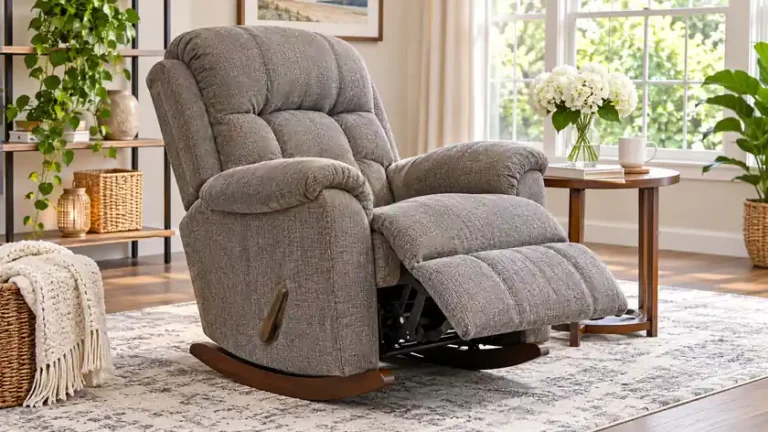 Rocker Recliner: Rocker vs Glider, Swivel Options and Whether It Suits a NurseryA rocker recliner combines a rocking or gliding motion with a reclining back and footrest. Rockers move in an…Read more →
 Leather Ottoman Guide: Genuine vs Faux, Top-Grain, Hybrid Labels, Storage, Tray Tops and CareQuick answer: a leather ottoman is a padded footrest, seat or table covered in leather. Top-grain leather is…Read more →
 Swivel Recliner Guide: Rocker and Glider Options, Clearance, Weight Capacity and Small Room FitQuick answer: a swivel recliner turns on its base and reclines, and some also rock or glide. Most residential…Read more →
 Loveseat Recliner Guide: Wall-Hugger Clearance, Console Models, Dimensions and Power vs ManualQuick answer: a loveseat recliner is a two-seat sofa where each seat reclines. Wall-hugger models need only…Read more →




One Comment