Recliner Chair: Types, Features and How to Choose the Right One
A good recliner chair changes how you relax. You can sit upright to read, lean back to watch TV or stretch out for a nap. But recliners come in many styles, and the wrong one can eat up space, feel awkward or break your budget.
This article is part of our accent chairs, recliners and seating guide, where you can compare related options.
A recliner chair is a seat with a backrest that tilts back and a footrest that rises when you pull a lever or press a button. Some tilt only a little. Others lie almost flat. Recliners come as single chairs, rockers, swivels and even lift chairs that help you stand.
This guide covers the main recliner types, key features, how much room you need and what to check before you buy. You’ll also find a comparison table and answers to common questions.

Types of Recliner Chairs
Each type solves a different problem. Here are the main ones.
Manual Recliners
A manual recliner works with a lever on the side or by pushing back with your body. It usually costs less and doesn’t need an outlet. The mechanism is simple, which means fewer parts that can fail. The downside is that you get a limited set of positions, and the lever takes some effort.
Power Recliners
A power recliner uses a motor and a button. You can stop the chair at almost any angle. Many models add extras like USB ports, heat, massage or a headrest that moves. Power recliners cost more and need to be near an outlet or have a battery pack. If the power goes out, the chair may not move unless it has a backup.
Wall-Hugger Recliners
A wall-hugger slides forward as it reclines, so the back clears the wall. This means you can place the chair just a few inches from the wall. Standard recliners often need about 12 to 18 inches of space behind them. If your room is tight, a wall-hugger is a smart choice.
Rocker Recliners
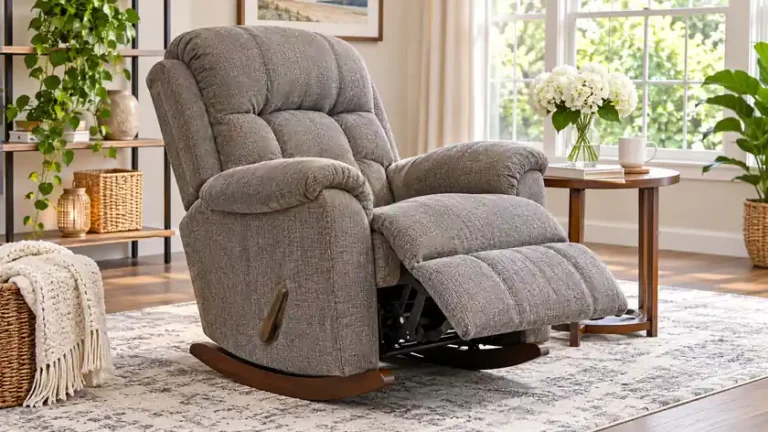
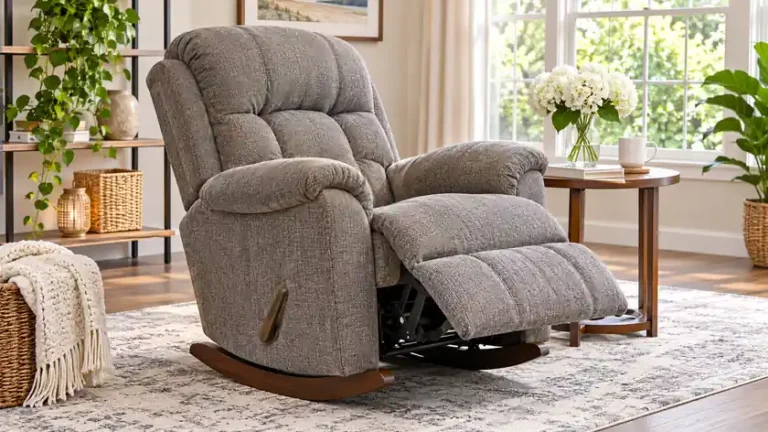
A rocker recliner rocks gently back and forth and also reclines. Some models let you lock the rocking motion. These are popular for nurseries and for people who like a calming motion.
Lift Chairs
A lift chair uses a motor to tilt the whole seat forward and up, which helps a person stand. It’s useful for older adults and people with limited mobility. Lift chairs cost more and are often built around comfort and ease of use.
Swivel and Zero-Gravity Recliners
A swivel recliner turns, so you can face a TV or a conversation without getting up. A zero-gravity recliner leans back so your knees sit near the height of your heart. Many people like this position for resting, and it’s also popular in outdoor chairs.
| Type | Best for | Needs outlet? | Space behind chair |
|---|---|---|---|
| Manual | Budget, simple use | No | More space needed |
| Power | Custom angles, extras | Usually yes | Depends on style |
| Wall-hugger | Small rooms | Depends | Only a few inches |
| Rocker | Nursery, relaxing motion | No (unless power) | Extra room to rock |
| Lift | Mobility needs | Yes | Depends on model |
| Swivel | Flexible viewing | No (unless power) | Some turning space |
Features Worth Looking For
Footrest style: some recliners have a short footrest that lifts to your calves. Others have a long one that supports your whole leg. If you’re tall, check how far the footrest extends. Lumbar and headrest support: a chair with a curved back or a lumbar cushion supports your spine better. A headrest that moves helps when you read or watch TV. USB ports and cup holders: these are small details that you may use every day. USB ports are common on power models. Heat and massage: some models include built-in heat or massage. These can be nice, but they raise the price and add parts that could break. Cushion filling: foam holds shape well. Softer fillings feel plush but may flatten sooner. Ask about cushion density if you plan to use the chair for hours. Upholstery: leather feels classic and wipes clean, though it can get warm. Fabric feels soft and comes in many colors. Microfiber resists stains and is a common pick for families with pets.
How Much Space Does a Recliner Need?
Measure first, then buy. Check the chair’s width, depth, height and its full reclined depth. A standard recliner often needs roughly 12 to 18 inches behind it to recline without hitting the wall. Wall-huggers need only a few inches, while rocker recliners need extra room to move.
Also measure your path. A recliner has to fit through doorways, up stairs and around corners. Look at the product’s width and depth, and compare them to your narrowest entry point.
Leave enough room around the chair so people can walk by when the footrest is up. A good tip is to mark the chair’s reclined footprint on the floor with painter’s tape and see how it feels in the room.
How to Choose the Right Recliner
Use these steps to narrow your options.
Decide where it goes. Pick the spot and measure the space, including the reclined length. Pick the type. Tight room? A wall-hugger. Mobility needs? A lift chair. Simple and low-cost? Manual. Custom angles and extras? Power. Check the size for your body. Sit in it if you can. Your feet should rest on the floor when the chair is upright, and your head should reach the headrest. Choose the upholstery. Think about pets, kids, spills and sunlight. Pick your features. Decide which extras you will use and skip the rest. Check the frame. A solid wood or strong metal frame lasts longer than thin particleboard. Read the warranty. Mechanisms and motors are the parts most likely to wear out, so look for coverage on them. Plan the delivery. Some recliners come fully built, and others need assembly.
Recliner Chair Problems and Fixes
The recliner won’t close: check for objects under the footrest. On power models, check the cord and outlet. The lever feels stiff or loose: a lever may need tightening. If the mechanism is damaged, contact the maker or a repair shop. The cushion has flattened: rotate or fluff it, or buy replacement foam. A chair that sinks right away may have low-density foam. The chair squeaks: tighten loose bolts, and add a bit of lubricant to the metal joints as the guide suggests. The power fails: check the plug and the power supply. A battery pack can keep a chair working during an outage.
Care and Cleaning
Vacuum the seams and crevices each week to remove crumbs. Blot spills quickly with a clean cloth and use a cleaner suited to the upholstery. Leather needs a gentle cleaner and an occasional conditioner. Keep recliners out of direct sun, since it can fade fabric and dry out leather.
Never sit on the footrest or lean on the open mechanism, since it can bend the frame. Keep pets and children away from moving parts when the chair is in use.
Frequently Asked Questions
What is the difference between a recliner and a lift chair?
A recliner leans back and raises a footrest. A lift chair does that too, but it also tilts the whole seat forward to help you stand. Lift chairs are made for people with limited mobility.
How far from the wall should a recliner be?
Standard recliners often need roughly 12 to 18 inches behind them. Wall-huggers need only a few inches because the chair slides forward as it reclines. Always check the specific model’s measurements.
Are power recliners worth it?
If you want custom angles, extra features or easier operation, yes. If you want a simple, low-cost chair that works without an outlet, a manual one is a good fit.
How long do recliners last?
It varies with the frame, the mechanism and how often you use it. Look for strong frames, good cushions and a warranty on the moving parts.
Is a recliner good for your back?
Many people find a recliner comfortable, but good support is the key. Look for lumbar support and try the chair if you can. If you have ongoing back pain, check with a healthcare professional.
Can you sleep in a recliner?
Many people do. Some like it for naps or when they need to sleep upright. For long-term sleeping, a proper bed is usually better for most people.
Conclusion
The best recliner chair fits your room, your body and the way you relax. Manual chairs keep things simple, power chairs add control, wall-huggers save space and lift chairs help with standing.
Measure the space and the path to it, choose a type that suits your needs and sit in a few chairs if you can. Check the frame, upholstery and warranty, and you’ll end up with a chair you’ll want to sit in every day.
Related guides
 Small Recliner Chair: Wall-Hugger Clearance, Seat Size and Full-Recline FootprintA small recliner chair fits a compact room, but the size on the box isn t the whole story. A wall-hugger…Read more →
 Rocker Recliner: Rocker vs Glider, Swivel Options and Whether It Suits a NurseryA rocker recliner combines a rocking or gliding motion with a reclining back and footrest. Rockers move in an…Read more →
 Club Chair: What It Is, Typical Sizes, Leather Styles and Club Chair vs ArmchairA club chair is a deep, low-backed, heavily upholstered lounge chair, traditionally covered in leather. One…Read more →
 Loveseat Recliner Guide: Wall-Hugger Clearance, Console Models, Dimensions and Power vs ManualQuick answer: a loveseat recliner is a two-seat sofa where each seat reclines. Wall-hugger models need only…Read more →