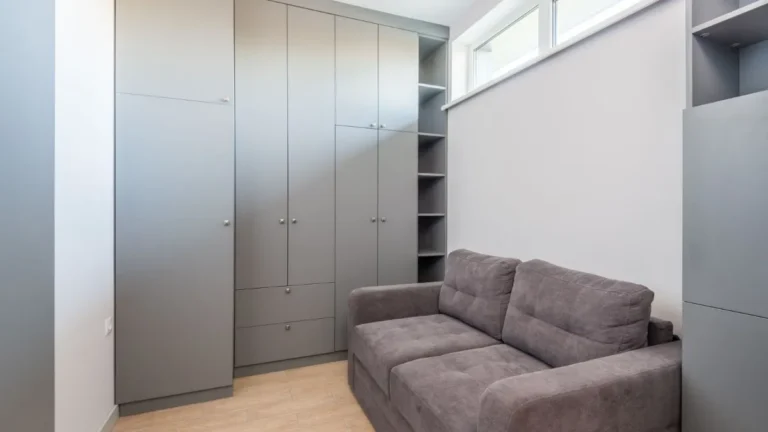
Sleeper Sofa: Mattress Types, Sizes and How to Choose One
A sleeper sofa looks like a normal couch until a guest stays over. Then it opens up into a bed. It’s a smart choice when you don’t have a spare room but still want to host people comfortably.
This article is part of our sofa and couch buying guide, where you can compare related options.
A sleeper sofa, also called a sofa bed, is a sofa with a mattress and a folding frame hidden inside. You pull out the bed or lift a section to open it. When you close it, it goes back to being a regular sofa. Many people use them in living rooms, dens, offices and small apartments.
This guide explains how a sleeper sofa works, the mattress types, how to check size and doorway fit and what to look for in comfort and quality. You’ll also find a comparison table and answers to common questions.
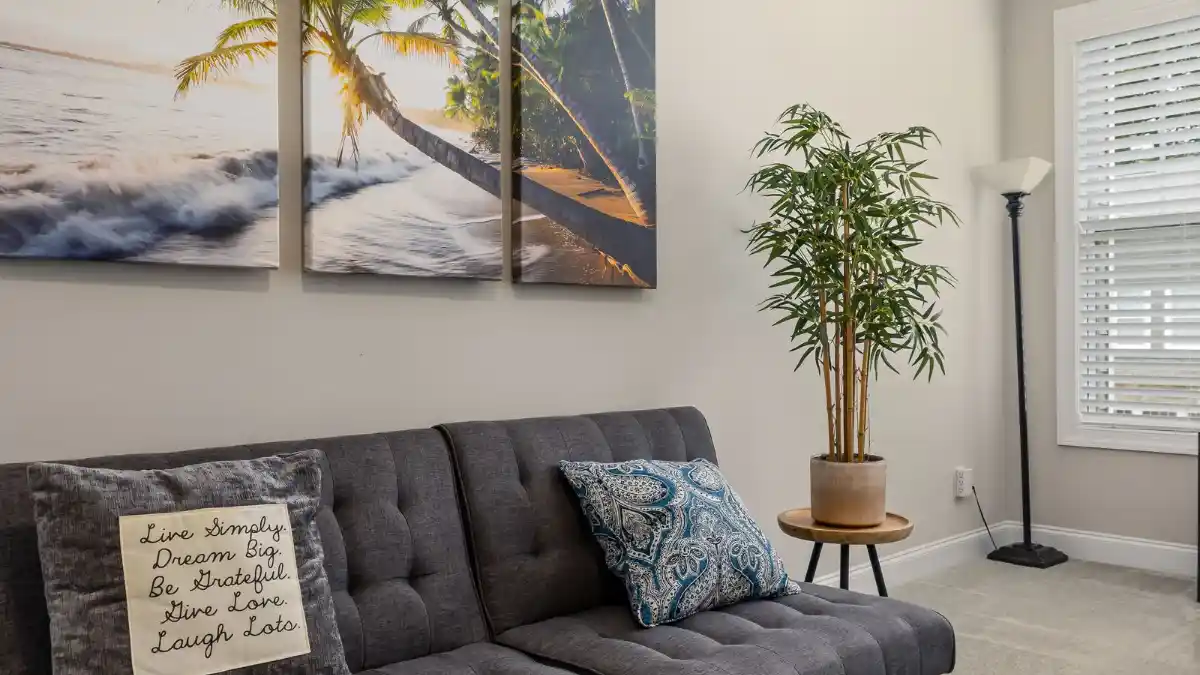
How Does a Sleeper Sofa Work?
Most sleeper sofas have a metal frame that folds in a Z shape. You remove the seat cushions, pull a handle and the frame unfolds with the mattress. The mattress is usually folded in thirds or halves inside the sofa. Some designs use a lift-and-lower motion or a slide-out base.
Sleeper sofas need room to open. Measure the space in front of the sofa so you have enough clearance for the pulled-out bed. This is often more than the sofa’s regular depth. A sleeper in a small room may block a coffee table or a walkway when it’s open.
Sleeper Sofa Mattress Types
The mattress decides most of the comfort, so look at it closely.
Innerspring: the traditional choice. Coils give support and bounce, and the mattress breathes well. These are the most common and are budget-friendly. Many are around 4 to 5 inches thick, according to one guide. Memory foam: foam gives good pressure relief and a more comfortable feel for many sleepers. Thickness can run around 4.5 to 6 inches. Some people find foam warm, and gel-infused versions try to sleep cooler. Air-over-coil: a mix of coils and an air layer that you can adjust. One guide calls it versatile, while another advises avoiding it because of the maintenance, like pumping air. Air mattress: cheaper and lighter, but usually less durable and less comfortable for long-term use.
| Mattress type | Comfort | Pros | Cons |
|---|---|---|---|
| Innerspring | Firm, bouncy | Low cost, breathable | Less pressure relief |
| Memory foam | Soft, contouring | Good comfort | Can feel warm |
| Air-over-coil | Adjustable | Customizable | Needs maintenance |
| Air | Variable | Light, cheap | Less durable |
Mattress thickness is limited by the folding frame, so sleeper sofa mattresses are thinner than regular ones. That’s one reason why they may feel less comfortable than a full bed, especially for long stays. For occasional guests, a basic mattress may be enough. For regular use, look for higher-quality options.
Sleeper Sofa Sizes
Sleeper sofas come in twin, full, queen and sometimes king sizes. The size refers to the mattress, not the sofa. A queen sleeper sofa is longer and wider, and it needs more room to open. Full and queen are the most common choices for adults.
Measure your living room and the space where the bed will open. A sofa that looks right closed may crowd the room when it’s open. Also check the seat depth and height, since a sleeper sofa often has a taller or deeper seat than a standard couch.
Don’t forget the doorway. If you can’t get the sofa through the door, the bed will never be used. Measure all doors, halls and stairs on the path. Compare them to the sofa’s width, depth and height. Some sofas can be taken apart to fit through narrow spaces.
Sleeper Sofa vs Day Bed vs Futon
A day bed keeps its mattress on top at all times. It sleeps better but sits less like a regular sofa. A futon has a thin, foldable mattress that serves as both seat and bed. It’s often cheaper and simpler, but less comfortable. A sleeper sofa has a hidden mattress and looks like a normal sofa, but the bed part is often thinner than a standard mattress.
If your guests stay for a night or two, a sleeper sofa is usually fine. For frequent or longer stays, a day bed or a guest room bed may be better.
What to Look For When Buying a Sleeper Sofa
Test the mattress. If you can, lie on it. If you can’t, read reviews and check the return policy. Check the frame. Kiln-dried or solid hardwood frames usually last longer than particleboard. Test the mechanism. It should open and close smoothly, without sticking or squeaking. Check the weight capacity. Add up the weight of the people who might sleep on it. Measure the room. Include the open bed length. Measure the path. Doorways, halls and stairs. Pick the fabric. Choose durable, stain-resistant upholstery if you have pets or kids. Look at seat comfort. You’ll sit on it more often than sleep on it. Read the warranty. Check coverage on the frame, mechanism and mattress. Check mattress replacement. Some makers sell replacement mattresses, which can extend the life of the sofa.
Tips to Make a Sleeper Sofa More Comfortable
Add a mattress topper, which can soften the thin mattress and cover the bar that some frames have. Use fitted sheets that match the mattress size and thickness. Store sheets and a pillow nearby so guests have what they need. If the metal bar can be felt, a thick topper or a folded blanket under the sheet can help.
Open the bed and check it before guests arrive. Make sure the mattress is clean and fresh. Let the sofa air out if it’s been closed for a long time.
Common Sleeper Sofa Problems
A bar in the back: cheaper models can have a visible bar under the mattress. A topper helps, or choose a model with a better design. A stiff or noisy mechanism: check the frame and lubricate the joints if the maker allows it. Don’t force the mechanism. A sagging mattress: it may be time to replace the mattress. Look for a replacement made for your frame. Difficulty opening: make sure nothing blocks the path and that the cushions are removed.
Frequently Asked Questions
Are sleeper sofas comfortable?
They can be, but they’re usually less comfortable than a regular bed. The mattress is thinner because it has to fold. Memory foam and well-built innerspring models tend to be the most comfortable.
What’s the best mattress for a sleeper sofa?
It depends on the use. Innerspring is a common, low-cost choice. Memory foam gives better pressure relief.
How thick is a sleeper sofa mattress?
One guide gives about 4 to 5 inches for innerspring and about 4.5 to 6 inches for memory foam and latex. Check the model you’re considering.
How much space does a sleeper sofa need?
You need room for the open bed, which is longer than the closed sofa. Measure the clearance in front of the sofa before you buy.
Can you replace a sleeper sofa mattress?
Often yes. Many makers sell replacements. Check the size and thickness for your frame.
Is a sleeper sofa good for everyday sleeping?
Usually not. They’re made for occasional guests. For daily use, a regular bed is a better choice.
Conclusion
A sleeper sofa gives you a sofa and a guest bed in one. The mattress type affects comfort, the frame affects how long it lasts and the open size affects how well it fits your room.
Measure the space and the doorway, test the mechanism and read the warranty. If you host overnight guests now and then, a good sleeper sofa can be a smart, space-saving choice.
Related guides
 Sectional Sleeper Sofa Guide: Pull-Out Bed Types, Mattress Options, Chaise, Size and What to TestQuick answer: a sectional sleeper sofa is an L-shaped or modular sofa with a hidden pull-out bed. Choose the…Read more →
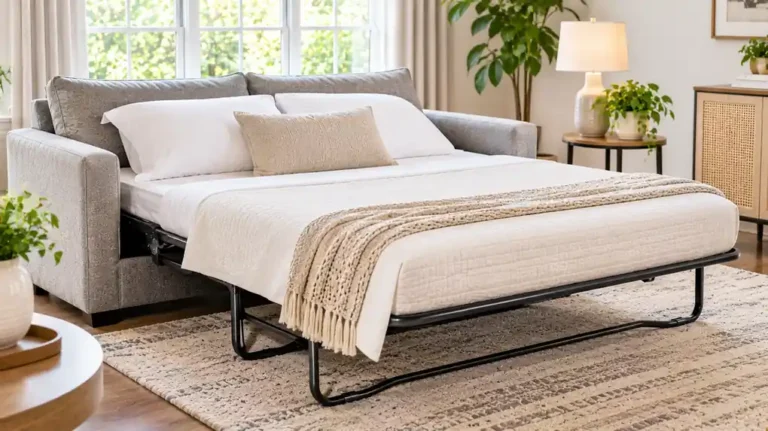 Queen Sleeper Sofa: Real Mattress Size, Thickness, Comfort and What to MeasureA queen sleeper sofa is a full-size sofa with a fold-out bed inside. The mattress is usually smaller than a…Read more →
 Loveseat Sleeper Guide: Sizes, Mattress Types and How to MeasureA loveseat sleeper is a small sofa with a bed folded inside. Standard loveseats run about 52 to 72 inches wide,…Read more →
 Couch Table Guide: Sofa Table Height, Width, Depth and Walkway SpaceWhen people search for a couch table, they often mean one of two things: a narrow table that sits behind the…Read more →