Console Table: Size, Height, Styling and Where to Use One
A console table is one of the most useful pieces of furniture in a home. It’s slim enough to fit in tight spaces, yet big enough to hold keys, lamps, books and decor. Because it’s so flexible, people use it in hallways, living rooms, dining rooms and even bedrooms.
This article is part of our coffee, end and console tables guide, where you can compare related options.
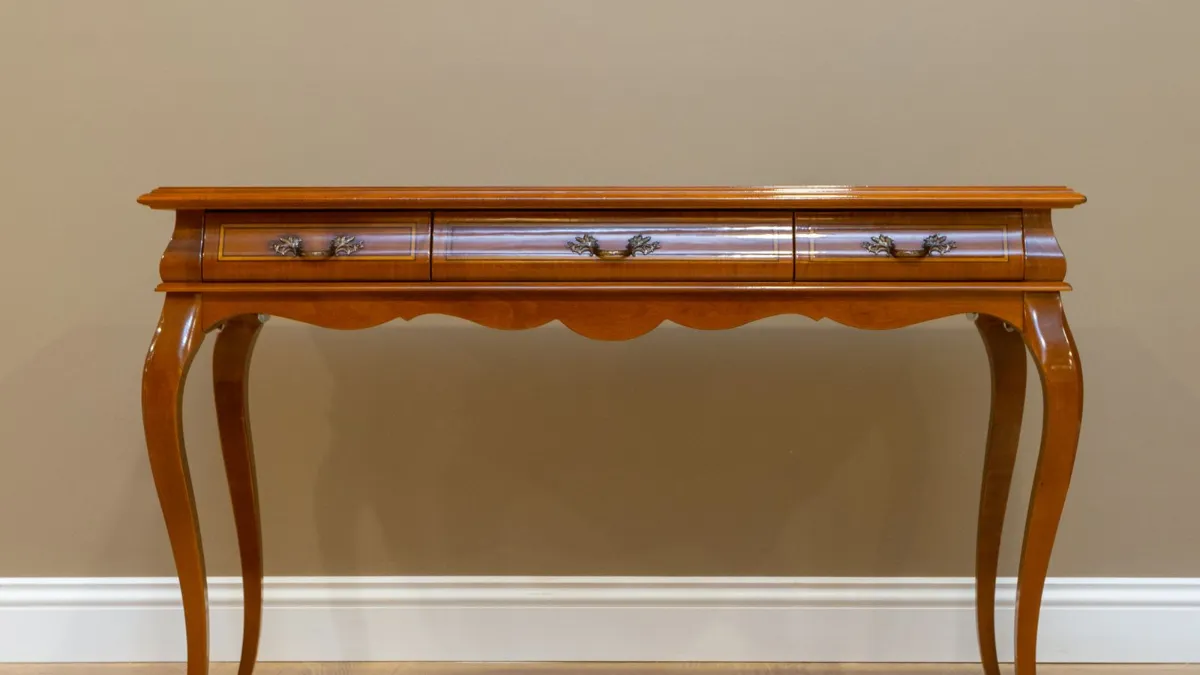
A console table is a long, narrow table meant to stand against a wall or behind a sofa. It’s usually shallow and often has a shelf, drawers or a lower rack. People also call it a hall table, entryway table or sofa table, depending on where it sits.
This guide explains the best sizes for different spots, how to style a console table and how to pick the right material and storage. You’ll also find a quick size chart, a list of common mistakes and answers to common questions.
What Is a Console Table Used For?
A console table does different jobs in different rooms.
In an entryway: it’s a landing spot for keys, mail, bags and sunglasses. A mirror above it, a tray for small items and a basket underneath keep the area tidy. Behind a sofa: it makes a back surface for lamps, books and decor. It also helps divide an open room into zones, like a living area and a dining area. In a hallway: it adds style to a long, plain wall. Pair it with art or a mirror. In a dining room: it can act as a buffet or serving surface for dishes and drinks. In a bedroom: it can sit at the foot of the bed or along a wall as a place for a lamp, a plant and a few personal items.
Console Table Size Guide
Size is the biggest factor in how well a console table works. On the basics, with small differences between sites.
For an entryway, the height is usually about 30 to 34 inches, and the depth is around 14 to 18 inches. Leave about 6 to 12 inches of wall space on each side so the table doesn’t feel crowded. Entryway tables often run a little taller, since there’s no sofa or other furniture to match.
For a table behind a sofa, the main rule is to match the sofa back or go slightly lower. Never go taller. Depth is typically 10 to 14 inches. For length, one guide suggests about two-thirds of the sofa’s length, and another suggests 60 to 80 percent of the sofa width.
For a narrow hallway, use a shallower table, often 10 to 12 inches deep. Keep at least 36 inches of walking space so people can pass comfortably.
| Location | Height | Depth | Length guide |
|---|---|---|---|
| Entryway | About 30-34 in | About 14-18 in | Leave 6-12 in of wall on each side |
| Behind sofa | Same as sofa back or lower | About 10-14 in | About 60-80% of sofa width |
| Narrow hallway | About 30-34 in | About 10-12 in | Keep 36 in of walking space |
Always measure your own space and tape the outline on the floor before you buy. A table that fits on paper can feel too big when it’s in the room.
Types of Console Tables
Classic console: a simple table with four legs and a top. It’s the most flexible and works with any style. Console with shelf: a lower shelf adds storage for baskets, books or shoes. It also adds visual weight, which can help in a large space. Console with drawers: drawers hide clutter like keys, chargers and mail. They work well in entryways. Narrow console: made for tight halls, these are often 10 to 12 inches deep. Half-moon (demilune) console: a curved table that suits small spaces and tight corners, since it has no sharp corners. Floating console: a console mounted to the wall. It saves floor space and works in small entries. Console with cabinet doors: doors hide everything inside and give a tidy look.
Materials and Finishes
Solid wood: is strong and long lasting. It suits traditional and rustic styles. Engineered wood costs less and comes in many finishes. Metal frames feel modern and light. Glass tops add brightness but show fingerprints. Marble or stone looks high-end but is heavy and can stain.
Choose a finish that fits the rest of your furniture. Matching wood tones isn’t required, but keep the color family consistent. In an entryway that sees heavy use, pick a durable top that handles scratches and spills.
How to Style a Console Table
A good console table looks balanced and not crowded. Follow these steps.
- Start with height. Place a tall item at one end or in the middle, like a lamp or a vase with branches.
- Add a mirror or art above. In an entryway, a mirror lets you check your look before leaving and makes the space feel larger. Center it above the table.
- Use a tray. A tray holds keys and small items so they don’t scatter.
- Bring in something living. A small plant or fresh flowers add color and softness.
- Group items in odd numbers. Three objects of different heights usually look better than two or four.
- Add storage underneath. Baskets, stools or boxes use the space under the table.
- Leave open space. Don’t cover the whole top. A bit of empty surface looks neater and stays useful.
If you put a lamp on the table, check that it doesn’t rise above eye level, particularly behind a sofa, where people sit and look past it.
How to Choose the Right Console Table
Pick the location. Decide where it goes and what it will do. Measure the wall or sofa. Use the size guide above. Check the clearance. Make sure doors open, and people can walk by comfortably. Decide on storage. Do you need drawers, a shelf or an open design? Choose the material. Think about wear, cleaning and the look you want. Match the style. Pick a design that suits the room and the rest of your furniture. Check the weight rating. If you plan to put a heavy mirror, lamp or decor on it, make sure it can hold the load. Look at the stability. A wobbly table is a problem in a hallway where people brush past it.
What mistakes should you avoid?
A few common mistakes are worth avoiding: choosing a table that’s too deep (in a hallway, a deep table blocks traffic. Keep it shallow); putting a table taller than the sofa back (behind a sofa, it should be level with or below the back); making it too small for the wall (a tiny table on a long wall looks lost. Pick a width that suits the space); skipping the mirror or art (a bare wall above the table can make it feel unfinished); overstyling (too many items make a console look like clutter); ignoring lighting (a lamp or a nearby light makes the table feel warm and useful).
Frequently Asked Questions
What is the difference between a console table and a sofa table?
They’re nearly the same. A sofa table is a console table placed behind a sofa. A console table can go in an entryway, hallway or other spots too.
How tall should a console table be?
For an entryway, about 30 to 34 inches is common. Behind a sofa, match the height of the sofa back or go slightly lower.
How deep should a console table be?
Entryways often use about 14 to 18 inches. Behind a sofa, 10 to 14 inches is typical. In narrow halls, 10 to 12 inches helps keep space for walking.
How long should a console table be behind a sofa?
Guides suggest about two-thirds of the sofa’s length, or roughly 60 to 80 percent of the sofa width. Pick what looks balanced in your room.
What do you put on a console table?
Common items are a lamp, a tray for keys, a plant, books and a mirror or art on the wall above. Keep it simple, and leave some open space.
Can a console table go in a bedroom?
Yes. It can sit at the foot of the bed or along a wall for lamps, a plant and a few personal items.
Conclusion
A console table is a small piece with a big impact. Choose the right height and depth for the spot, whether that’s an entryway, a hallway or behind a sofa, and measure your space carefully before you buy.
Pick a material and storage style that fit how you’ll use it, then style it with a lamp, a mirror and a few well-chosen items. A thoughtful console table makes a home feel organized and welcoming.
Related guides
 Kotatsu Table Guide: How It Works, Heights (14 to 20 Inches), Futon Blanket Size, Wattage and SafetyQuick answer: a kotatsu is a low Japanese table with a heater underneath and a thick quilted blanket draped…Read more →
 C Table Guide: Sofa Side Tables, Height, Slide-Under Clearance, Materials and UsesA C table is a small table shaped like the letter C. One side slides under your sofa, chair or bed, and the…Read more →
 Narrow Side Table Guide: 7 to 12 Inch Widths, Heights, Tiered Designs and Small Space PlacementQuick answer: a narrow side table is a slim end table, often 7 to 12 inches wide and about 21 to 24 inches tall…Read more →
 TV Console Table Guide: Width, Height, Viewing Distance, Cable Management and Safe PlacementQuick answer: a TV console table should be wider than the TV itself, ideally about 20 to 30 centimeters (8 to…Read more →