Reclining Chair Guide: Manual, Power, Wall-Hugger, Zero Gravity and Lift Recliners
A reclining chair, or recliner, is built for rest. You lean back, raise the footrest and let the day slide off. It is one of the most comfortable chairs you can own, and one of the most confusing to buy. There are manual and power models, wall-huggers that fit near a wall, zero-gravity chairs, lift chairs that help you stand and sizes from compact to extra wide. Pick the wrong one, and the chair either does not fit the room or does not fit you.
This article is part of our accent chairs, recliners and seating guide, where you can compare related options.
A reclining chair is a chair with a back that tilts and a footrest that rises. This guide explains the main types, how to measure the chair and your room (including the reclined depth), how wall clearance works, what to check about fit and comfort and how to choose between features. Clearance numbers conflict, and health claims are retailer claims, so check the product spec sheet and ask a doctor for medical advice.
Types of Reclining Chairs
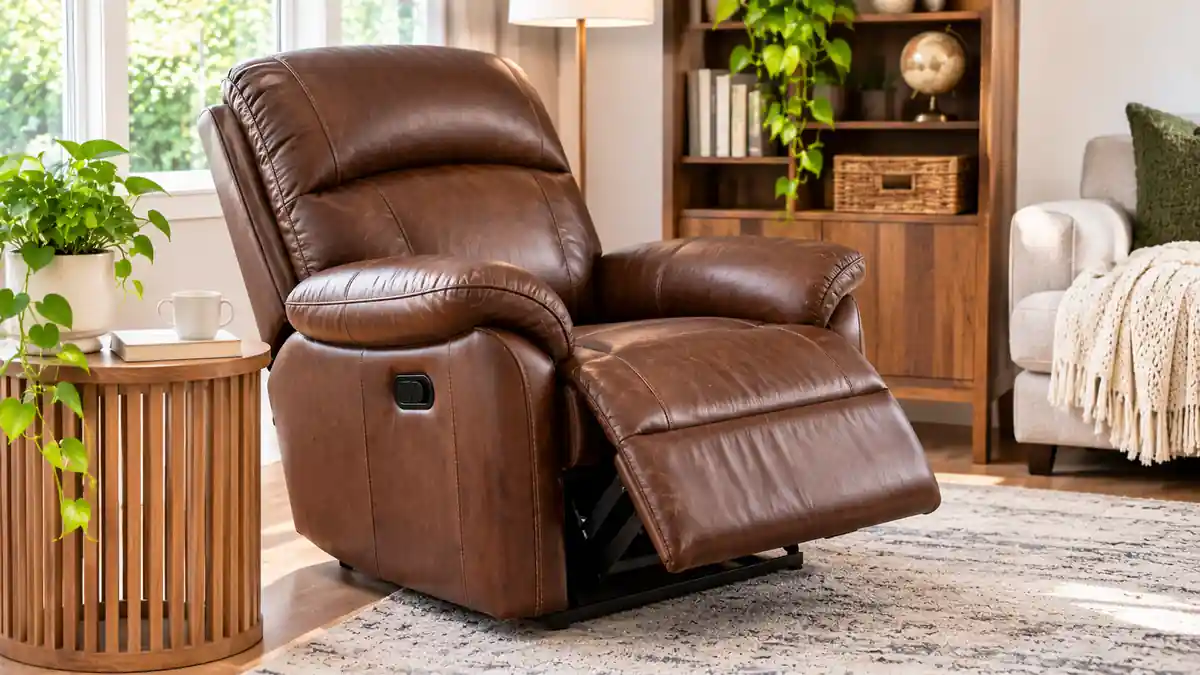
Manual recliner: you use a lever, handle or push-back action. One guide notes manual models offer lower costs, simpler maintenance and placement flexibility independent of wall outlets. Fewer parts to fail. Power recliner: motorized, with push-button controls. Smooth, with multiple positions, and often extra features like heat, massage, a power headrest and USB ports. Needs an outlet or battery pack. One source puts power recliners at $800 to $1,500 versus $150 to $400 for manual models, but prices vary. Wall-hugger (zero-wall) recliner: the base slides forward as it reclines, so the chair can sit close to a wall. One source says it achieves a full recline while sitting just 4 to 6 inches away from a wall. Great for small rooms. Zero-gravity recliner: raises the legs above the heart level. One guide says it helps distribute body weight more evenly and reduces pressure on the spine. That is a retailer claim. Ask a doctor if you have a medical condition. Lift recliner: a motor that helps the user stand by tilting the chair forward. It as great for those with mobility or medical issues. Talk to a healthcare provider or occupational therapist. Rocker recliner: rocks gently and reclines. Popular for nurseries and reading. Swivel recliner: rotates. See the swivel chair guide. Glider recliner: smooth gliding motion. Chair-and-a-half or oversized recliner: extra wide. See the oversized chair guide. Heated and massage recliners: extra comfort features. Recliner sofa and loveseat: related products. See the reclining sofa guide and the leather recliner guide.
| Type | Power | Wall space needed | Best for |
|---|---|---|---|
| Manual | No | More | Budget, simple |
| Power | Yes | Varies | Comfort, features |
| Wall-hugger | Often | Little | Small rooms |
| Zero-gravity | Often | Varies | Relaxation |
| Lift | Yes | Varies | Mobility needs |
Fit: Start With Your Body
One guide recommends matching seat depth to your legs, with knees at 90 degrees, before comparing mechanisms. Sit in the chair if you can.
Seat height. Feet should rest flat on the floor when upright. Seat depth. A small gap behind the knees. Too deep, and you slouch. Too shallow, and your thighs lack support. Back height. A high back supports the head and neck. Shorter people may prefer a lower back. Footrest length. Tall people need a long footrest. Arm height and width. Arms should rest comfortably. Weight capacity. Check the stated limit. Firmness. Soft cushions feel cozy, but firm ones support better over time. Headrest and lumbar support. Some chairs have adjustable ones.
Test the recline: it should be smooth, quiet and stable. See the lumbar pillow guide for back comfort ideas.
Measure the Chair and the Room
Measure four things: chair width, fully reclined depth, wall clearance and walkway clearance. Width is taken arm to arm, and fully reclined depth runs from the back of the chair to the end of the footrest.
- Chair width (arm to arm).
- Seat width and depth.
- Depth when upright.
- Depth when fully reclined.
- Wall clearance behind the chair.
- Walkway clearance beside and in front.
- Doorways and halls for delivery.
- Ceiling and TV height, if you will watch TV.
Tape the reclined footprint on the floor to see how much room it uses.
Wall Clearance
Figures conflict. Standard recliners are commonly cited as needing 12 to 18 inches behind them. One guide says they need real distance behind them, 12 to 18 inches minimum and closer to 20 inches on some larger power models. Another puts the figure at 6 to 12 inches of wall gap. Wall-huggers need only about 4 to 6 inches, according to one source.
Check the spec sheet for the specific model, since one source warns that clearance requirements vary in this category. If the chair hits the wall, it can damage the wall and the mechanism.
Power vs Manual
Choose power if: you want smooth, push-button control, multiple positions, extra features or have limited strength. Check the motor warranty and battery backup. Choose manual if: you want a lower price, no outlet, simple repairs or a portable chair.
Think about the outlet. A power recliner needs one nearby. Cords across a walkway are a trip hazard. Battery packs can help.
Materials and Upholstery
Leather. Durable and wipes clean if good quality. See the leather recliner guide for leather grades. Fabric and microfiber. Soft and warm. Easier on the budget. Performance fabrics. Stain-resistant, good for kids and pets. Faux leather. Can peel over time. Velvet and boucle. Cozy but need care. See the boucle chair guide.
Frame and Mechanism
Key points: frame. Hardwood or kiln-dried wood last longer than thin particleboard; mechanism. Steel parts are sturdier than plastic; cushions. High-density foam keeps shape; springs. Sinuous or eight-way hand-tied; warranty. Look for separate coverage for frame, mechanism and motor.
Care
Key points: vacuum and wipe regularly; follow the fabric or leather care instructions; avoid direct sun and heat; do not sit on the footrest or lever; keep pets’ claws away; lubricate manual mechanisms if the maker advises; check bolts and tighten them; unplug power recliners when cleaning around them.
What are the main strengths and weaknesses?
On the plus side: very comfortable; many styles and features; good for resting, reading and TV; wall-huggers fit small rooms. On the downside: bulky; needs clearance; power models need an outlet and can fail; cheap models wear out.
How to Choose a Reclining Chair
Decide the main use: TV, reading, napping, mobility help. Choose a type: manual, power, wall-hugger, zero-gravity or lift. Measure your room, including reclined depth and wall clearance. Sit in it and check the fit with your body. Check weight capacity. Choose upholstery for your household. Check the frame, mechanism and warranty. Plan the outlet for power models. Check delivery access. Read reviews for comfort and durability.
What mistakes should you avoid?
A few common mistakes are worth avoiding: not measuring the reclined depth; ignoring wall clearance; buying for features, not fit; putting a power recliner far from an outlet; choosing cheap upholstery for daily use; skipping the warranty.
Frequently Asked Questions
What is the difference between manual and power recliners?
Manual uses a lever. Power uses a motor and buttons, and costs more.
What is a wall-hugger recliner?
A recliner whose base slides forward so it can sit close to a wall.
How much space does a recliner need behind it?
Standard models often need 12 to 18 inches. Wall-huggers need less. Check the spec sheet.
What is a zero-gravity recliner?
One that raises the legs above heart level. Retailers say it reduces pressure on the spine. Ask a doctor for health advice.
Are lift recliners good for seniors?
They can help people stand, but ask a healthcare provider about your needs.
How do I choose the right size?
Match seat depth and height to your body, and measure the reclined depth and your room.
Conclusion
The best reclining chair fits your body, your room and your habits. Choose between manual and power, measure the reclined depth and wall clearance, sit in the chair if you can and check the frame, mechanism and warranty.
With the right fit, a recliner becomes the most comfortable spot in your home.
Related guides
 Club Chair: What It Is, Typical Sizes, Leather Styles and Club Chair vs ArmchairA club chair is a deep, low-backed, heavily upholstered lounge chair, traditionally covered in leather. One…Read more →
 Barrel Chair: Dimensions, Styles, Swivel Options and How to Place OneA barrel chair is an upholstered armchair with a rounded, curved back that wraps around the sitter like the…Read more →
 Floor Chair Guide: Legless Chairs, Back Support, Cushion Thickness and Who Should Avoid ThemQuick answer: a floor chair sits on the floor and gives you a seat and back support without legs. Legless…Read more →
 Sleeper Chair Guide: Sizes, Comfort, Sleeper Chair vs Sofa Bed and How to ChooseA sleeper chair is a chair by day and a small bed by night. It fits in rooms where a sofa bed would be too big:Read more →