
Swivel Recliner Guide: Rocker and Glider Options, Clearance, Weight Capacity and Small Room Fit
Quick answer: a swivel recliner turns on its base and reclines, and some also rock or glide. Most residential models are rated for about 250 to 350 pounds. Measure the chair upright and fully reclined, leave room for it to turn, and test the rock arc so it stays clear of tables and walls.
This article is part of our accent chairs, recliners and seating guide, where you can compare related options.
A swivel recliner is useful in open rooms and small spaces. You can turn from the TV to a conversation, rock a baby or recline for a nap, all in one chair. But the extra movements need extra room. This guide explains the types, clearance, weight ratings, how to fit one in a small room, what features to look for and how to choose. Check each model’s spec sheet. This is not medical advice.

Types of Swivel Recliners
Swivel recliner: turns 360 degrees and reclines. Manual or power. Swivel rocker recliner: adds a rocking motion. Swivel glider recliner: slides back and forth on a smooth track. Popular in nurseries. Babesta publishes a guide to space-saving gliders and rockers for small nurseries. Wall-hugger swivel recliner: the seat moves forward as the chair reclines, so it can sit near a wall. One listing describes a model with a zero-clearance design. Power swivel recliner: motorized, with buttons or USB ports. Compact swivel recliner: a smaller footprint for small spaces.
See the oversized recliner guide for big and tall models and the swivel accent chair guide for non-reclining swivel chairs.
Clearance: The Most Important Measurement
A swivel recliner needs more room than a fixed chair.
Turning space. A retailer notes the seat needs room to turn and, depending on the model, rock or glide. Upright and reclined. Before buying, measure the chair both upright and fully reclined. Rock arc. A shopping guide advises testing the rock arc so it stays clear of side tables and walls. Recline radius and base width. For tight spots, compare the chair’s recline radius, base width and clearance requirements. Wall-hugger option. A wall-hugger design reduces the space needed behind the chair.
Draw the chair’s footprint on the floor with painter’s tape, and trace the maximum recline. If your sofa or table is within that area, move something or pick a smaller chair.
Weight Capacity
One guide says most residential recliners accommodate 250 to 350 pounds, though heavy-duty models can support more. Many listings cite 330 or 350 pound ratings, but a few smaller units are rated at 220 to 250 pounds, so confirm the number for the specific model. Choose a rating well above the heaviest user. For larger bodies, see the oversized recliner guide.
Fitting One in a Small Room
A layout example from one guide suggests that in a 10 by 12 foot living room, one compact swivel rocker recliner alongside a 72 to 78 inch sofa usually ensures effective circulation. Another guide notes these chairs minimize visual weight, although this can come at the cost of less cushioning.
Tips: choose a compact model with a smaller base; place the chair in a corner with room to turn; keep side tables small or wall-mounted; choose a wall-hugger for placement near a wall; use light colors to reduce visual weight; keep walkways of about 30 inches (general guideline).
Mechanism: Manual vs Power
Manual. A lever or handle. Simple, reliable, no cord. Power. Buttons recline the chair smoothly. Power models add a cord and outlet placement to the clearance check. Battery pack. Some power models use batteries to avoid cords. Check run time.
Power helps people with limited strength. Ask a doctor if you have mobility concerns and need a lift chair.
Seat and Back Style
Cushion firmness. Firm cushions are easier to rise from, and soft ones feel cozy. Seat depth. Short people prefer shallower seats, and tall people deeper. High back with headrest. Supports the neck. Lumbar support. Good for long sitting. Arms. Wide arms hold drinks, and slim arms save space.
Fabric and Frame
Key points: performance fabric. Stain-resistant and washable. Helpful with kids and pets; leather and faux leather. Easy to wipe; linen and boucle. Soft but need care; frame. Solid hardwood and steel are stronger than particleboard; foam. High-density foam holds shape.
See the couch covers for dogs guide for protecting fabric.
Swivel Base and Floor Protection
A swivel base can scratch floors. Check the base finish and whether replacement pads are available. Use felt or rubber pads or place the chair on a rug. See the swivel accent chair guide for floor protection tips.
Nursery Use
Gliders and rockers are popular in nurseries. Look for: a smooth, quiet glide; a fabric that wipes clean; arms at a comfortable height for holding a baby; a locking feature so the chair does not move when you stand; enough clearance for a crib and dresser. See the kids dresser guide.
Follow safe-sleep guidance from your pediatrician and never sleep with a baby in a recliner. This is general safety advice, not medical advice.
Safety
Key points: keep children and pets away from the footrest mechanism; do not overload the chair; do not let children spin the chair while someone is in it; use the supplied power cord and keep it out of walkways; check bolts and mechanism now and then.
What are the main strengths and weaknesses?
On the plus side: turns toward TV or conversation; rocking and reclining in one chair; fits well in open plans; many sizes. On the downside: needs clearance to turn and recline; cheap swivel bases can wobble; can scratch floors; less cushioning in compact models.
How to Choose a Swivel Recliner
Measure the room and mark the footprint. Measure the chair upright and reclined. Choose a type: swivel, rocker, glider or wall hugger. Check the weight rating (250 to 350 pounds typical). Choose manual or power. Check seat depth and height for comfort. Check fabric and frame. Plan floor protection. Check outlets for power models. Read reviews and the return policy.
What mistakes should you avoid?
A few common mistakes are worth avoiding: measuring only the upright size; forgetting the rock arc; ignoring the weight rating; placing it too close to side tables; letting the base scratch the floor; buying without checking the return policy.
Frequently Asked Questions
How much weight can a swivel recliner hold?
Most hold 250 to 350 pounds. A few small ones are rated 220 to 250.
How much space does a swivel recliner need?
Enough to turn, recline and rock. Measure it upright and fully reclined.
What is a wall-hugger recliner?
A recliner that moves forward as it reclines, so it can sit near a wall.
Are swivel recliners good for small rooms?
Yes, if you choose a compact model and measure the clearance.
Can I use a swivel glider in a nursery?
Yes. Check for smooth motion and wipe-clean fabric.
Do swivel recliners scratch floors?
They can. Use pads or a rug.
Conclusion
A swivel recliner is a flexible seat that turns, reclines and sometimes rocks. Measure it upright and reclined, leave room for the swivel and rock, check weight capacity and protect your floor.
Pick a compact or wall-hugger design for small rooms. With the right fit, it becomes the most-used chair in your home.
Related guides
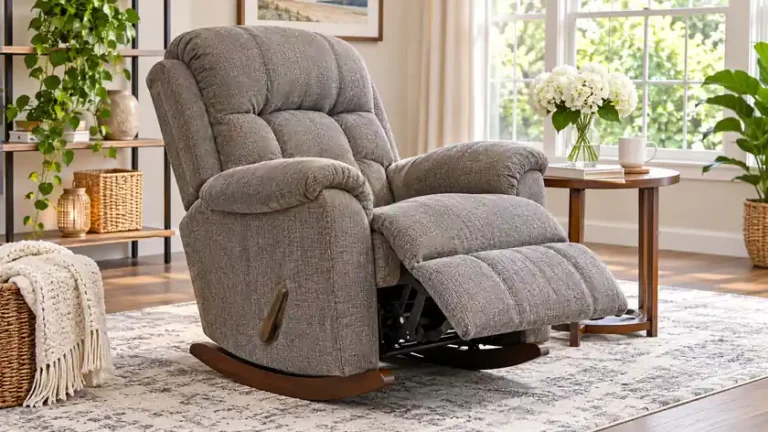 Rocker Recliner: Rocker vs Glider, Swivel Options and Whether It Suits a NurseryA rocker recliner combines a rocking or gliding motion with a reclining back and footrest. Rockers move in an…Read more →
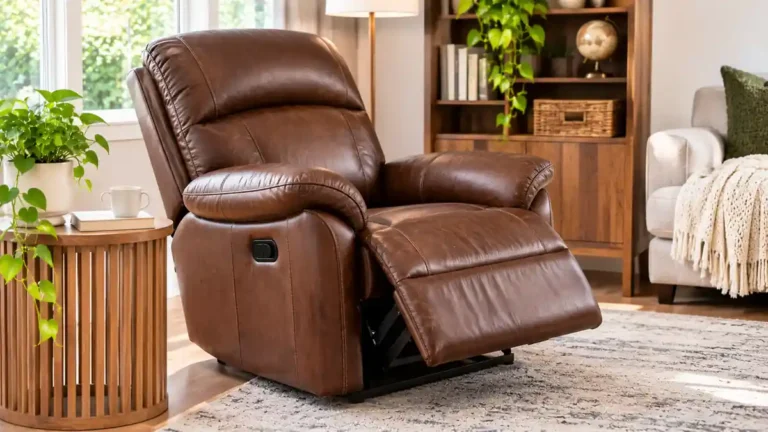 Leather Recliner Guide: Top Grain vs Bonded Leather, Power vs Manual, Care and DurabilityA leather recliner is the chair many people picture when they think of comfort: you sink in, lean back and put…Read more →
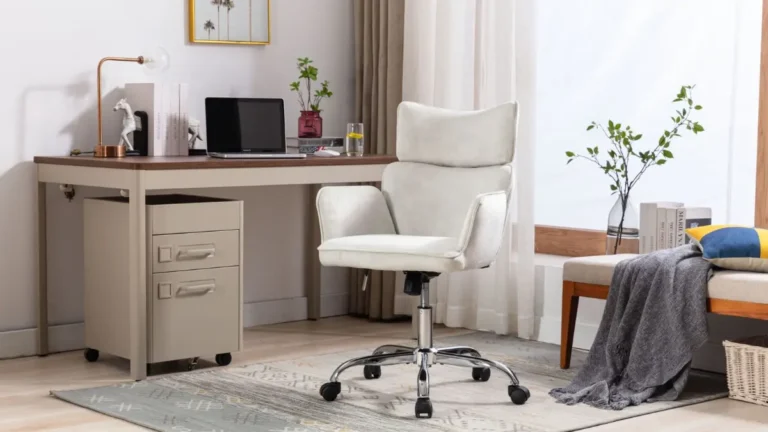 Swivel Chair: Types, Base Styles, Size and How to ChooseA swivel chair turns, so you can face the TV, the window or a friend without moving the chair. That small…Read more →
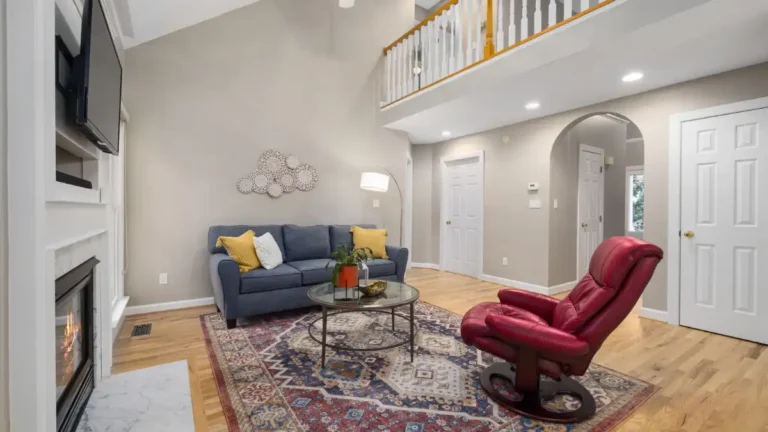 Loveseat Recliner Guide: Wall-Hugger Clearance, Console Models, Dimensions and Power vs ManualQuick answer: a loveseat recliner is a two-seat sofa where each seat reclines. Wall-hugger models need only…Read more →




One Comment