Round Dining Table Sizes: How Many People Fit and What Space You Need
A round dining table makes a meal feel closer, because everyone sits at the same distance from the center. It also fits well in small rooms and square spaces, since it has no sharp corners to bump into. The key is to pick the right diameter, because a table that’s too big crowds the room and one that’s too small leaves guests squeezed.
Round dining table sizes are measured by diameter, which is the distance straight across the top. The size decides how many people can sit comfortably and how much floor space the table needs. A few inches can change the feel of the room, so it helps to check the numbers before you buy.
This guide explains how many people fit at common round table sizes, how much space you need around the table, how the base changes legroom and what to check before you choose chairs. You’ll also find common mistakes and a few tips for small rooms.
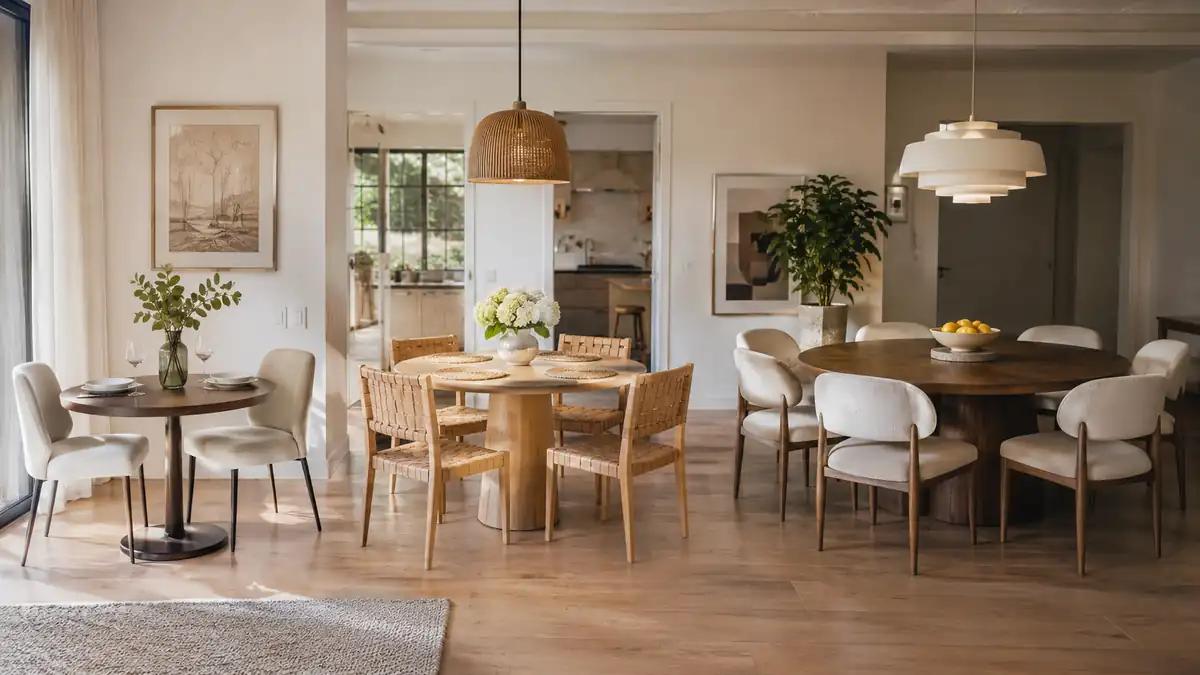
How many people fit at a round dining table?
A 36-inch round table seats about two to three people, a 42-inch table seats about three to four, and a 48-inch table seats about four to five. A 54-inch table seats about five to six, and a 60-inch table seats about six to eight. These counts are rough guides, and the real number depends on chair width and how close you’re willing to sit.
A common rule is to give each person about 24 inches of table edge. On a round table, the edge length is the circumference, which is about 3.14 times the diameter. A 48-inch table has an edge of around 150 inches, which in theory holds six people at 24 inches each, but many people prefer to seat four to five so elbows aren’t touching.
Chairs make a difference. Wide chairs with arms take more room than slim chairs without arms, so a table that seats six with slim chairs may seat four with bulky ones. If you often host, choose a bit larger, or look for an extendable round table.
How much space do you need around a round table?
You need about 36 inches between the table edge and the nearest wall or furniture, so people can push back chairs and stand up. If people will walk behind seated guests, plan for 44 to 48 inches. These numbers match common dining-room planning guidance, and more is always more comfortable.
A simple way to size the room is to add the table diameter and 72 inches, which is 36 inches on each side. For a 48-inch table, the room should be at least about 120 inches, or 10 feet, in that direction. If the room is smaller, look at a smaller table or a pedestal base.
Think about doors and traffic paths too. A door that swings into the dining area, a hallway opening or a sideboard can all take space away. Use painter’s tape or a sheet of cardboard to mark the table size on the floor, then walk around it before you buy.
Pedestal base or four legs?
A pedestal base is a single column in the center, and it gives you the most legroom. Nobody has to straddle a leg, so you can fit more chairs around the table. Pedestal tables suit small rooms because chairs tuck in tight and you can squeeze one more person in.
A four-leg round table is very stable and often costs less, but the legs can get in the way. On a smaller table, a leg may sit right where a chair wants to be. Check the leg position in the product photos before you buy.
Look at the weight rating and the stability. A heavy glass or stone top on a narrow pedestal can feel unstable if someone leans on the edge. Choose a base that’s wide enough and ask the maker how much weight the top can hold.
Which table height and chairs should you choose?
Standard dining table height is about 28 to 30 inches. Chairs for it usually have a seat height of about 17 to 19 inches, which leaves roughly 10 to 12 inches between the seat and the underside of the table. That gap lets people fit their legs without feeling cramped.
Look at the apron, which is the frame under the tabletop. A deep apron can block legs, so choose a slim one if you plan to use bigger chairs. Armchairs need more room than armless chairs, and they may not tuck in under a round table, so measure them.
Consider the shape of the chair back too. A round or curved back follows the edge of a round table nicely. A tall, square back can clash and take up more space. If you’re unsure, pick armless chairs for the sides and save armchairs for the ends of a bigger table.
Which material is best for a round table top?
Wood is warm and can be refinished, but it can scratch and mark. Glass looks light and keeps a room feeling open, though it shows fingerprints and can chip. Stone and marble look rich and are sturdy, but they’re heavy and can stain if not sealed.
Laminate and veneer cost less and come in many looks, and they handle spills well. Ask about heat, because hot dishes can damage some finishes. A tablecloth, mats and coasters help protect any top.
If kids will use the table, choose a finish that wipes clean and rounded edges. A round table is already kinder to small children because it has no sharp corners.
How should you light and style a round table?
A round table looks best with a light centered above it. A pendant or chandelier should hang about 30 to 36 inches above the tabletop, so it lights the table without blocking views across it. Make sure the fixture is centered over the table, not over the room, and that its width is about half to two thirds of the table’s diameter.
A round rug under the table, or a square one that is large enough, keeps chairs on the rug when people pull back. Leave about 24 to 30 inches of rug beyond the table’s edge on all sides. A low centerpiece, like a bowl or a small plant, lets people see each other.
If you use a tablecloth, choose one that drops about 10 to 12 inches on each side, so it doesn’t catch on chair arms. A round cloth or a square cloth set at an angle both work well.
What mistakes should you avoid?
The main mistake is buying a table that’s too big for the room. People often judge size by looks in a showroom, where there’s lots of space. Measure your own room and leave room to move.
Another is forgetting to check how chairs fit under the table. A third is ignoring the weight of the top. A fourth is choosing a base that blocks legs. And a fifth is skipping the return policy, since a table that looks right online may feel different in your home.
Finally, think about the future. If you plan to host more guests later, a table with a leaf or a size you can grow into may save you from buying twice.
Frequently Asked Questions
How many people does a 48-inch round table seat?
About four to five people comfortably. Six can fit if you use slim chairs and don’t mind close seating.
What size round table fits a small kitchen?
A 36 to 42 inch table with a pedestal base is often the best fit. Leave about 36 inches around it.
How much space should be around a round dining table?
About 36 inches from the table edge to a wall, and 44 to 48 inches if people walk behind chairs.
Is a pedestal base better for a round table?
It gives more legroom and lets you fit one more chair. Check that the base is wide and stable.
What height should a dining table be?
Most are about 28 to 30 inches tall, with chairs that have a seat height of about 17 to 19 inches.
Conclusion
A round dining table works well when its diameter matches the room and the number of people you want to seat. Measure the space, leave about 36 inches around the table and choose a base that gives your legs room.
Check the maker’s size and weight details, and test the footprint with tape on the floor. With the right size, a round table makes the dining area feel friendly and easy to use.
Related guides
 Extendable Dining Table: Sizes, Leaf Types, Mechanisms and What to CheckAn extendable dining table gives you a small table for everyday meals and a bigger one when guests come. It s a…Read more →
 Counter Height vs Bar Height: Differences, Stool Sizes and Which to ChooseCounter height and bar height are two common table heights, and they re easy to mix up. Both are taller than a…Read more →
 Upholstered Dining Chairs: Fabrics, Comfort, Cleaning and How to ChooseUpholstered dining chairs are more comfortable than bare wood or metal, and they add color and texture to a…Read more →