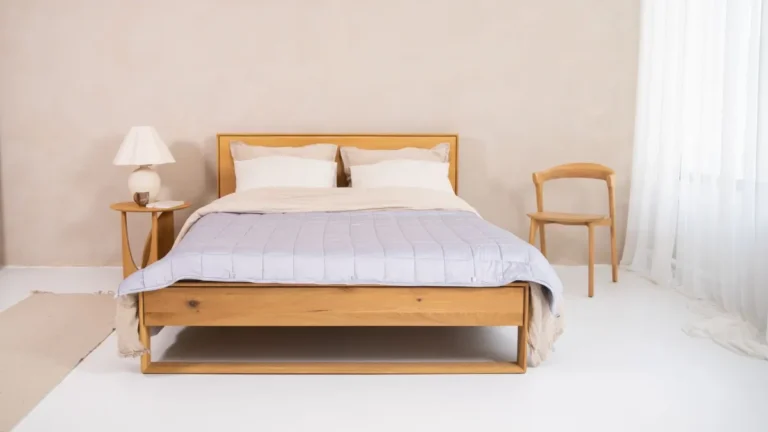
Twin Bed Frame: Types, Size, Support and How to Choose
A twin bed frame holds up your mattress and shapes the look of the room. The right frame is sturdy, quiet and a good match for your mattress. The wrong one can squeak, sag or limit your mattress warranty.
This article is part of our bed frame guide, where you can compare related options.
A twin bed frame is the base that supports a twin mattress, which measures about 38 inches wide and 75 inches long. Frames may include a headboard, a footboard, slats, storage drawers or a built-in platform. They come in wood, metal and upholstered styles.
This guide covers the main frame types, support options, size and height, materials and what to check before you buy. You’ll also find a comparison table and answers to common questions.

What Size Is a Twin Bed Frame?
The frame is a little larger than the mattress. Many twin frames measure about 40 to 42 inches wide and 77 to 80 inches long, but this varies by design. Frames with headboards, footboards or storage can be even bigger. Check the product dimensions and compare them to your room.
Make sure you’re buying the right mattress size. A twin XL frame is longer, at about 80 inches for the mattress, and it won’t match a standard twin mattress. If you plan to buy a twin XL mattress later, choose an XL frame now.
Leave room for walking and for opening drawers and doors. Most people like at least a couple of feet of clear space beside the bed.
Types of Twin Bed Frames
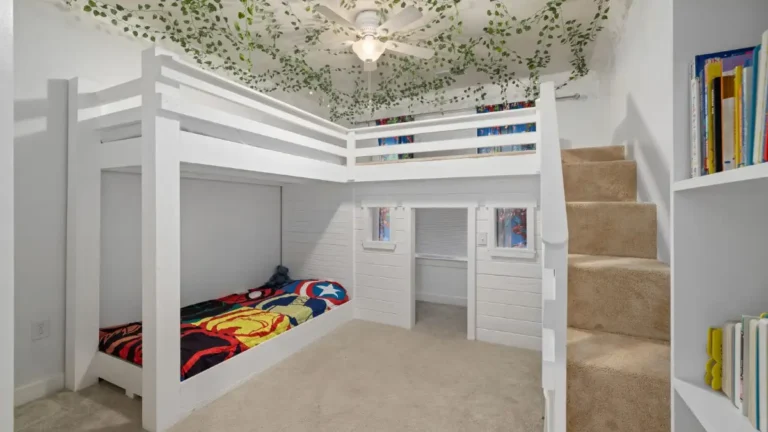
Platform frame: it has a solid deck or slats that support the mattress directly. It needs no box spring and often sits low. This is the simplest option for most modern mattresses. Metal frame: a basic metal frame with legs and rails. It’s light, low-cost and easy to move. It often needs a box spring or foundation, unless it has slats. Panel or wood frame: it has a headboard and footboard. Solid wood feels sturdy and classic. Storage frame: drawers or a lifting base add storage. This is great for small rooms. Upholstered frame: covered in fabric. It feels soft and cozy, especially for the headboard. Loft or bunk frame: the bed sits high or stacks with another. These need extra care around safety and ceiling height. Trundle or daybed frame: includes a second bed or a sofa-style design.
| Frame type | Needs box spring? | Pros | Cons |
|---|---|---|---|
| Platform | No | Simple, low profile | Check slat gaps |
| Metal | Often | Light, low cost | Can squeak |
| Wood panel | Depends | Sturdy, classic | Heavier |
| Storage | Usually no | Extra space | Heavy, bulky |
| Upholstered | Depends | Soft look | Harder to clean |
Support: Slats, Platforms and Box Springs
How the frame supports the mattress matters. Slats are boards or bars across the frame. If the gaps are too wide, the mattress can sag between them. Guides disagree a little on the limit. A woodworking guide says slats should be no more than about 2.5 inches apart, and many mattress retailers say 3 inches is the maximum. Using gaps of 2.5 inches or less is a safe plan. Your mattress warranty may list its own rule, which is the one to follow.
A solid platform needs no slats and gives even support, but it can reduce airflow. Some mattresses, especially foam ones, can trap moisture on a solid surface. Look for a platform with vent holes or a mattress made to handle it.
A box spring adds height and a bit of spring. Many metal frames are made for box springs. Modern foam and hybrid mattresses often work better on a platform or a slatted base. Check the warranty before you use a box spring with memory foam, since some makers say it can cause problems.
Height and Clearance
Frame height changes how the bed looks and how easy it is to use. Low platform frames can sit only about 6 to 10 inches off the floor, while standard frames with a box spring can be 12 to 16 inches or more. For a child, a lower bed is easier and safer. For an adult or someone with sore knees, a bit higher bed is easier to get in and out of.
If you want storage under the bed, check how much clearance you need. Bins and rolling drawers need a few inches of space. Storage frames with drawers use that space for you.
Materials: Wood, Metal and Upholstered
Solid wood: is strong, long lasting and quiet. It costs more and is heavy. Engineered wood like MDF or particleboard costs less and comes in many finishes, but it can wear out faster if you move or reassemble the bed often. Metal frames are strong and light. Bolts can loosen over time, which causes squeaks. Upholstered frames feel soft but collect dust and need more cleaning.
Whatever the material, check the weight rating. For kids, a typical frame holds a good amount, but ratings differ. For teens and adults, look for ratings that cover the sleeper plus the mattress.
How to Choose a Twin Bed Frame
Check your mattress. Read the warranty and support rules. Measure the room. Include door swing and closet space. Pick the type. Platform for simplicity, storage for small rooms, upholstered for comfort. Choose the support. Look for slat spacing and a center support if the frame needs it. Check the weight rating. It should cover the sleeper and the mattress. Pick the material. Think about budget, noise and how often you’ll move. Consider the height. Match it to the user’s age and mobility. Read reviews. Look for words like “squeaky,” “wobbly” or “easy to assemble.”. Check the assembly. Some frames take one person, and some need two.
How to Assemble a Twin Bed Frame
Lay out all the parts and read the manual. Sort the hardware into groups. Build the frame loosely first, so you can adjust the pieces. Tighten all bolts at the end, and check them again after a week. Place the frame in its final spot before you add the mattress, since it will be heavy to move after.
If the frame squeaks, tighten the bolts first. Rubber washers or a little wax on metal joints can help. Make sure all feet touch the floor evenly.
Frequently Asked Questions
What size is a twin bed frame?
The mattress is about 38 by 75 inches, and the frame is slightly larger, often about 40 to 42 inches wide and 77 to 80 inches long. Check the exact dimensions of the model you want.
Does a twin bed frame need a box spring?
Not if it’s a platform frame or has slats. Metal frames without slats often need a box spring. Check the frame and your mattress warranty.
How far apart should slats be on a twin bed frame?
Many guides say 3 inches or less. A safer target is 2.5 inches or less. Follow your mattress maker’s rule.
What’s the difference between a twin and a twin XL frame?
A twin XL frame is longer, built for a mattress that’s about 80 inches long. A standard twin frame fits a 75-inch mattress.
How much weight can a twin bed frame hold?
It depends on the model. Ratings vary, and metal frames often hold more than particleboard ones. Check the maker’s rating.
Which is better, a metal or a wood bed frame?
Wood is quiet and sturdy. Metal is light and often cheaper. Choose based on your budget, your need to move the bed and how much noise you’ll accept.
Conclusion
A good twin bed frame supports your mattress, fits your room and suits the person who sleeps in it. Platform frames are a simple choice for most mattresses, storage frames help small rooms and metal or wood options depend on your budget and style.
Check your mattress warranty, slat spacing and the weight rating before you buy. Measure your space, then choose a frame that’s sturdy, easy to put together and made to last.
Related guides
 Twin Bed: Sizes, Types and How to Choose the Right OneA twin bed is the classic choice for kids rooms, guest rooms and small spaces. It takes up little floor space,…Read more →
 Rattan Bed Frame: Three Constructions, Natural vs Synthetic and Weight CapacityA rattan bed frame is a bed with a woven rattan headboard, footboard or sides. The weave is mostly a look, and…Read more →
 Bed Frame with Headboard Guide: Wood, Metal and Upholstered Types, Headboard Height, Width and AttachmentQuick answer: a bed frame with a headboard combines the base and the headboard in one piece. Headboard width…Read more →
 Twin vs Full Bed: Size (38 vs 54 Inches), Room Needed, Who Each Suits and CostQuick answer: a twin bed is 38 inches wide and 75 inches long. A full bed is 54 inches wide and 75 inches long.…Read more →