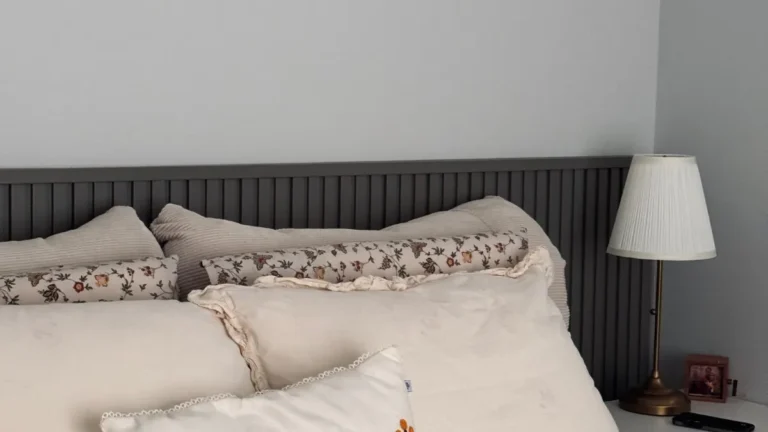
Upholstered Headboard Guide: Foam Thickness, Fabric, Height, Wall-Mounted vs Frame-Mounted and Cleaning
Quick answer: an upholstered headboard is padded and covered in fabric or leather, so you can lean on it comfortably. One source gives at least 5 cm (about 2 inches) of foam as the functional minimum for leaning, high-density foam lasts longer, a tight weave is easier to clean and you can mount it to the frame or the wall. Fabric headboards need regular vacuuming and spot cleaning.
This article is part of our bed frame guide, where you can compare related options.
An upholstered headboard softens a bed, protects the wall and gives a comfortable backrest for reading. It can be tufted, channeled, plain, tall or low. But the details matter: foam thickness, fabric, height and how it attaches change how it looks and lasts. This guide explains how to choose foam and fabric, size and height, mounting, cleaning and common problems. It overlaps with the bed frame with headboard guide, which covers headboard types and standard widths, so see that for size charts.

Why Choose Upholstered?
Comfort for sitting up. One retailer rates upholstered headboards much better for sitting up in bed (see the bed frame with headboard guide). Soft, warm look. Many fabrics and colors. Pairs with pillows and bedding. See the bedding sets and decorative pillows guides. Can be tufted, channeled or paneled.
Size and Height
Match the headboard width to the bed frame, and consider room size and ceiling height so it sits in proportion, per one guide. Very tall headboards look great with high ceilings but will dominate a smaller room. For height, one source says to base it on your own sitting position. Taller people need a higher headboard to lean back comfortably, while shorter people or children need less. Another suggests measuring the room, bed and mattress before choosing. Adjustable-height models exist, and one example allows fitting anywhere between 34 and 46 inches. For a full-size bed, one size chart lists about 56 inches wide. A queen mattress is 60 inches, so a queen headboard should be at least that wide.
See the bed frame with headboard, king vs queen, twin vs full and full size bed dimensions in feet guides for widths.
Foam Padding
For leaning against it, one source gives at least 5 cm (about 2 inches) of foam as the functional minimum. Medium-density foam that gives slightly but keeps its shape offers more sustained support than very soft foam that compresses to nothing. Cheaper upholstered headboards often use lower-quality construction, fabric and padding, which can wear down faster. One guide recommends high-density foam. If the headboard is for decoration rather than reading in bed, one source says thinner or no padding will do.
See the best memory foam mattress guide for foam density terms.
Fabric
One source recommends a tight weave for easier cleaning. Performance fabrics resist stains. See the couch covers for dogs and velvet couch guides. Leather or faux leather wipes clean. See the leather ottoman guide. Linen, velvet and boucle give different looks. Choose a color that hides wear, such as gray or taupe. Check abrasion ratings with the maker.
Kovi Fabrics publishes fabric and material advice for reupholstering a headboard. Check fire-retardant labels if required in your area.
Wall-Mounted vs Frame-Mounted
Frame-Mounted
Attach to the bed frame, usually with brackets or bolts. Changing frames can create incompatible mounting points. Typical steps: slide the bed away from the wall, align the headboard’s mounting points with the frame and fasten them with bolts or screws, with a helper holding the frame steady.
Wall-Mounted
Attach to the wall and stay fixed when the frame changes. They can fit any type of bed, but installation requires some wall damage. One guide recommends a French cleat or heavy-duty bracket, noting that it does not touch the bed frame, which means no wobbling. Installing a wall-mounted headboard means finding studs or using anchors. See the floating nightstand and floating bathroom vanity guides for stud and anchor tips.
Headboards meant to bolt into wood or metal frames usually will not fit a divan base.
Cleaning
Fabric is the hardest material to clean. Genuine fabric headboards usually need spot cleaning or professional upholstery cleaning for significant marks. Fabric collects dust and pet hair. Regular vacuuming and quick spot cleaning usually handle it, according to one retailer. Tufts and folds need extra attention when cleaning.
No source covered the specific cleaning products or how often to clean, so consult the manufacturer’s care label for those details. Test on a hidden area. For deep cleaning, ask a professional.
Common Problems
Flattening foam. Cheap foam compresses with use. Wobble. Poor mounting or loose bolts. Tighten hardware. See the how to stop squeaky bed guide. Marks on the wall from the headboard. Add felt pads. Stains and oils. Use a throw pillow or a headboard cover. Gap between mattress and headboard. Pillows fall. Use a wedge filler.
What are the main strengths and weaknesses?
On the plus side: comfortable backrest; soft, stylish look; many fabrics and shapes; protects walls. On the downside: harder to clean than wood or metal; cheap foam flattens; mounting compatibility issues; fabric can attract dust and pet hair.
How to Choose an Upholstered Headboard
Match the width to your bed. Choose a height that suits your sitting position and ceiling. Check foam: at least 2 inches, high density. Choose a tight-weave or performance fabric. Choose frame-mounted or wall-mounted. Check mounting compatibility. Plan cleaning habits. Match style and color. Read reviews. Check the return policy.
What mistakes should you avoid?
A few common mistakes are worth avoiding: choosing paper-thin padding for a backrest; ignoring mounting compatibility; picking a very light fabric that stains; setting height without sitting up; wall-mounting without studs; not planning cleaning.
Frequently Asked Questions
How thick should the foam be?
At least about 5 cm (2 inches) for leaning, per one source.
What fabric is easiest to clean?
A tight weave, per one source. Performance fabrics help.
How tall should it be?
It depends on your sitting position and ceiling height. Adjustable models fit 34 to 46 inches in one example.
Wall-mounted or frame-mounted?
Wall-mounted stays fixed when you change frames. Frame-mounted is simpler.
How do I clean it?
Vacuum and spot clean. Check the care label.
Does it fit any bed?
Not always. Check mounting compatibility.
Conclusion
An upholstered headboard makes a bed comfortable and beautiful when you choose good foam, a tight-weave fabric and the right mounting. Aim for at least 2 inches of foam, match the width and base the height on your sitting position.
Vacuum regularly and spot clean per the label. A well-made upholstered headboard becomes the best part of your bedroom.
Related guides
 Queen Headboard Guide: Size, Height, Types and How to Attach OneA headboard does more than look good. It protects the wall from pillows, gives you something to lean on and…Read more →
 Bed Frame with Headboard Guide: Wood, Metal and Upholstered Types, Headboard Height, Width and AttachmentQuick answer: a bed frame with a headboard combines the base and the headboard in one piece. Headboard width…Read more →
 Upholstered Bed Frame: Pros, Cons, Fabrics, Care and How to ChooseAn upholstered bed frame makes a bedroom feel soft and finished. The padded headboard gives you something…Read more →
 Headboard Pillow: Wedge Backrest Sizes, Fill, Covers and How to Pick OneA headboard pillow, also called a wedge or bed backrest pillow, is a large triangular cushion that sits between…Read more →