Water Beds Guide: Hardside vs Softside, Waveless Baffles, Heaters, Weight and Floor Load
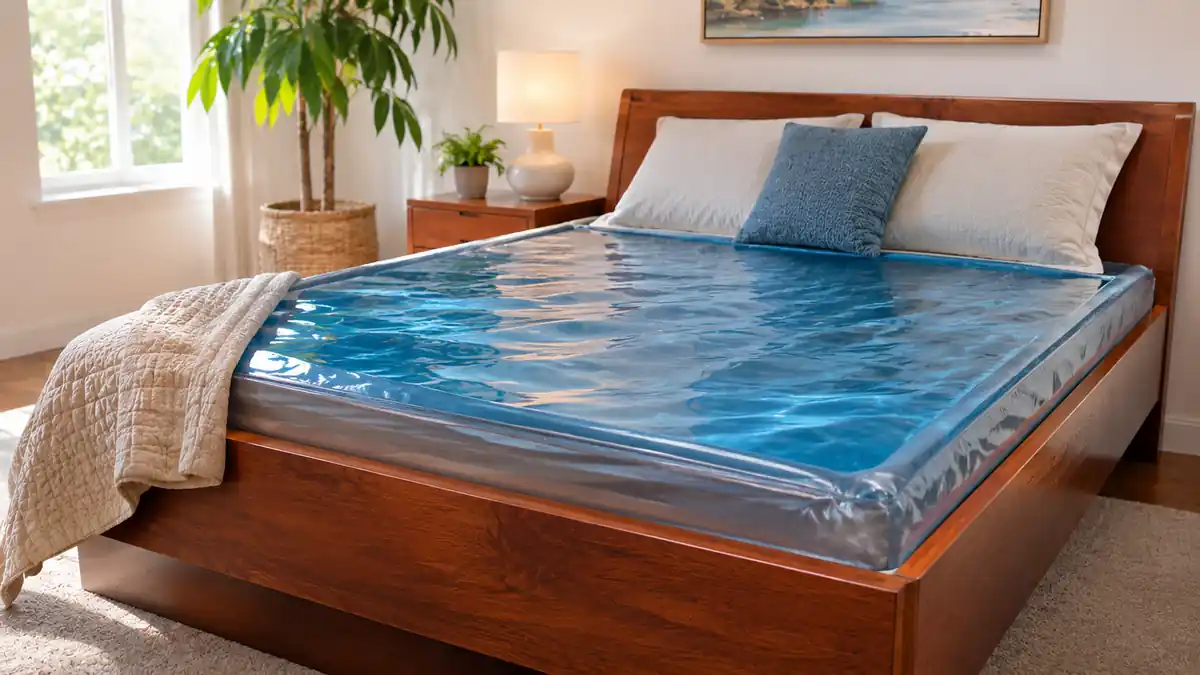
Quick answer: a water bed is a mattress filled with water in a vinyl bladder. Hardside beds use a heavy wooden frame, softside beds look like regular upholstered beds, modern softside models are usually waveless or semi-waveless, and a heater is needed or the bed feels cold. A filled water bed is very heavy, so confirm the weight with the maker and check your floor’s load capacity.
This article is part of our bed frame guide, where you can compare related options.
Water beds were a 1970s and 1980s icon, and they still exist. Fans like the supportive, adjustable feel and the warmth. Critics point to weight, upkeep and the hassle of moving. This guide explains how water beds work, hardside versus softside, wave control, heaters and maintenance, weight and floor load, pros and cons, costs and alternatives. One Canadian guide gave a filled queen weight that looks far too high, so I ask you to verify weights with the manufacturer. Back-pain claims vary by person and are not verified. This is not medical or structural advice.
How a Water Bed Works
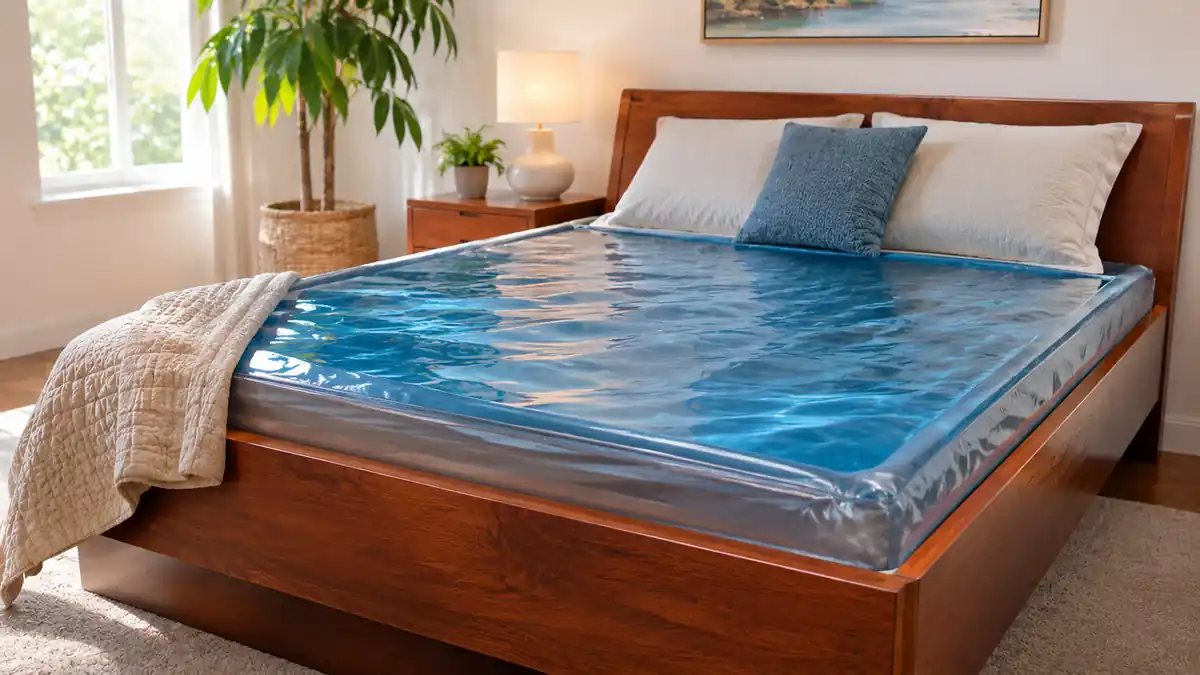
A water bed has a vinyl bladder (mattress) filled with water, a heater to keep the water at a comfortable temperature and a frame or support structure. Water conforms to your body and distributes weight. Conditioner is added to prevent algae and vinyl wear. The bed can be drained for moving. Wikipedia covers the history and design.
Hardside vs Softside
Hardside
A hardside waterbed uses a heavy external frame, usually constructed from furniture-grade hardwoods such as oak or pine. It as the original design and often the cheaper option, but frames come in unusual sizes, so standard bedding may not fit. One source says hardside beds are heavy and hard to move.
Softside
Foam and fabric form the perimeter, so the bed looks like a regular upholstered bed. It takes standard sheets and often fits existing frames. Sources conflict on weight: one says softside beds are lighter, while another calls them lighter yet more durable.
| Feature | Hardside | Softside |
|---|---|---|
| Look | Wooden frame | Like a regular bed |
| Sheets | Unusual sizes | Standard sheets |
| Weight | Heavy | Lighter (sources conflict) |
| Cost | Often cheaper | Often higher |
Softside waveless models are generally the most modern and convenient option. Hardside suits buyers who want a traditional look or lower price and can accept the frame size limits.
Wave Control
Key points: free-flow. No baffles, the most wave, like a classic water bed; semi-waveless. Some fiber inserts reduce motion; waveless. Many layers of fiber or baffles minimize motion.
One source notes most softside mattresses are designed to be waveless or semi-waveless, so buyers wanting full wave may be disappointed. Waveless models feel more like a firm, supportive mattress. Sleep Information writes about shallow-fill tube beds.
Heater and Maintenance
Heaters matter. One source says without a heater, waterbeds are quite cold. A heater keeps water around body temperature. Check the heater’s thermostat and safety features. Insulation pads and a liner are commonly recommended. Liners catch leaks and protect the floor. Conditioner is added periodically to protect the vinyl and prevent algae. Repair kits patch small leaks. Vinyl can have an odor when new, and the fill plug can be hard to undo.
Check manufacturer instructions for conditioner amounts and schedules.
Weight and Floor Load
A filled water bed is heavy. One Canadian guide says a filled queen-size waterbed weighs approximately 750 to 900 kilograms. That figure is much higher than other typical estimates I would expect, so verify it with the manufacturer before relying on it. Another source notes that draining a California king waterbed weighing around 2,000 kilograms can be physically draining. Check your floor’s load capacity before buying, especially on upper floors or older buildings. Ask a structural engineer or contractor if unsure. Do not guess.
Pros
Support and comfort. A waterbed removes pressure from the spine and can provide relief to those with back pain, but the benefit varies by person. I did not verify the claims. Ask a doctor about back pain. Modern waveless and semi-waveless designs with lumbar reinforcement are described as more supportive than older free-flow beds. Adjustable firmness by changing the fill. Temperature control with a heater. Hygiene. The vinyl can be wiped clean, per some sellers (general).
Cons
Key points: weight and moving difficulty. Draining and refilling are chores; ongoing costs. Heater, conditioner and occasional repairs. One guide says these can make the total cost comparable to a conventional innerspring mattress, though that is a sales-oriented claim; odor and plug issues; heat and electricity use; leak risk; not for everyone; fewer retailers.
Costs
I did not find reliable current prices. Costs depend on size, type and brand, plus conditioner and heater costs. Compare the total cost with other mattress types. See the best affordable mattress and best memory foam mattress guides.
Alternatives
Memory foam or latex. See the best memory foam mattress and best cooling mattress guides. Air beds with adjustable firmness. Different from inflatable guest beds. See the inflatable mattress guide. Adjustable bases. See the adjustable mattress guide. Firm mattresses. See the best firm mattress guide.
Safety Notes
Key points: check the heater for certifications, and keep electricity away from water; use a liner to protect floors; check the floor structure; don’t puncture the bladder with sharp objects; follow draining instructions; if you have health conditions, ask a doctor.
How to Choose a Water Bed
Check your floor’s load capacity with a professional. Choose hardside or softside. Choose wave control: free-flow, semi-waveless or waveless. Choose a heater and liner. Check sheet fit. Plan maintenance: conditioner, repair kit. Check delivery and setup. Check the warranty. Read independent reviews. Compare total cost.
What mistakes should you avoid?
A few common mistakes are worth avoiding: skipping the floor load check; trusting unverified weight numbers; buying free-flow when you wanted stability; forgetting the heater; not using a liner; underestimating moving effort.
Frequently Asked Questions
What is a water bed?
A mattress with a water-filled vinyl bladder, usually heated.
What is the difference between hardside and softside?
Hardside has a wooden frame. Softside looks like a regular bed with foam sides.
Do water beds have waves?
Older free-flow beds do. Most softside models are waveless or semi-waveless.
How much does a water bed weigh?
A lot. One guide gives an extremely high figure that should be verified. Ask the maker.
Do I need a heater?
Yes, or the bed is cold.
Do water beds help back pain?
Some people say so, but benefits vary. Ask a doctor.
Conclusion
A water bed offers a unique, supportive feel, but it needs a heater, upkeep and a strong floor. Decide between hardside and softside, pick the wave control you want and confirm weight with the maker.
If you love the feel, a modern waveless softside bed is the easiest choice.
Related guides
 Water Bed: How It Works, Hardside vs Softside, Pros, Cons and CostWater beds were everywhere in the 1980s. Today they re rare, but they haven t disappeared. People still buy…Read more →
 Bunk Beds: Types, Safety Rules and How to Choose the Right OneBunk beds save floor space and give kids a fun place to sleep. They re a classic choice for shared rooms,…Read more →
 Chair Bed: Folding Sleeper Chair Sizes, Mattress Thickness and Weight LimitsA chair bed is a chair that unfolds into a thin guest bed. Guest-oriented models often have a mattress about 49…Read more →
 Bed in a Bag: What’s Included, Sizes and How to Check QualityA bed in a bag is a full set of bedding sold as a single purchase. It usually includes a comforter, a fitted…Read more →