Twin Loft Bed Guide: Dimensions, Ceiling Height, Guardrail Height, Mattress Thickness and Weight Limits
Quick answer: a twin loft bed holds a twin mattress (about 38 by 75 inches) on a raised frame with open space below. Most are about 70 to 72 inches tall and need roughly 30 to 36 inches between the mattress and the ceiling. Guardrails should rise at least 5 inches above the mattress, and listings say loft beds are recommended for children ages 6 and older.
This article is part of our bed frame guide, where you can compare related options.
A twin loft bed turns wasted space into a desk, a play zone or storage. It is a smart move for small kids’ rooms and dorm-style spaces. But a raised bed is also a safety piece: guardrails, mattress thickness, weight limits and ceiling height all matter. This guide explains typical dimensions, ceiling clearance, guardrail and mattress rules, weight ratings, age guidance and how to choose. This is not safety certification advice. For full-size lofts, see the full size loft bed guide.
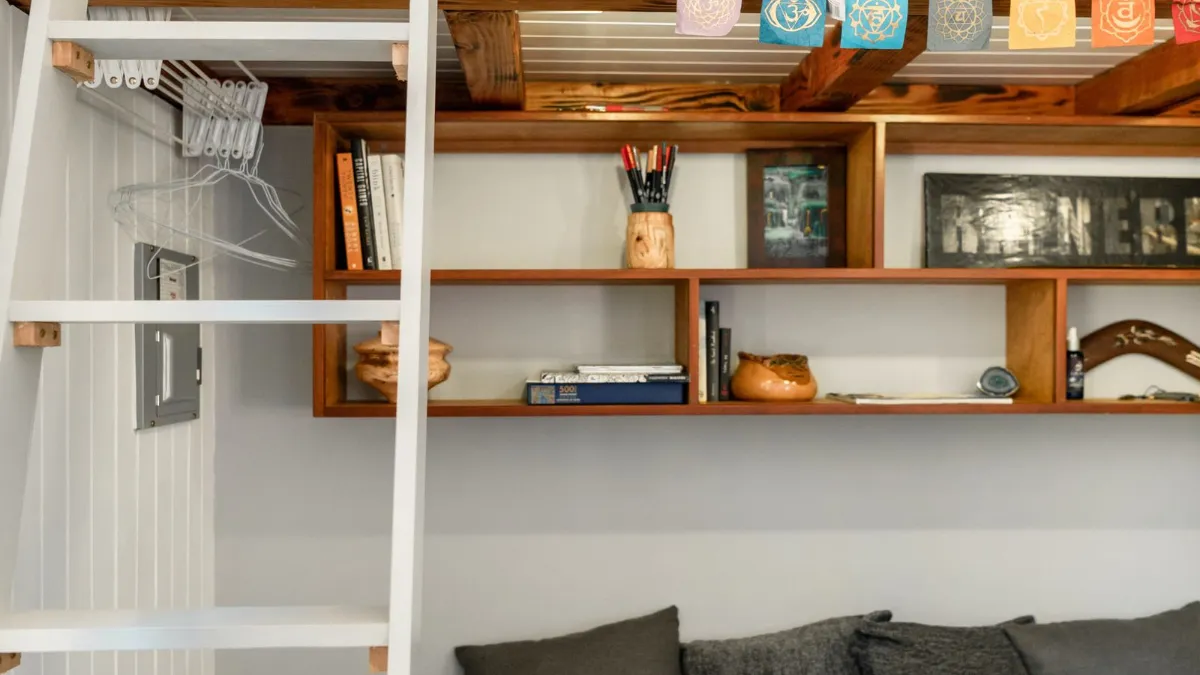
Typical Dimensions
Retailers describe twin lofts as follows: A typical twin mattress size is 74 to 75 inches long by 37.5 to 38.5 inches wide. Most beds are about 70 to 72 inches tall. Low lofts sit lower, and high lofts sit higher, with more room below.
Check the exact frame size, which is wider and longer than the mattress. See the twin mattress dimensions and how wide is a twin bed guides.
Ceiling Height
Sellers generally recommend 30 to 36 inches of clearance between the top of the mattress and the ceiling. Some suggest a minimum ceiling height of 8 feet (96 inches), and one recommends 9 feet. With a bed frame of about 70 to 72 inches, an 8-foot ceiling leaves about 24 to 26 inches above the frame top (my arithmetic), not counting the mattress. So check the maker’s minimum.
Also consider: ceiling fans, lights and sprinklers; sloped ceilings; a child’s height when sitting up; whether you need extra height to assemble.
Low Loft vs High Loft
| Type | Pros | Cons |
|---|---|---|
| Low loft | Fits lower ceilings, easier to climb | Less room underneath |
| High loft | More space below for a desk or sofa | Needs high ceilings, taller climb |
For younger kids, a lower loft is easier and safer. Delta Children, for example, sells a low twin loft bed with a guardrail and ladder.
Guardrails
Listings say the top of the guardrail should sit at least 5 inches above the mattress surface. This is why mattress thickness matters. Check: guardrails on all open sides; no large gaps where a child could get stuck; a solid ladder or stair with a secure attachment; handholds.
Mattress Thickness
Limits differ by product: one listing allows up to 6 inches; another says the mattress should not exceed 8 inches; another caps it at 4 inches or less.
So use the model’s rule. Thin foam mattresses are common on lofts. See the best memory foam mattress guide. Do not use a box spring or add a thick topper unless the maker allows it, because the guardrail will no longer be tall enough above the mattress.
Weight Limits
Weight ratings vary.
Many models are rated for about 220 to 250 pounds. One listing gives a maximum weight up to 485 pounds. A seller says its twin and full beds hold 800 pounds, based on internal testing, which I treat as a seller claim.
Check the rating for adult use. For adults, see the bunk beds for adults guide. Also account for weight that goes on the bed, such as bedding and friends.
Age Guidance
Several listings say the upper bunk or loft is meant for children 6 and older, citing CPSC guidance. One says loft beds and the top bunks of bunk beds are recommended for children 6 years of age and older. I relayed this from listings, so confirm it on CPSC.gov and in the manual.
Younger kids can use a low bed or a floor bed instead. See the kids bed guide.
What Fits Underneath
Key points: desk and chair. See the writing desk, small desk and L shape desk guides; dresser or wardrobe. Anchor tall pieces. See the tall dresser guide; reading nook. A bean bag, pouf or small sofa. See the pouf ottoman and kids couch guides; play zone; vanity. See the vanity table guide; storage bins.
Many twin lofts come with a built-in desk, drawers or a wardrobe. Check clearance.
Safety Checklist
Key points: read the manual before assembly; tighten all bolts after assembly, then recheck regularly; place on a flat floor away from windows and fans; teach kids to climb facing the ladder, one at a time; no jumping, roughhousing or hanging items from rails; use a night light near the ladder; keep cords and ropes away; check for recalls on CPSC.gov; consider attaching to a wall stud if the maker allows.
Wood vs Metal
Key points: wood. Warm and sturdy, can be heavy; metal. Slim, often cheaper, check for sharp edges and sturdy welds; mixed.
Check reviews for wobble and squeaks.
What are the main strengths and weaknesses?
On the plus side: frees floor space; adds a desk or play area; fun for kids; smaller and lighter than a full loft. On the downside: needs ceiling height; climbing risk; making the bed is harder; mattress and weight limits apply; not for young children.
How to Choose a Twin Loft Bed
Measure the ceiling and obstacles. Check the maker’s minimum ceiling. Choose low or high loft for the child’s age. Check guardrail height and mattress limits. Check the weight rating. Choose ladder or stairs. Plan what goes underneath. Check materials and reviews. Check CPSC age guidance. Plan assembly.
What mistakes should you avoid?
A few common mistakes are worth avoiding: ignoring ceiling height; using a thick mattress or box spring; ignoring weight and age guidance; not tightening bolts; placing under a fan or light; buying a loft for a young child.
Frequently Asked Questions
How tall is a twin loft bed?
Most are about 70 to 72 inches tall.
How high should the ceiling be?
Sellers recommend 30 to 36 inches above the mattress and a minimum of 8 to 9 feet.
How thick can the mattress be?
It depends on the model: 4, 6 or 8 inches are common limits.
How tall should the guardrail be?
At least 5 inches above the mattress surface.
What age is a loft bed for?
Listings say 6 and older. Confirm on CPSC.gov.
How much weight can it hold?
Many hold 220 to 250 pounds. Some claim more. Check the manual.
Conclusion
A twin loft bed is a great space-saver when you choose it carefully. Check the ceiling height, guardrails, mattress limits and weight rating, follow age guidance and tighten the hardware.
Plan what goes underneath and enjoy the extra room. Safety first makes a loft a lasting favorite.
Related guides
 Loft Beds Guide: Sizes, Ceiling Clearance, Guardrails, Age Limits and Space-Saving LayoutsA loft bed lifts the mattress high off the floor and leaves the space underneath free. That space can hold a…Read more →
 Twin Bed: Sizes, Types and How to Choose the Right OneA twin bed is the classic choice for kids rooms, guest rooms and small spaces. It takes up little floor space,…Read more →
 Loft Bed: Types, Ceiling Height, Weight Limits and SafetyA loft bed lifts your mattress up high and gives you floor space underneath. That space can hold a desk, a…Read more →
 Twin vs Full Bed: Size (38 vs 54 Inches), Room Needed, Who Each Suits and CostQuick answer: a twin bed is 38 inches wide and 75 inches long. A full bed is 54 inches wide and 75 inches long.…Read more →