Water Bed: How It Works, Hardside vs Softside, Pros, Cons and Cost
Water beds were everywhere in the 1980s. Today they’re rare, but they haven’t disappeared. People still buy them for the floating feel, the even support and the ability to control the temperature. They also come with extra work: filling, conditioning, heating and a lot of weight.
This article is part of our bed frame guide, where you can compare related options.
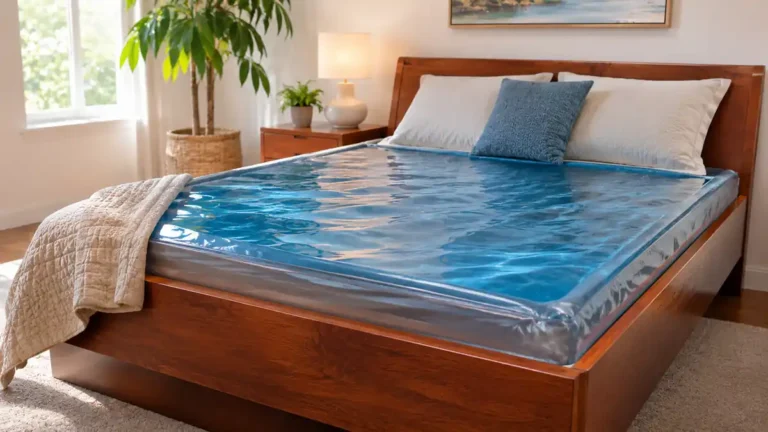
A water bed is a bed with a vinyl bladder filled with water instead of foam or springs. The bladder sits inside a frame, and the water moves as you do. Many have a heater that keeps the water at a comfortable temperature.
This guide explains how water beds work, the types, the pros and cons, the weight and heater issues, the maintenance and the cost. You’ll also find a comparison table and answers to common questions.

How Does a Water Bed Work?
A water bed has a vinyl water mattress, a frame, a heater and a safety liner. You fill the mattress with water, add a conditioner and set the heater to a comfortable temperature. When you lie down, the water shifts to support the shape of your body.
The water spreads weight evenly. Some people like the feeling of floating. Others find it too wobbly. Water beds have a “wave” feel unless the mattress is made to reduce motion.
Types of Water Beds
Hardside water bed: the water mattress sits in a rigid wooden frame that holds its shape. Hardside beds are often non-standard sizes and are hard to move. Softside water bed: the water bladder sits inside a foam and fabric shell that looks like a regular mattress. Softside beds can often use a standard frame and standard sheets, which is a big practical advantage. One source says softside models generally take standard sheets and sizes. Free-flow (full-motion): the classic wave feel with lots of movement. Semi-waveless: baffles or fiber inside reduce motion. One source says semi-waveless designs cut motion by about 50 percent. Waveless (ultra-waveless): heavy internal fiber or baffles reduce motion by 95 percent or more, according to one source. These feel closer to a regular mattress.
| Type | Feel | Sheets | Notes |
|---|---|---|---|
| Hardside | Floating, wobbly | Often non-standard | Heavy, hard to move |
| Softside | Closer to a regular mattress | Standard | Common today |
| Free-flow | Lots of motion | – | Classic feel |
| Semi-waveless | Moderate motion | – | Balance |
| Waveless | Very little motion | – | Best for couples |
Pros of a Water Bed
Even support: the water spreads your weight evenly and may reduce pressure points. Some people say it helps with back pain, but that claim is not well established, so ask a doctor if you have medical concerns. Temperature control: a heater lets you warm the bed, which many people enjoy on cold nights. Vinyl surface: one source notes that vinyl doesn’t harbor dust mites the way fabric and foam surfaces can. Long-lasting bladder: a well-cared-for water mattress can last many years.
Cons of a Water Bed
Weight: water is heavy. Estimates vary widely. One source says mattresses hold about 80 to 235 US gallons of water, which could bring the weight of the whole bed to over 2,000 pounds. A king-size figure of 1,700 to 2,100 pounds appears in another source. Some lower figures in other sources look inconsistent with the volumes they cite. Treat the numbers as rough, and have your floor checked by a professional. Hard to move: moving a water bed means draining it and refilling it. They don’t come in standard sizes like regular mattresses (hardside types). Maintenance: you need to add water conditioner regularly to stop algae and bacteria, burp out air bubbles and monitor the heater. Leak risk: a puncture or seam failure can release a large amount of water. A safety liner under the mattress is required to catch leaks. Energy use: heating costs money. One source estimates 300 to 1,500 kWh per year, or about $36 to $180 at 12 cents per kWh. Another says 100 to 250 Swiss francs per year. Limited choices: fewer stores sell water beds today, and modern foams give similar pressure relief without electricity, weight or maintenance, according to one source.
The Heater
Heaters are optional but common. Without one, the bed feels cold and you lose some of the body-contouring benefit. The target temperature is usually cited around 78 to 90 degrees Fahrenheit. A thermostat controls it.
One source recommends replacing your heater every five years or according to the manufacturer’s instructions. Always use a heater that’s made for water beds, and follow the safety instructions. Never use it if the cord or controller is damaged.
Water Bed Maintenance
Add conditioner. To add water conditioner regularly to prevent algae and bacteria. One says to change the water every few years. Burp the mattress. Remove trapped air bubbles using the fill valve. Check the heater and thermostat. Make sure it works properly. Inspect for leaks. Look for damp spots or wet carpet. Wipe the vinyl. Clean it with mild soap and water. Keep sharp objects away. Pets’ claws and sharp furniture can cause punctures.
Follow the manufacturer’s instructions for the products to use.
How Much Does a Water Bed Cost?
Prices vary by source and region, and some cost pages I found looked generic. Regional guides cite a queen softside at about $800 to $1,500, a hardside frame plus mattress at $400 to $800, and a heater at $60 to $150. Another guide lists the mattress at about $299 to $999 with the frame at $120 to $800.
When you add up the total cost of ownership over five years, a water bed is not necessarily cheaper than a quality innerspring or hybrid mattress, according to one source. Ongoing maintenance, electricity and replacement parts add up.
Should You Buy a Water Bed?
A water bed may suit you if you love the floating feel, like to control your bed temperature and don’t plan to move often. A waveless softside model is the most practical for most people.
It may not suit you if you rent, move often, worry about floor weight, dislike maintenance or share the bed with a partner who doesn’t like motion. Many people find that a modern memory foam or hybrid mattress gives comfort without the extra work.
Checklist Before You Buy
Check your floor. Ask a professional about the weight, especially on upper floors. Check your lease. Many landlords and insurance policies restrict water beds. Choose softside or hardside. Pick the wave level. Waveless for less motion. Plan for the heater and safety liner. Budget for conditioner and upkeep. Check the warranty on the bladder and the heater. Plan delivery and setup. Filling takes time.
Frequently Asked Questions
How does a water bed work?
A vinyl bladder filled with water supports your body. The water moves as you do, and a heater keeps it warm.
What is the difference between hardside and softside water beds?
Hardside beds use a rigid wooden frame, and softside beds use a foam and fabric shell that looks like a normal mattress. Softside beds often take standard sheets.
How much does a water bed weigh?
Very heavy, often well over 1,000 pounds when filled, and some estimates are above 2,000 pounds.
Do water beds need a heater?
Not required, but common. Without one, the bed feels cold.
Are water beds good for back pain?
Some people like the even support, but the claim is not well established. Talk to a doctor.
Can you still buy a water bed?
Yes, from specialty retailers, but fewer stores carry them than in the past.
How do you move a water bed?
Drain it, move the frame and parts, then refill it. It’s a big job.
Conclusion
A water bed offers even support, temperature control and a floating feel, but it also brings weight, maintenance and extra cost. Softside, waveless models are the most practical choice today.
Check your floor, lease and budget, and plan for conditioner, a heater and a safety liner. If you want comfort without the upkeep, a modern foam or hybrid mattress may be a simpler choice.
Related guides
 Water Beds Guide: Hardside vs Softside, Waveless Baffles, Heaters, Weight and Floor LoadQuick answer: a water bed is a mattress filled with water in a vinyl bladder. Hardside beds use a heavy wooden…Read more →
 Bunk Beds: Types, Safety Rules and How to Choose the Right OneBunk beds save floor space and give kids a fun place to sleep. They re a classic choice for shared rooms,…Read more →
 Chair Bed: Folding Sleeper Chair Sizes, Mattress Thickness and Weight LimitsA chair bed is a chair that unfolds into a thin guest bed. Guest-oriented models often have a mattress about 49…Read more →
 Bed in a Bag: What’s Included, Sizes and How to Check QualityA bed in a bag is a full set of bedding sold as a single purchase. It usually includes a comforter, a fitted…Read more →