Air Mattress: How to Choose One, Inflate It and Fix Leaks
An air mattress is a handy bed for guests, camping trips and moves. It packs small, inflates fast and costs less than a regular mattress. But it also has a bad reputation. Many people wake up on the floor in the middle of the night after the bed slowly lost air.
This article is part of our mattress buying guide, where you can compare related options.
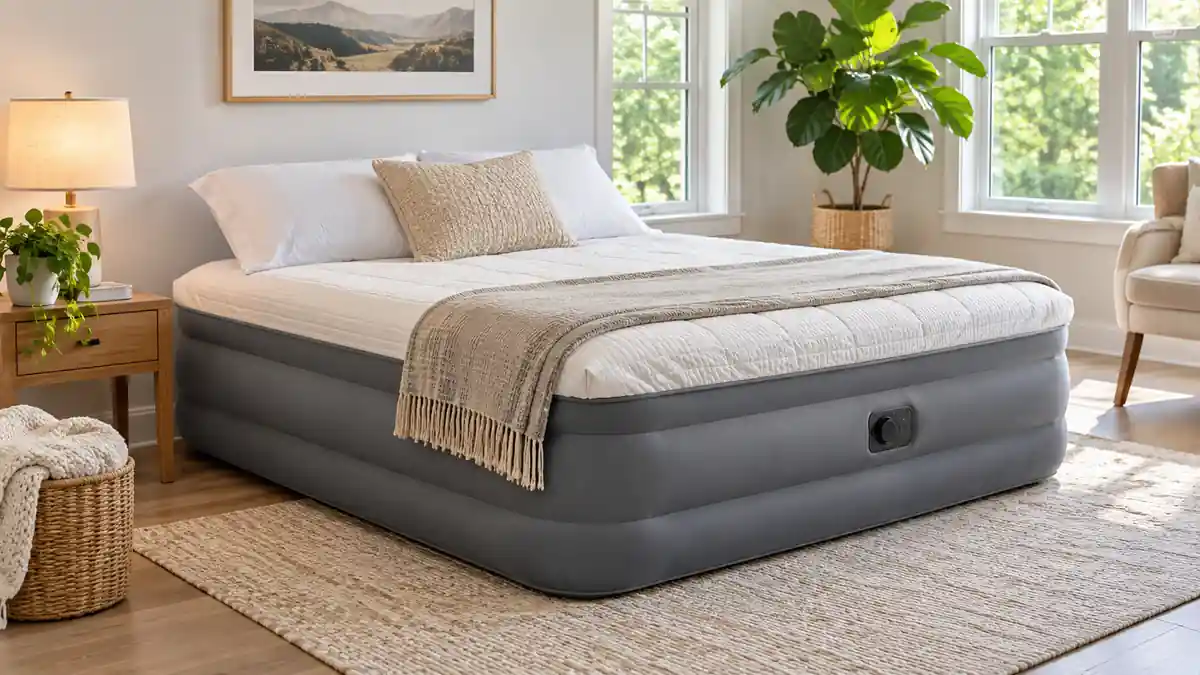
An air mattress, sometimes called an air bed, is a mattress made of tough plastic or vinyl that you fill with air. Some use a separate pump. Others have a built-in electric pump. Many come with a repair kit and a carry bag.
This guide helps you choose a good air mattress, inflate it the right way and fix common problems. You’ll also learn why air mattresses lose air overnight and how to tell a real leak from normal changes in the air.
How to Choose an Air Mattress
Start with how you’ll use it. A guest bed that lives in a closet has different needs than a bed for a camping trip. Think about size, height, pump type and material before you buy.
Size: air mattresses come in twin, full, queen and king sizes, like regular beds. Measure the space and check the bed’s width and length. A queen suits two adults, while a twin suits kids or a single guest. Height: a low mattress sits close to the floor and is easier to store. A raised one sits about as high as a regular bed. Taller models are easier to get in and out of, especially for older guests. Pump type: built-in pumps are easy because you just press a button. Separate pumps can be a manual, battery or electric type. If you camp, check that the pump can run on batteries or a car outlet, since you may not have a wall socket. Material and top surface: look for thick vinyl or PVC with a soft, flocked top. The flocked top feels better and keeps sheets from sliding around. Thicker material usually resists punctures better. Weight capacity: check the maximum load. If it’s a couple’s bed, the rating needs to cover both sleepers. Going over the limit can cause leaks or seam failures. Extras: some models include a headboard, a carry bag, a repair kit and a deflate setting. These small extras make the bed easier to live with.
| Feature | Best for guests | Best for camping |
|---|---|---|
| Pump | Built-in electric | Battery or manual |
| Height | Raised | Low and light |
| Material | Soft flocked top | Tough, puncture-resistant |
| Storage | Compact bag | Very packable |
How to Inflate an Air Mattress the Right Way
A bed that’s inflated well lasts longer and sleeps better. Follow these steps.
- Check the floor. Remove sharp objects like pins or staples. Put a blanket or rug under the bed to protect it.
- Unfold and open the valve. Lay the mattress flat. Open the valve, then connect the pump.
- Inflate in a room at normal temperature. If the air is cold, the mattress can shrink later when the air warms or cools. Aim for room temperature.
- Let the material stretch. New vinyl stretches in the first hours. Stop when the bed feels firm but not rock hard.
- Check the maker’s maximum. Don’t overinflate. A bed that’s too tight is more likely to leak at the seams.
- Close the valve fast. Pull out the pump and close the valve right away so you don’t lose air.
- Top up after a few hours. Many beds need a little extra air once the material has relaxed.
Why Does an Air Mattress Deflate Overnight?
Air mattresses lose air for a few reasons. Some are normal, and some mean you have a real problem.
Temperature changes: cold air shrinks. If the room cools down at night, the air inside takes up less space and the mattress feels softer. It can look like a leak even when nothing is wrong. Material stretch: new vinyl stretches during the first night or two. The bed feels softer even though no air has escaped. No bed is perfectly airtight: valves and seams let tiny amounts of air out over time, especially with heavy use. Valve problems: a valve that isn’t fully closed or has a worn seal can leak. This is one of the most common culprits. Punctures and tears: small holes from sharp objects, pets or rough floors let out air. Seams can also split if the bed is overinflated or overloaded. Weight: heavy loads and sleepers who move a lot add strain to the seams.
How to Find and Fix a Leak
If your bed loses a lot of air, look for a leak. A simple soapy water test works well.
- Inflate the mattress fully. A firm bed makes leaks easier to find.
- Check the valve first. Spray or brush soapy water on the valve. If bubbles appear, the valve may be leaking. Make sure it’s closed tightly.
- Check the seams and surface. Work in sections and watch for bubbles or listen for a hissing sound.
- Mark the hole. When you find bubbles, mark the spot with a pen.
- Clean and dry the area. Wipe off the soap and let the spot dry fully.
- Apply the patch. Use the repair kit that came with the bed. Follow the instructions, press it flat and let the glue cure before inflating.
- Wait before using. Give the patch the time listed in the kit. Don’t overinflate to make up for a poor repair.
If the valve is the problem, some models allow you to replace it. If the bed has multiple leaks or long splits, replacing it is often easier than patching.
Tips to Make an Air Mattress More Comfortable
Add a mattress topper or a thick blanket under the sheet. This gives the surface more cushion and adds a layer of insulation. Cold air under the bed can make it feel chilly, so a blanket helps in winter or in a cool basement.
Use fitted sheets that match the mattress size, and tuck them tight so they don’t slip. Place the bed against a wall to stop it from sliding, and keep pets with sharp claws away from it. If you share the bed, a firmer setting reduces rolling toward the middle.
Check the air level in the evening. If the bed feels soft at bedtime, add a little more air. It’s better to fine-tune it early than to wake up on the floor.
How to Store an Air Mattress
Storing a bed properly helps it last. Deflate it fully and let it dry if it got damp. Fold it along the lines in the maker’s guide, and avoid sharp creases that can crack the vinyl. Store it in the carry bag in a cool, dry place away from sharp objects.
Avoid very hot or very cold storage, since extreme temperatures can weaken the material. Keep the pump and repair kit with the bed so you can find them next time.
Frequently Asked Questions
Why does my air mattress keep deflating?
The cause could be temperature changes, material stretch, a loose valve, a puncture or an overloaded seam. Start with the valve, then do the soapy water test to look for holes.
How do I find a hole in an air mattress?
Inflate it fully, then brush soapy water over the surface and valve. Bubbles show where air is escaping. Mark the spot, dry it and patch it with a repair kit.
How long should an air mattress stay inflated?
A good bed should hold most of its air overnight. Expect it to feel a bit softer after the first night as the material stretches. Large changes may mean a leak.
Can I use an air mattress every night?
Some are made for regular use, and many aren’t. Check the maker’s guidance. Daily use puts more wear on seams and valves.
Should I fill an air mattress all the way?
No. Stop when it feels firm and stay under the maker’s limit. An overinflated bed can leak at the seams.
What’s the best air mattress for guests?
Look for a raised, queen-size model with a built-in pump and a flocked top. Choose strong material and a weight rating that suits your guests.
Conclusion
An air mattress is a practical bed for guests and trips, and it can sleep well when you choose the right one and use it properly. Pick a size, height and pump that match how you’ll use it, and inflate it at room temperature without overfilling.
When it loses air, check the valve and do the soapy water test before you give up on it. A simple patch fixes many leaks. With careful storage, your air mattress can be ready for the next guest.
Related guides
 Best Air Mattress Guide: Built-In Pump, Coil vs Beam Construction, Height, Weight Capacity and LeaksAn air mattress is the quick-fix bed. Pull it out of a bag, plug it in and in a few minutes you have a place forRead more →
 Folding Mattress: Tri-Fold Foam Thickness, Sizes, Density and Who It SuitsA folding mattress is a foam mattress that folds into thirds so you can store it in a closet or carry it.…Read more →
 Adjustable Mattress Guide: Which Mattress Types Work on Adjustable Bases (Foam, Latex, Hybrid) and What to CheckQuick answer: most foam, latex and many hybrid mattresses work on an adjustable bed base. Casper rates memory…Read more →
 Full vs Queen Mattress: Size Difference, Couples, Room Size, Price and How to ChooseFull and queen mattresses are two of the most popular sizes in the country, and they look close on a size…Read more →