Best Cooling Mattress Topper: Latex vs Gel Foam vs Wool and How to Choose
Sources generally rank latex as the coolest topper material, gel-infused memory foam as a middle ground between contouring and breathability and wool as a moisture-wicking, natural option that’s less effective on heat than latex or gel. Hot sleepers should look for an open structure, a medium-firm feel and a thin profile. One source suggests no more than 5 centimeters (about 2 inches) thick.
This article is part of our mattress buying guide, where you can compare related options.
A topper is the cheapest way to change how a mattress feels. It can add softness, firm up a sagging bed or, in this case, help you sleep cooler. But cooling claims are easy to make and hard to prove, and cheap toppers often lose their cooling properties quickly.
This guide explains the main cooling materials, how thickness and firmness affect heat, how to handle allergies and how long toppers last. I don’t endorse specific products.
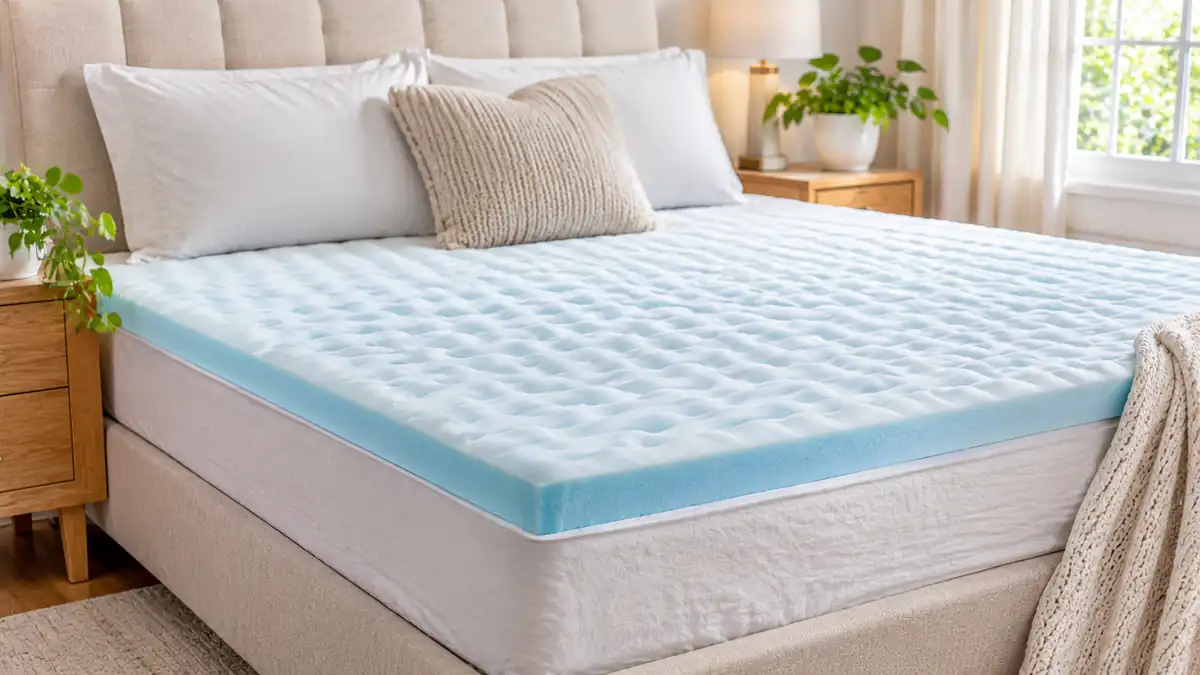
Which topper material is coolest?
Latex usually comes out on top. One guide calls latex the coolest overall, and another notes that its open structure lets air move through it. Listings rate latex excellent for cooling, though it costs more. Latex also springs back quickly, so you sit on top of it instead of sinking in.
How does gel-infused memory foam compare?
Gel foam offers a good middle ground between contouring and breathability. The gel beads or swirls are meant to pull heat away from the body. This foam lasts about three to five years, and one notes that gel’s cooling may become less effective over time. Memory foam can still trap heat, so look for open-cell or perforated designs.
What about wool, cotton and bamboo toppers?
Wool wicks moisture and breathes well, which helps you stay dry. One guide rates it breathable but generally less effective than latex or gel for heat. Cotton and bamboo covers feel cool to the touch, but reviewers describe cotton as less effective at temperature regulation than gel or latex. Copper-infused foam also appears in guides, though evidence for it is thin.
How thick and firm should the topper be?
Thinner usually means cooler. One source suggests no more than 5 centimeters thick for hot sleepers, because thick foam holds more heat. For firmness, one guide suggests medium-firm to firm for better back support and pressure relief. A very soft topper lets you sink in, which can make you warmer.
What if I have allergies?
Choose a hypoallergenic material like latex, wool or synthetic fibers, according to one guide. Check the care label for washing steps. Our waterproof mattress protector guide explains how to protect the topper and the bed from spills and dust mites.
Is a cheap cooling topper worth it?
Probably not, if cooling is your goal. One source says cheaper alternatives often lose their cooling properties quickly. A modest price may suit a guest room, but for your main bed it’s smarter to invest in a better material. Read reviews from hot sleepers, and check the return policy so you can test it for a few weeks.
Do cooling toppers work with every mattress?
Most do, but check compatibility with adjustable bases and thick mattresses. Our adjustable mattress guide covers how foam, latex and hybrid mattresses flex. A thick topper on a thick mattress can make the bed too tall for fitted sheets. Look at your sheet pocket depth first.
How do I choose a cooling mattress topper?
Start with the material. Pick latex for the best cooling and durability, gel foam for a balance of contour and cost or wool for natural moisture control. Keep the topper thin and medium-firm. Check the cover fabric and the certifications. Compare warranties, since the topper’s lifespan matters.
What else helps with sleeping hot?
A topper is only one piece. Breathable sheets matter a lot, such as cotton percale or linen, and our linen bedding guide explains why. A cooling pillow and a lighter blanket help, and our best cooling pillow and bamboo pillow guides cover those. Keep the room cool, use a fan and avoid heavy layers. If your mattress itself traps heat, a cooling mattress may be a better long-term fix, as our best cooling mattress guide explains.
These are general tips. If night sweats are new or severe, ask a doctor, because they can have medical causes.
How do I know a cooling topper is working?
Give it a few weeks. Track how warm you feel at night and whether you wake sweaty. Pay attention to the first few minutes, because many materials feel cool to the touch and then warm up. A topper that stays comfortable through the night is the real test. Use the return period if the maker offers one, and keep the packaging until you’re sure.
Care affects performance. Wash removable covers as the label says, and let foam air out. Rotate the topper if the maker advises it. Replace it when it flattens or loses its bounce, since a worn topper won’t cool or support well.
What should I know about size and fit?
Choose a topper that matches your mattress size, such as twin, full, queen or king. Check the sheet pocket depth, because a thick topper plus a thick mattress can strain standard fitted sheets. Many toppers have straps or skirts to hold them in place. If your bed has an adjustable base, make sure the topper bends with it. Our adjustable mattress and king vs queen guides cover sizes and flexibility.
What mistakes should I avoid when buying?
Don’t trust “cooling” on the label alone. Check the material and read independent reviews. Don’t buy a topper that’s too thick if you sleep hot, since thick foam holds heat. Don’t ignore the cover, because a polyester cover can undo the benefit. And don’t skip the trial period. A topper that looks perfect online may feel different at night.
Further reading: the Sleep Foundation mattress information hub.
Frequently Asked Questions
What is the coolest mattress topper material?
Latex is generally rated coolest by the sources.
Does gel memory foam stay cool?
It helps at first, but one source notes the cooling may fade over time.
How thick should a cooling topper be?
One source suggests no more than 5 centimeters.
Is wool a good cooling topper?
It wicks moisture, but it’s generally less effective on heat than latex or gel.
How long do toppers last?
Gel foam lasts about three to five years, according to sources.
Conclusion
The best cooling mattress topper depends on your budget and sleep style. Latex is the coolest, gel foam is a middle choice and wool is a natural, moisture-wicking option. Keep it thin and medium-firm if you sleep hot.
Because cooling claims vary, read independent reviews and use the return period to test your choice.
Related guides
 Best Cooling Mattress Guide: Hybrid vs Latex vs Gel Foam, Covers, Toppers and Hot Sleeper TipsQuick answer: for most hot sleepers, the best cooling mattress is a hybrid or a natural latex model, because…Read more →
 Cooling Mattress Guide: Gel Foam, Latex, Hybrid, Phase Change and What Really Keeps You CoolIf you wake up sweaty, kick off the covers and flip your pillow to the cool side all night, your mattress may…Read more →
 Best Mattress Toppers: Types, Thickness, Firmness and How to ChooseA mattress topper is a quick, lower-cost way to change how your bed feels. If your mattress is too hard, a soft…Read more →
 Best Cooling Pillow: Latex, Shredded Foam and Gel ComparedLatex and shredded fills tend to run coolest, gel-infused or graphite memory foam sits in the middle and…Read more →