Black and White Bathroom Ideas: Tile Balance, Checkerboard Floors, Warm Brass Accents and Small Bathroom Tips
Quick answer: a black and white bathroom works best when you balance the two. One guide suggests white tile brightens and widens a compact room, while black is best kept to niches, floors or small accent walls for definition. Checkerboard floors are classic and grippy, warm brass keeps the scheme from feeling clinical and today’s versions tend toward softer contrast.
This article is part of our bathroom remodel guide, where you can compare related options.
Black and white is a timeless bathroom palette: crisp, graphic and easy to mix with metals and wood. Done well, it feels elegant. Done badly, it can feel cold, busy or dated. This guide explains how to balance black and white, checkerboard floors, tile ideas, fixtures and accents, small bathroom tips, cons and how to plan. One guide’s section on why black and white can backfire in a small bathroom did not load, so I cannot report its points.
Why Black and White Works
High contrast looks clean and bold. Neutral colors pair with any metal or wood. It suits many styles: vintage, modern, farmhouse and art deco. Black tile is said to show dirt less, and it is often less likely to show dirt and stains, which can help minimize maintenance. (Seller claim; black can show water spots and dust.).
Balance: Which Color Where?
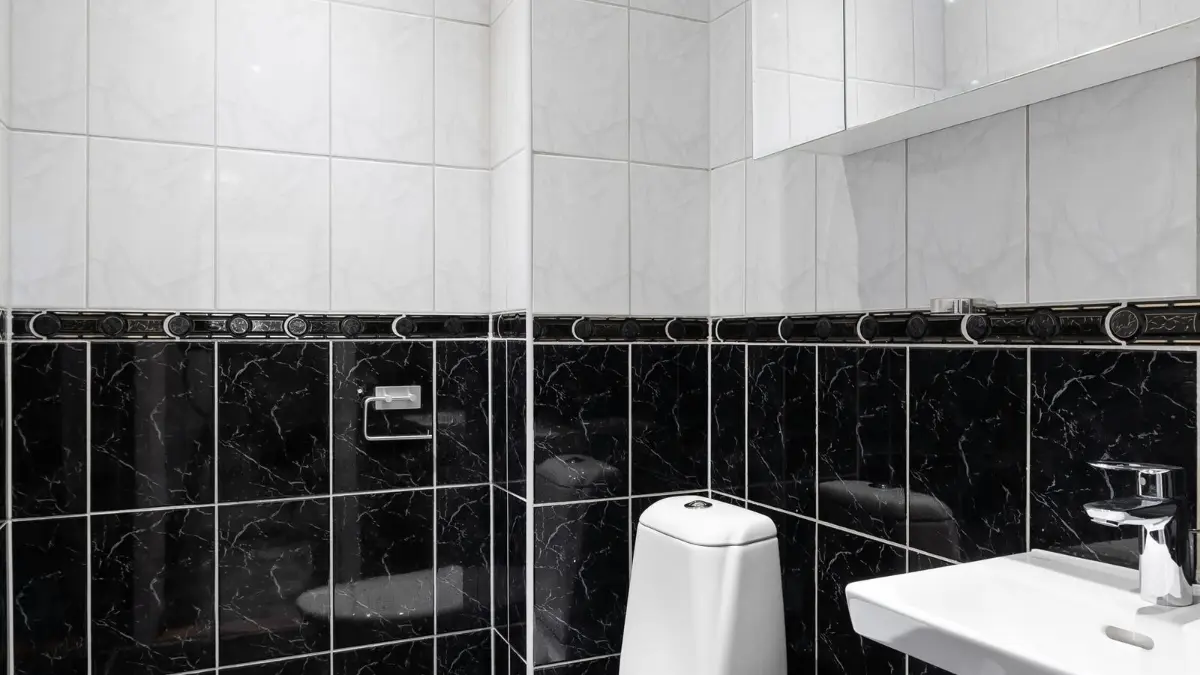
One guide suggests that in small spaces, white tile helps reflect light and visually expand the room, while black tiles can provide grounding and definition in controlled areas such as niches, flooring or small accent walls. Common approaches: Mostly white, black accents. White walls and tub, black floor or fixtures. Black floor, white walls. Grounds the room. White floor, black accent wall. Dramatic backdrop. Black vanity, white tile. A strong focal point. See the small vanity and double vanity guides. Half and half. Black lower, white upper, divided by a rail or trim. Soft contrast. Charcoal and off-white instead of pure black and white. One source says today’s versions tend toward softer contrasts, larger scales or warm neutrals instead of stark black and white.
Checkerboard Floors
Checkerboard floors are described as classic and durable choices. One retailer notes that porcelain checkerboard tiles or small hexagonal tiles replicate classic styles while ensuring durability and water resistance. More grout lines add grip underfoot, which matters for floor tile. Edward Martin discusses whether checkered tiles are good for bathrooms and which tile size is best for a checkerboard floor. Block Renovation publishes checkerboard tile flooring tips. The results did not address tile size choices for small rooms in detail, or the cost of checkerboard versus solid tile.
Tips (general): Use porcelain for water resistance. Choose a grout color that suits the tile. Grout can look busy. Lay on a diagonal for a classic look. Keep the rest of the room simple so the floor stands out.
Tile Ideas
Key points: subway tile in white with black grout; hexagon tile in black and white mosaic; penny round tile floors; black large-format tile with white fixtures; zellige or handmade tile for texture in white; marble-look tile with black veining; pattern tile accent in a shower niche.
Cle Tile publishes black and white small bathroom ideas and small black bathroom design ideas. Homestyler lists vintage black and white bathroom tile ideas.
Fixtures and Accents
Warm brass is suggested as a way to keep a black-and-white scheme from feeling clinical. Warm brass can make black and white feel collected rather than clinical. Options: brass or gold faucets, mirror frames and towel bars; matte black fixtures for a modern look; chrome for a classic vintage vibe; wood accents such as a stool or shelf for warmth; plants for softness; textiles in white, cream or gray. See the hand towels, bath robe and bathroom mats guides.
The results did not address how fixture finishes (chrome versus matte black) should be matched, so use consistency as a guide: pick one or two finishes and repeat them. See the bathroom accessories guide.
Small Bathroom Tips
Key points: use white on most surfaces to reflect light; limit black to one or two zones; use large mirrors and good lighting. See the LED mirror guide; choose a glass shower door to keep sight lines open; keep patterns to one area; use consistent grout colors.
See the small bathroom remodel and powder room guides for layout and clearances.
Cons and Cautions
The results say little about downsides, but design guides raise these concerns: Overwhelm risk. A Cle Tile guide has a section titled “why black and white can backfire in a small bathroom,” but the text did not load. Dated look. Stark black and white can feel retro. Balance needed. Another guide frames the challenge as keeping the layers of detail harmonious rather than busy. Black surfaces show water spots and soap film (general knowledge). Strong patterns can feel busy in a tiny room.
Cleaning
Key points: wipe black surfaces to avoid water spots; use a squeegee on glass. See the shower squeegee guide; clean grout regularly; use gentle cleaners that suit the surface.
What are the main strengths and weaknesses?
On the plus side: classic and bold; pairs with many metals; works for vintage and modern; checkerboard gives grip and durability. On the downside: can feel busy or cold; black shows water spots; can look dated if too stark; needs careful balance.
How to Plan a Black and White Bathroom
Choose the balance: mostly white with black accents. Choose a floor pattern: checkerboard, hex or solid. Choose wall tile and grout. Choose fixtures and metals. Add warm accents (brass, wood, plants). Plan lighting and mirrors. Plan textiles. Check the budget. See the bathroom remodel cost guide. Order samples.
What mistakes should you avoid?
A few common mistakes are worth avoiding: too much black in a tiny room; busy patterns on every surface; no warm accents; inconsistent metals; poor lighting; ignoring water spots on black.
Frequently Asked Questions
Can I use black in a small bathroom?
Yes, in controlled areas such as niches, floors or accent walls, with white elsewhere.
Are checkerboard floors practical?
They are classic and durable, and grout lines add grip.
What metal goes with black and white?
Warm brass keeps it from feeling clinical. Chrome and matte black also work.
Is black and white dated?
Stark versions can be. Softer contrast and warm neutrals are current.
Does black tile hide dirt?
Some sellers say so, but it can show water spots.
What tile size is best?
The search did not give detail. Use samples.
Conclusion
A black and white bathroom can be elegant if you balance the colors, use white to brighten and black for definition and add warm accents like brass and wood. Checkerboard floors add classic style and grip.
Keep patterns controlled, light the room well and order samples. A thoughtful black and white scheme looks timeless.
Related guides
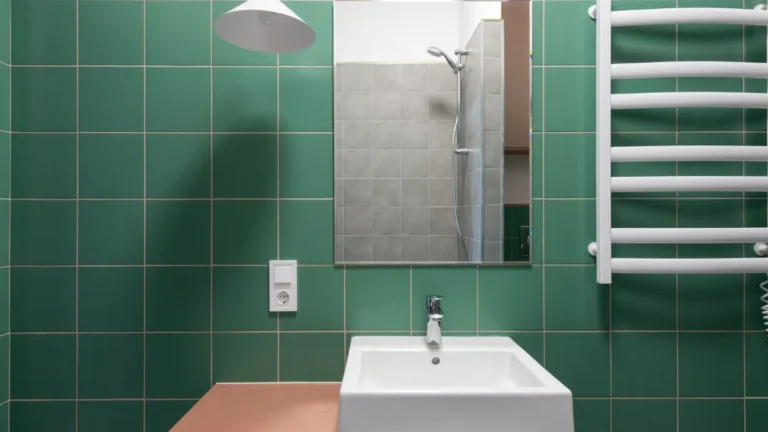 Green Bathroom Ideas: Sage vs Emerald, Paint Finish, Tile and PairingsSage and emerald are the two most popular greens for bathrooms. Sage feels timeless and restful, and emerald…Read more →
 Modern Bathroom Ideas: Colors, Materials, Fixtures, Lighting and StorageA modern bathroom is clean, calm and uncluttered. It uses simple lines, a limited color palette and a few…Read more →
 Bathroom Decor Ideas: Towels, Rugs, Plants, Art and Storage That Handle HumidityBathroom decor is different from decor in any other room. The air is damp, the space is small and everything…Read more →
 Bathroom Storage Ideas: Over-Toilet Units, Wall Cabinets, Towers, Sizes and AnchoringQuick answer: the easiest way to add bathroom storage is to use vertical space. Over-the-toilet shelves are…Read more →