
Laundry Room Ideas: Layouts, Storage, Folding Counters and Small-Space Tips
Laundry is a job you do every week, so the room where you do it should work for you. A well-planned laundry room has a place for dirty clothes, a spot to fold and storage for detergent and supplies. A poorly planned one is a pile of baskets in the way.
This article is part of our bathroom remodel guide, where you can compare related options.
A laundry room is the space where you wash, dry and fold clothes. It may be a full room, a closet, a hallway nook or a corner of the garage or basement. The ideas below work for all sizes, with a focus on small spaces.
This guide shares ideas for layouts, stacked machines, folding counters, storage, sinks and drying spots, lighting and finishes. You’ll also find a checklist and answers to common questions. The ideas come from design and home blogs, so treat them as inspiration, not rules.

Plan the Layout First
Start with the machines. Measure the space and the washer and dryer. Note where the water, drain, vent and power outlets are. Moving these costs money, so work with them if you can.
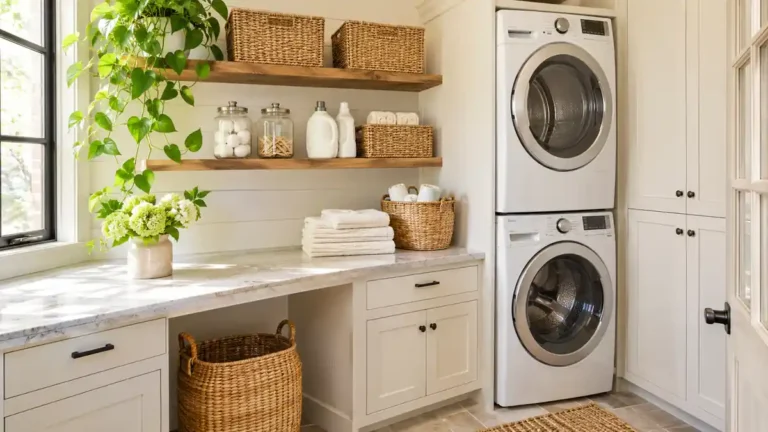
Side by side. Gives you a countertop over the machines if they are front loaders and the same height. Stacked. Frees floor space. Stacking machines liberates floor space for storage or a narrow folding counter. In a closet. A closet with bifold or pocket doors hides the machines. Make sure there’s room for ventilation. In a hallway or nook. A shallow alcove can hold a stacked pair with a shelf above. Door swing. A pocket door can reclaim swing space, and an outswing door saves room inside.
Stacked Washer and Dryer Tips
Stacking is the biggest space saver in a small laundry room.
Measure first. Before purchasing a stackable washer and dryer, measure the available space to ensure the units fit comfortably. Leave clearance. One source gives a rough guideline of at least 1 inch on the sides and 3 to 4 inches at the back for ventilation, in line with manufacturer guidelines. Always follow the maker’s installation guide. Use a stacking kit. Buy a kit designed for your washer and dryer models. The kit ensures the units are safely and securely stacked. Check the controls. Make sure you can reach the dryer controls and the washer door. Plan the vent. Dryers need a proper vent to the outside.
Add a Folding Counter
A flat surface makes folding easier.
Fold-down counter. A fold-down counter above stacked units provides a dedicated folding area without the permanent presence of a full countertop. It folds up when you don’t need it. Countertop over side-by-side machines. A solid counter gives a large folding surface. Check that the machines can be pulled out for service. Folding station with storage. If you have room for a small counter, a multi-functional piece with storage underneath serves double duty. Rolling cart. A cart can serve as a movable folding table. Wall-mounted drop-leaf table. Folds flat against the wall.
Storage Ideas
Wall shelves and cabinets: mount shelves above the machines for detergent, softener and baskets. Closed cabinets hide clutter. Pedestals with drawers: pedestals have a handy drawer that can give you extra room for laundry supplies that are easy to access. Slim rolling cart: slim rolling carts fit snugly between your washer and dryer or alongside cabinets, providing extra storage for detergents, dryer sheets or cleaning tools. When not in use, roll them out of the way. Pegboard: a wall pegboard with hooks, baskets and shelves adds storage on the wall. Magnetic baskets and hooks: they stick to the sides of the machines and hold small items like stain removers, clothespins or dryer sheets. Hampers and sorting bins: use separate bins for whites, darks and delicates. Over-the-door organizers: use the back of the door for brushes, lint rollers and spray bottles. Labeled containers: decant detergent into jars or bins for a tidy look. Under-sink storage: if you have a sink, the cabinet below holds cleaning supplies.
Sink and Drying Spots
My sources said little about drying racks, sinks and lighting, so these are general ideas.
Utility sink. Useful for hand washing, soaking stains and rinsing. A deep sink is handy, but check the space and plumbing. Drying rod. A rod mounted on the wall or from the ceiling lets you hang shirts and delicates. A pull-out or retractable rod saves space. Fold-away drying rack. Folds flat against the wall when not in use. Hooks. Hang clothes on hangers from hooks or rails.
Lighting and Finishes
Good lighting makes laundry tasks easier, especially stain checking.
Key points: use bright, even overhead lighting; add under-cabinet lights over a counter; choose light colors to make the room feel bigger; pick easy-to-clean, moisture-resistant surfaces; use water-resistant flooring, such as tile or vinyl, in case of leaks; add a floor drain or a leak pan under the washer if the code requires.
Make the Laundry Room Pleasant
Key points: add a plant that tolerates humidity; hang art or a mirror; use baskets and bins in a consistent style; add a small rug on hard floors, if safe; keep a trash can nearby for lint; ventilate the room to control moisture.
Laundry Room Ideas by Room Size
Closet laundry: stack the machines. Add shelves above. Use a pocket or bifold door. Small room: stack, fold-down counter, wall shelves, hooks and a slim cart. Medium room: side-by-side machines with a counter, upper cabinets, a sink and a drying rod. Large room: a full folding station, island, built-in hamper, sink and ironing area.
Laundry Room Checklist
Measure the room and machines. Note plumbing, vent and outlets. Choose side by side or stacked. Plan clearance around the machines. Add a folding surface. Add storage for supplies. Plan hanging and drying space. Choose lighting. Pick water-resistant finishes. Plan ventilation. Set a budget. Hire a licensed plumber or electrician for hookups.
What mistakes should you avoid?
A few common mistakes are worth avoiding: not measuring the machines (they may not fit once you add clearance); skipping ventilation (moisture and lint build up); blocking access (keep room to service the machines); too little storage (clutter piles up quickly); poor lighting (hard to spot stains); ignoring the door swing (it can steal space).
Frequently Asked Questions
How do I organize a small laundry room?
Stack the washer and dryer, add a fold-down counter, use wall shelves and hooks, and add a slim cart for supplies.
How much space do I need around a washer and dryer?
One source suggests at least 1 inch on the sides and 3 to 4 inches at the back for ventilation. Follow the manufacturer’s installation guide.
Should I stack my washer and dryer?
If space is tight, yes. Stacking frees floor space for storage or a folding counter. Use a stacking kit made for your models.
How do I add a folding table to a laundry room?
Use a fold-down counter, a wall-mounted table, a rolling cart or a countertop over the machines.
What storage works best in a laundry room?
Wall shelves, cabinets, pedestals with drawers, slim carts, pegboards and magnetic baskets.
How can I make a laundry room look nice?
Use light colors, matching bins, good lighting and a few decor touches, like a plant or art.
Conclusion
Good laundry room ideas start with measuring, planning the layout and making the most of vertical space. Stack the machines when space is tight, add a folding surface and use shelves, carts and hooks for storage.
Add good lighting and water-resistant finishes, and don’t forget ventilation. A little planning makes laundry day faster and the room a pleasant place to work.
Related guides
 Small Laundry Room Ideas: Stacked Machines, Folding Counters, Vertical Storage and Layouts That WorkQuick answer: the best small laundry room ideas are to stack the washer and dryer, add a folding counter or…Read more →
 Powder Room Guide: Size, Layout, Clearances (15 and 21 Inches), Ideas and Door ChoicesQuick answer: a powder room, or half bath, has a toilet and a sink but no shower or tub. Most sources put it at…Read more →
 Green Bathroom Ideas: Sage vs Emerald, Paint Finish, Tile and PairingsSage and emerald are the two most popular greens for bathrooms. Sage feels timeless and restful, and emerald…Read more →
 Bathroom Storage Ideas: Over-Toilet Units, Wall Cabinets, Towers, Sizes and AnchoringQuick answer: the easiest way to add bathroom storage is to use vertical space. Over-the-toilet shelves are…Read more →



One Comment