Bunkie Board: What It Is, Bunkie Board vs Box Spring and Do You Need One?
A bunkie board is a thin, flat support that sits under a mattress. It’s a simple piece of bedding hardware, but it solves some common problems: wide slat gaps, sagging box springs and beds with limited height. If you’ve seen the term and wondered if you need one, the answer depends on your bed.
This article is part of our mattress buying guide, where you can compare related options.
A bunkie board is a low-profile foundation for a mattress. One guide describes it as a wooden or metal frame covered with a solid surface or closely spaced slats. It’s much thinner than a box spring. One source puts a box spring at 8 to 10 inches high, while a bunkie board is 2 to 3 inches thick.
This guide explains what a bunkie board does, how it compares with a box spring and slats, when you need one, which mattresses work and what to check about size and warranty. You’ll also find a comparison table, a checklist and answers to common questions.

What Is a Bunkie Board Used For?
A bunkie board gives your mattress a solid, even surface.
On bunk beds and loft beds, where height is limited and a box spring wouldn’t fit. On platform beds with gaps, where slats are too far apart. On older frames with weak slats. Over a worn box spring, to add support. One guide warns that a bunkie board does not fix a failing box spring, it just masks the problem for a short while. In trundle beds and daybeds, where height matters. In RVs and boats, for low-profile support.
Bunkie Board vs Box Spring vs Slats
| Feature | Bunkie board | Box spring | Slats |
|---|---|---|---|
| Height | 2 to 3 inches | About 8 to 10 inches | Frame-dependent |
| Surface | Solid or closely slatted | Fabric over springs or a frame | Gaps between boards |
| Airflow | Lower, especially if solid | Good | Best |
| Cost | Usually less than half a comparable box spring | Higher | Lower or included |
| Best for | Foam, latex, hybrid mattresses | Innerspring mattresses | Many modern mattresses |
A box spring has coils that help with weight and pressure distribution, while a bunkie board is solid and flat. One source says the built-in coil unit of a box spring provides all the flex the mattress needs, which is why it suits innerspring mattresses.
Slats can leave gaps that let a mattress sag. One source notes that a bunkie board provides a more solid and uniform support surface than traditional bed slats. Slats do offer better airflow. One source notes that using a bunkie board with a slatted base will reduce the airflow to the mattress, which could result in you sleeping hotter.
Do You Need a Bunkie Board?
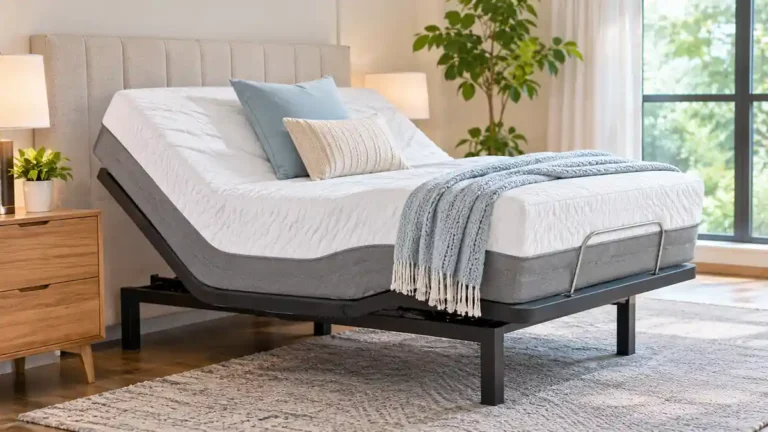
Often, no. A platform bed already has built-in support, either a solid surface or a set of slats. If you have an adjustable base, you likely do not need or want a bunkie board.
You may want one if: Your frame has wide-spaced slats (more than about 3 inches apart). You have a platform with gaps. You have a bunk bed or a bed with limited height. You want a more solid surface for a foam mattress. You need to replace a worn-out box spring in a low-profile setup.
Check your mattress warranty first. Some warranties require a particular foundation, and some prohibit certain types.
Which Mattresses Work With a Bunkie Board?
One source says memory foam mattresses, hybrids and latex mattresses can all benefit from a bunkie board. Traditional innerspring mattresses are the exception, since they can be used with a box spring. Heavy mattresses may need extra checking. One retailer advises that if you buy a heavy-duty mattress, be sure to check its foundation compatibility.
If your mattress needs airflow, such as some memory foam beds, choose a bunkie board with slats or vents, and use it on a frame that allows air to move.
Sizes and Thickness
Bunkie boards come in standard mattress sizes, from twin to king. Many are sold in two halves for larger beds. Thickness is usually 2 to 3 inches. The sources I found confirm the thickness but don’t include a detailed size chart, so check dimensions against your mattress before buying.
The board should match the mattress size. A board that is too small leaves the edges unsupported. A board that is too big may not fit the frame. Measure the inside of your bed frame.
Remember that the board adds height to your bed. Add 2 to 3 inches to your total bed height.
Materials
Wood or plywood: common and low in cost. One source notes that wood tends to warp in wetter climates, though you can opt for a non-wooden bunkie board to resolve this issue. Metal: strong and resistant to warping. Fabric-covered: often has a cover that looks like a box spring and keeps the mattress from sliding. Slatted or solid: slatted designs allow more airflow.
Look for strong construction and a cover that prevents the mattress from slipping.
How to Use a Bunkie Board
- Check your frame. Make sure the board fits inside.
- Place the board on the frame, centered.
- Add the mattress on top.
- Check for gaps. The board should sit flat.
- Check regularly that the board hasn’t warped or cracked.
If you use two boards for a large bed, line them up carefully and, if possible, tape or strap them together to prevent shifting.
How to Choose a Bunkie Board
Check your warranty. Check your frame. Does it need extra support? Match the size. Pick the thickness. 2 to 3 inches for a low profile. Choose the material. Wood, metal or covered. Think about airflow. Check the weight rating. Plan delivery. Large boards are awkward. Compare cost with a box spring or slat kit. Read reviews for notes on warping and noise.
What mistakes should you avoid?
A few common mistakes are worth avoiding: using it on an adjustable base (it’s not needed and can interfere); expecting it to fix a broken box spring (it only hides the problem); ignoring airflow (a solid board can make a foam mattress sleep hotter); buying the wrong size (edges need support); skipping the warranty check (some mattresses require a specific foundation); forgetting the added height (the bed may sit higher than you expect).
Frequently Asked Questions
What is a bunkie board?
A thin, flat foundation, usually 2 to 3 inches thick, that supports a mattress.
What is the difference between a bunkie board and a box spring?
A bunkie board is thin and solid. A box spring is taller and has springs or a frame. A bunkie board is generally cheaper.
Do I need a bunkie board with a platform bed?
Usually no. Platform beds have built-in support. You may want one if the slats are widely spaced.
Can I use a bunkie board with a memory foam mattress?
Yes. Memory foam, latex and hybrid mattresses can benefit from the solid support.
Does a bunkie board make a bed hotter?
It can reduce airflow if used over a slatted base, which could make you sleep hotter.
Can a bunkie board be used on a bunk bed?
Yes. It’s a common use because it’s thin.
Conclusion
A bunkie board is a simple, low-profile way to give a mattress even support. It’s useful on bunk beds, platform beds with gaps and frames with weak slats. It’s not usually needed on a solid platform bed or an adjustable base.
Check your mattress warranty, measure your frame and consider airflow. With the right board, your mattress stays supported and your bed feels steady.
Related guides
 Folding Mattress: Tri-Fold Foam Thickness, Sizes, Density and Who It SuitsA folding mattress is a foam mattress that folds into thirds so you can store it in a closet or carry it.…Read more →
 Adjustable Mattress Guide: Which Mattress Types Work on Adjustable Bases (Foam, Latex, Hybrid) and What to CheckQuick answer: most foam, latex and many hybrid mattresses work on an adjustable bed base. Casper rates memory…Read more →
 Inflatable Mattress Guide: Air Bed Height, Built-In Pumps, Leaks, Weight Capacity and CareQuick answer: an inflatable mattress, or air bed, is a mattress you fill with air for guests, camping or…Read more →
 Floor Pillows Guide: Sizes (20 to 32 Inches), Fill Types, Meditation Cushions, Covers and CleaningQuick answer: floor pillows are large cushions for sitting on the floor. A 24 inch square suits living room…Read more →