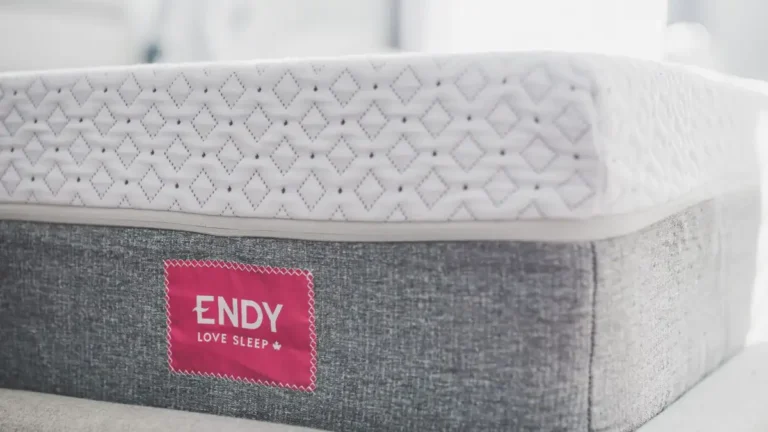
Hybrid Mattress: How It’s Built, Pros, Cons, Lifespan and Who It Suits
A hybrid mattress tries to give you the best of two worlds: the cushioning of foam and the support of coils. It’s one of the most popular mattress types today. But “hybrid” is also a broad label, and the quality can vary a lot between one hybrid and another.
This article is part of our mattress buying guide, where you can compare related options.
A hybrid mattress pairs a coil base with thicker layers of foam or other cushioning materials above them. Most use individually wrapped (pocketed) coils, which enhance responsiveness. The comfort layers can be memory foam, polyfoam or latex.
This guide explains how a hybrid is built, the pros and cons, who it suits, how long it lasts and what to check before you buy. You’ll also find a layer breakdown, a checklist and answers to common questions.

How a Hybrid Mattress Is Built
Most hybrids have three main parts.
- Comfort layers (top): one or more layers of foam, latex or fiber. These give the pressure relief and the surface feel. Memory foam hugs the body. Latex feels springy. Polyfoam is a general-purpose cushioning foam. 2. Transition layer (middle): some mattresses add a layer between the comfort layers and the coils to stop you from feeling the coils. 3. Support core (base): a layer of steel coils. Most hybrids use individually wrapped coils, each in its own fabric pocket, so they move independently. Some use connected coils. A foam base or edge support surrounds the coil unit.
A cover made of cotton, polyester or other fabric covers the whole mattress.
Pros of a Hybrid Mattress
Comfort and support: the foam gives pressure relief, and the coils give a stable base. Breathability: coils help airflow. Individually wrapped coils promote better airflow than solid foam cores. Motion isolation: a hybrid with individually wrapped coils can reduce motion transfer during sleep, which makes it a common pick for couples. Edge support: coils and edge reinforcement usually give a firmer perimeter. Bounce and ease of movement: easier to change positions than on dense foam. Variety: many firmness levels and designs.
Cons of a Hybrid Mattress
Price: hybrids typically cost more than basic foam or innerspring mattresses due to their complex construction and quality materials. No firm price ranges. Weight: coils add weight. A hybrid is harder to lift, flip or rotate. Heat: dense comfort layers, particularly memory foam, tend to trap ambient heat. Noise: some hybrids can make noise, especially cheaper ones. Quality varies: a thin foam layer over low-quality coils is not a good hybrid. Not as deep a hug: those who want deep cushioning may prefer an all-foam model. One source notes that plush mattresses have soft layers for deep cushioning and pressure relief, while hybrid mattresses provide a more balanced feel and support.
How Long Does a Hybrid Mattress Last?
One source says a high-quality hybrid mattress typically lasts seven to ten years, depending on the density of its foam layers and the quality of its pocketed coils. Body weight matters too, since a heavier individual will naturally place more stress on the mattress’s components. Rotating a flippable model can extend comfort-layer life, per one source.
Signs it’s time to replace your hybrid: visible sagging, lumps, loud springs, waking up with aches or the mattress no longer supporting you well. Check your warranty, which often covers sagging beyond a certain depth.
Who Should Buy a Hybrid Mattress?
Hybrids suit: sleepers who want a balance of foam contouring and coil support; hot sleepers, with breathable materials; couples who want motion isolation; combination sleepers who change positions; people who sit on the edge of the bed; heavier sleepers who want stronger support.
They may not suit people who want a very deep, hugging feel, who are on a tight budget or who can’t lift a heavy mattress.
| Sleeper | Hybrid fit |
|---|---|
| Side sleeper | Good with a plush comfort layer |
| Back sleeper | Good, balanced support |
| Stomach sleeper | Good with a firmer top |
| Hot sleeper | Good with breathable layers |
| Couple | Good with pocketed coils |
| Budget shopper | Often higher price |
Hybrid vs Memory Foam vs Innerspring
A hybrid is a middle path. Memory foam is all foam, with a deep contour and low motion transfer. Innerspring has coils with thin padding and feels bouncy with less pressure relief. A hybrid blends coil support with real comfort layers. See the memory foam vs hybrid comparison for a detailed table.
What to Check Before You Buy
Coil type. Individually wrapped (pocketed) coils are common. Ask about the coil count and gauge if listed. Comfort layer materials. Memory foam, latex or polyfoam, and their thickness. Foam density. Higher density lasts longer. Firmness. Match to your sleep position and weight. Edge support. Check the perimeter. Cooling features. Breathable covers or gel foam. Certifications. CertiPUR-US, OEKO-TEX or GOLS. Trial period. At least 100 nights is common. Warranty. Check sagging limits and foundation rules. Weight and delivery. Hybrids are heavy. Boxed versions are easier to carry. Base. Use a solid or closely slatted foundation.
How to Care for a Hybrid Mattress
Use a mattress protector. Rotate the mattress head to foot every few months if the maker advises, to even out wear. Don’t flip a one-sided mattress. Vacuum the surface now and then and spot clean with mild soap. Air the mattress when you change sheets. Make sure the base is supportive. Keep children from jumping on the bed, since that can damage the coils.
What mistakes should you avoid?
A few common mistakes are worth avoiding: assuming every hybrid is high quality (check the layers); ignoring the base (poor support can cause sagging and affect the warranty); skipping the trial (your body needs time to adjust); forgetting about weight (plan for delivery and moving); choosing the wrong firmness (match to your sleep position); not using a protector (stains can void warranties).
Frequently Asked Questions
What is a hybrid mattress?
A mattress with a coil base and foam or latex comfort layers on top.
Are hybrid mattresses good?
Many people like them for balanced comfort, airflow and edge support. Quality varies, so check the layers.
How long do hybrid mattresses last?
One source says seven to ten years for a high-quality hybrid, depending on foam density and coil quality.
Are hybrid mattresses hot?
They tend to be more breathable than all-foam beds, but dense memory foam layers can trap heat.
Are hybrid mattresses good for side sleepers?
Yes, if the comfort layer is plush enough for pressure relief at the shoulders and hips.
Do hybrid mattresses squeak?
Some can, especially lower-quality ones. Individually wrapped coils tend to be quiet.
Conclusion
A hybrid mattress combines the cushioning of foam with the support of coils. It offers good airflow, edge support and motion isolation, but usually costs more and weighs more than all-foam beds.
Check the coil type, comfort layers and foam density, test it through a sleep trial and use a supportive base. With the right hybrid, you can get balanced comfort for many years.
Related guides
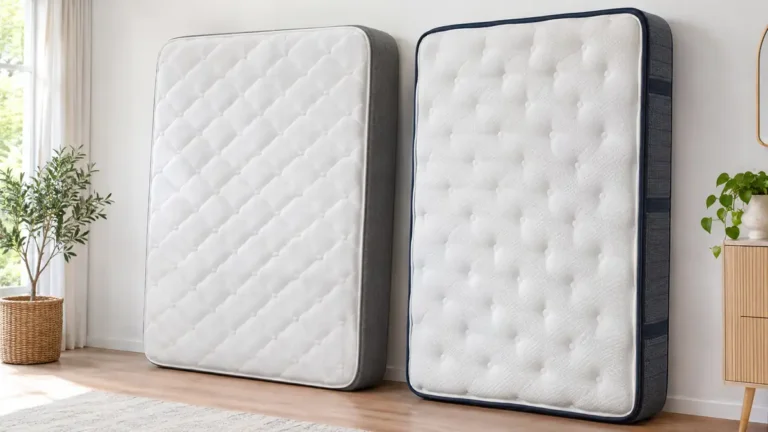 Memory Foam vs Hybrid Mattress: Comparison Table and How to ChooseMemory foam and hybrid are two of the most popular mattress types. They can look similar from the outside, but…Read more →
 Folding Mattress: Tri-Fold Foam Thickness, Sizes, Density and Who It SuitsA folding mattress is a foam mattress that folds into thirds so you can store it in a closet or carry it.…Read more →
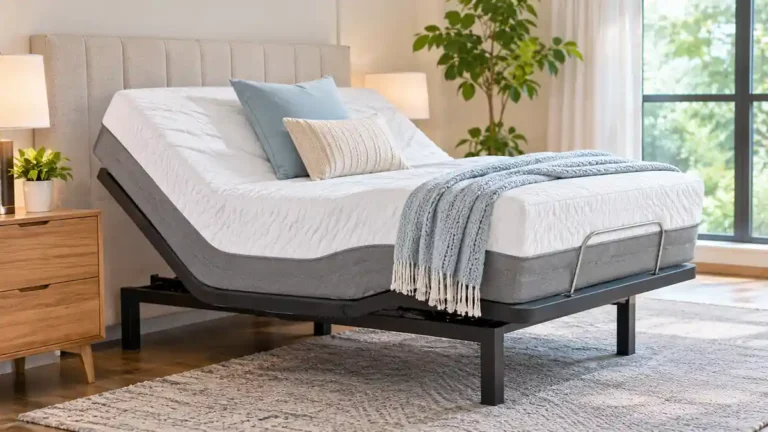 Adjustable Mattress Guide: Which Mattress Types Work on Adjustable Bases (Foam, Latex, Hybrid) and What to CheckQuick answer: most foam, latex and many hybrid mattresses work on an adjustable bed base. Casper rates memory…Read more →
 Full vs Queen Mattress: Size Difference, Couples, Room Size, Price and How to ChooseFull and queen mattresses are two of the most popular sizes in the country, and they look close on a size…Read more →