Chesterfield Sofa Guide: Tufting, Rolled Arms, Leather vs Velvet, History and How to Style
Quick answer: a chesterfield sofa is defined by deep button tufting, rolled arms upholstered to the same height as the back and a low, structured silhouette. The classic version is dark leather, and modern versions often use velvet or other fabric. Measure your room and doorways, since the search found no standard size.
This article is part of our sofa and couch buying guide, where you can compare related options.
The chesterfield is one of the most recognizable sofas in the world. Its tufted back and curved arms suggest old libraries, gentlemen’s clubs and cozy living rooms. It can look formal or relaxed depending on the color, fabric and room. This guide explains the defining features, a brief history, leather and fabric options, how to check quality, how to size and place one and how to style it. The search sources agreed on features and history but gave almost nothing on sizing or buying criteria, and many results were low-quality content-farm pages. I flag general advice as general. The naming history is traditional and not fully documented.
What Defines a Chesterfield Sofa?
On three markers.
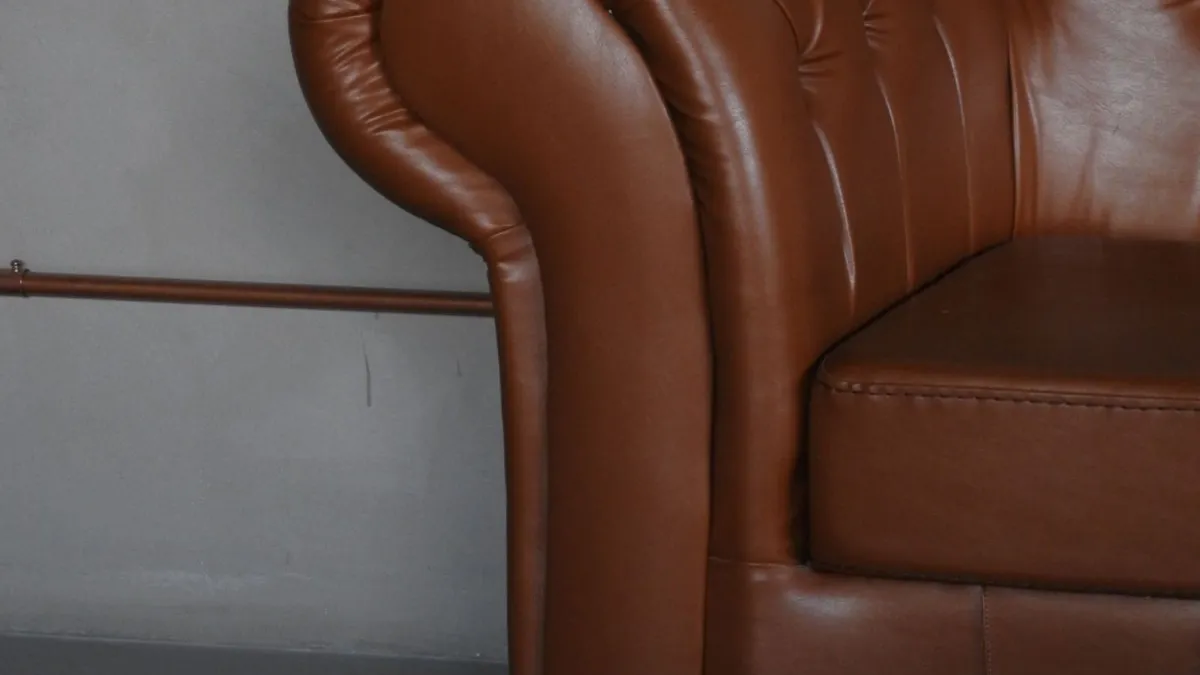
- Deep button tufting. Buttons are pulled into the upholstery to form a diamond pattern, adding depth and texture. On a classic chesterfield, tufting covers the back and often the arms.
- Rolled arms. The arms curl outward and are upholstered at the same height as the back, a signature feature.
- A low, structured back. It gives the sofa its formal silhouette.
Some chesterfields add nailhead trim, which is common but not essential. Bun feet or short turned legs are also common (general knowledge).
A Brief History
The design is usually linked to the Earl of Chesterfield, but the exact naming history is not fully documented. Accounts of the origin differ: one says it traces its roots to 18th-century England and evolved from an earlier design; another says it has been around for nearly 300 years. It as a club and gentlemen’s furniture piece and a status symbol. I treat these dates as approximate.
Leather vs Fabric
Leather
The classic version is leather. A source describes dark leather, deep button tufting all over and nailhead trim as the traditional standard.
Pros
Key points: develops a rich patina over time; wipes clean; durable if good quality.
Cons
Key points: can scratch; can feel cold or sticky in extreme temperatures; costs more.
Fabric and Velvet
Modern versions often use fabric. A source says newer takes typically lighten up the hefty original with velvet or other cloth upholstery, taller legs and a slimmer back and arms.
Pros
Key points: softer and warmer; many colors; can feel modern.
Cons
Key points: velvet shows marks and crush patterns; stains need care. See the couch covers for dogs guide.
Performance velvet or treated fabrics help with kids and pets.
Size and Fit
The search returned almost nothing useful on dimensions. Some product pages mention a width of 90 inches, but those are sales listings, not guidance. General advice: Measure the sofa’s width, depth and height. Measure doorways, hallways and stairs. Chesterfields have fixed frames and rolled arms that add width. Leave space around the sofa for walking. See the oval coffee table guide for clearance rules. Consider a two-seat or three-seat model for smaller rooms. Check seat depth if you are short or tall.
Quality Checks
The search gave limited quality guidance, so these are general. See the solid wood dresser guide for inspecting wood and construction.
Key points: frame. A kiln-dried hardwood frame is stronger than particleboard; tufting. Buttons should be firmly attached, with even pleats; springs and seat. Eight-way hand-tied springs are traditional, but check the maker’s claim; foam. High-density foam holds shape; leather type. Top-grain or full-grain leather lasts longer than bonded leather; stitching. Straight and tight; legs. Solid and well attached; warranty.
Where to Place a Chesterfield
Key points: living room as the main sofa; library or study; entryway or hallway (for a short settee); home office as a reading seat; bedroom seating area; restaurant or lounge style spaces.
Place it where its profile shows, such as against a wall facing a fireplace or centered on a rug.
Styling Ideas
Classic. Dark leather with wood bookshelves, brass lamps and a rug. See the white bookshelf guide for contrast. Modern. A velvet chesterfield in emerald, navy or blush with a clean coffee table. See the ottoman coffee table and oval coffee table guides. Eclectic. Mix patterns with decorative pillows. See the decorative pillows guide. Industrial. Brown leather with exposed brick. Add a throw blanket to soften the look. Flank with side tables and lamps. Pair with accent chairs. See the swivel accent chair guide.
The designersofas4u site publishes ideas for styling the chesterfield.
Care
Key points: dust and vacuum the tufting with a soft attachment; condition leather as the maker advises; blot spills at once; rotate cushions; keep out of direct sun; keep away from heat vents; use a professional cleaner for velvet if needed.
What are the main strengths and weaknesses?
On the plus side: timeless, recognizable design; sturdy and long-lasting if well made; works in many styles; leather ages well. On the downside: hard seat for some; tufting traps dust and crumbs; large and heavy; costly; sizing information is hard to find.
How to Choose a Chesterfield Sofa
Decide the style: classic leather or modern fabric. Measure the room and delivery path. Choose the size: two- or three-seat. Check the frame and tufting. Check the upholstery quality. Test seat comfort if possible. Match colors to the room. Check the warranty and return policy. Plan care. Read reviews.
What mistakes should you avoid?
A few common mistakes are worth avoiding: not measuring doorways; choosing bonded leather expecting full-grain quality; ignoring seat comfort; placing it in direct sun; buying a very large sofa for a small room; trusting content-farm sources.
Frequently Asked Questions
What is a chesterfield sofa?
A sofa with deep button tufting, rolled arms the same height as the back and a structured low back.
Why is it called a chesterfield?
It is traditionally linked to the Earl of Chesterfield, but the origin is not well documented.
Is a chesterfield leather?
The classic version is leather. Many modern versions use velvet or other fabrics.
How big is a chesterfield sofa?
Sizes vary. Some listings show 90 inches wide. Measure the one you plan to buy.
Are chesterfield sofas comfortable?
They are firm and upright. Add pillows for comfort.
Can a chesterfield look modern?
Yes. Choose a lighter fabric, slimmer arms and taller legs.
Conclusion
A chesterfield sofa is defined by deep tufting, rolled arms and a structured back. Choose leather for tradition or fabric for a softer modern look, measure your space and check the frame and upholstery.
Style it with pillows and a rug to suit your room. A well-chosen chesterfield can anchor a living room for decades.
Related guides
 Sofa with Chaise: Left vs Right Facing, Measuring and What to CheckA sofa with a chaise is a sofa with one extended seat where you can stretch out your legs. Left-facing and…Read more →
 Small Sofa Guide: Loveseat and Apartment Sofa Sizes (48 to 84 Inches), Arms, Depth and Fit for Small RoomsQuick answer: a small sofa can be a compact loveseat (about 48 to 58 inches wide and 30 to 34 inches deep) or…Read more →
 Curved Sofa Guide: Sizing, Bounding Box, Delivery, Rug Placement and Wall PlacementA curved sofa softens a room. Where most furniture is straight and boxy, a curved sofa wraps around a space,…Read more →
 Couch Table Guide: Sofa Table Height, Width, Depth and Walkway SpaceWhen people search for a couch table, they often mean one of two things: a narrow table that sits behind the…Read more →