Day Bed: What It Is, Sizes, Uses and How to Choose One
A day bed looks like a sofa during the day and works like a bed at night. It’s a smart choice when you want seating and sleeping space in the same room. People use day beds in guest rooms, home offices, kids’ rooms and small apartments.
This article is part of our sofa and couch buying guide, where you can compare related options.
A day bed is a piece of furniture with a mattress platform and a frame on three sides: a back and two arms. You sit on it like a couch, with the mattress or cushion as the seat. When guests stay, you can sleep on the same mattress. Some day beds also include a trundle, which is a second mattress stored underneath.
This guide explains what a day bed is, which mattress size it takes, how it differs from a sofa bed and a trundle bed, and how to choose one. You’ll also find a comparison table, a buying checklist and answers to common questions.

What Is a Day Bed?
A day bed is a hybrid. It’s part sofa and part bed. The frame supports a mattress that sits on a platform, usually with slats or a solid deck. The back and sides act like a sofa’s back and arms, so you can lean against them while you sit.
Day beds come in many styles. Metal frames often have a classic, airy look with curved bars. Wood frames feel warm and traditional. Upholstered day beds look soft and modern. Some models have tufted backs or decorative posts.
Unlike a sofa bed, the mattress doesn’t fold away. It stays flat and ready to use. This gives you a better sleeping surface, but the seat is deeper than a normal couch.
Day Bed Sizes and Mattress Types
Most day beds are built for a twin mattress, which measures about 38 by 75 inches. That’s a standard size, so mattresses and bedding are easy to find. Full and queen day beds exist, but they’re less common. They also work less well as sofas, because their seats are so deep.
A typical sofa seat is about 18 to 22 inches deep, and a day bed is much deeper. You’ll often sit with your back against pillows or bolsters to make the seat comfortable.
The mattress for a day bed should be fairly thin, so the bed still looks like a sofa. A mattress of around 6 to 8 inches works well for most frames. Thick mattresses make the back and arms look too low. Do not put a box spring on a day bed, since the frame is designed to hold the mattress directly on the deck.
If your day bed has a trundle, the second mattress is usually the same size as the top one. Trundle mattresses are thin, and many are no more than 8 inches thick, so they fit underneath.
| Day bed size | Mattress size | Common use |
|---|---|---|
| Twin | About 38 by 75 inches | Guest rooms, offices, kids’ rooms |
| Full | About 54 by 75 inches | Larger rooms, one adult sleeper |
| Queen | About 60 by 80 inches | Rare, usually wide spaces |
Day Bed vs Sofa Bed vs Trundle Bed
People often mix these up. Here’s how they differ.
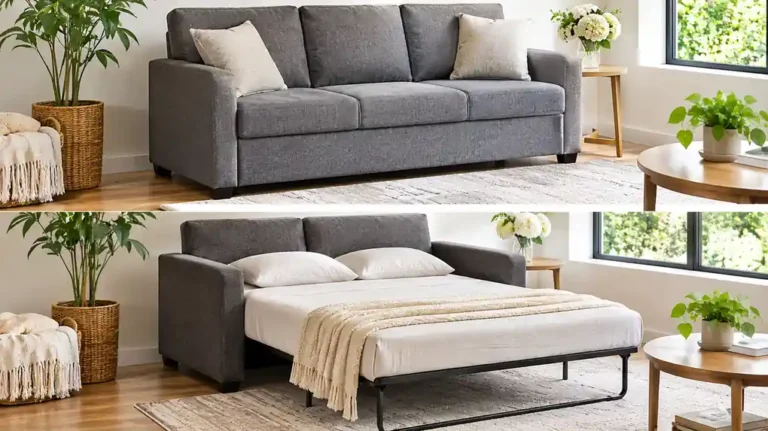
A sofa bed, also called a sleeper sofa, has a mattress hidden inside the couch. You pull it out when you need a bed. It’s a better couch and usually a weaker bed, since the mattress is often thin and folded.
A day bed has a mattress or cushion on top at all times. It gives you a better sleeping surface, but it’s a less traditional seat.
A trundle bed has a second mattress that slides out from under the first one. Some day beds come with a trundle, which turns one twin bed into two.
| Feature | Day bed | Sofa bed | Trundle bed |
|---|---|---|---|
| Main use | Seating and sleeping | Seating first | Extra sleeping |
| Mattress | Always on top | Folds inside | Slides under |
| Sleep comfort | Good | Often lower | Depends on thickness |
| Setup | None | Pull out | Pull out |
| Space needed | Moderate | Extra for pull-out | Extra for pull-out |
If you want a bed that sleeps well and doubles as seating, a day bed is a good pick. If you want a couch that seldom becomes a bed, a sofa bed may be better. If you often host two guests, a day bed with a trundle makes sense.
Where to Use a Day Bed
Guest room: a day bed gives you a comfortable guest bed and a place to sit when no one’s staying. With a trundle, it sleeps two. Home office: a day bed can act as a sofa in the corner of your office. It also gives you a place for a nap or a night guest. Kids’ room or teen room: a day bed offers a bed by night and a hangout spot by day. Friends can sit on it during the day and sleep over on the trundle. Small apartment or studio: it can serve as both your bed and your couch, saving space. Sunroom or porch: many day beds look good in a bright room, where they work as a lounge. Choose a frame and fabric suited to the setting.
How to Choose a Day Bed
Use these steps to pick the right one.
Measure the space. Check the wall length, the door swing and the room for a trundle to slide out. Pick the size. Twin fits most spaces. Full or queen need more room and may make a weaker sofa. Decide on a trundle. Want a second bed? Choose a frame with a trundle or storage drawers underneath. Choose the material. Metal is light and often low-cost. Wood is warm and sturdy. Upholstered models feel soft. Check the support. Look for a slatted or solid deck. Slat spacing should follow your mattress maker’s rules. Pick a mattress. Choose one thin enough to keep the sofa look, and check the maker’s guidance. Check the weight rating. Make sure it covers the sleeper and anyone who might sit on it. Think about bedding. Bolsters, throw pillows and a cover help turn the bed into a sofa by day.
Styling a Day Bed as a Sofa
To make a day bed feel like a couch, lean pillows against the back. Add a long bolster along the back and arms, or use square pillows in a row. A fitted cover or a quilt in a neutral color creates a clean look.
Place a small side table at one end for a lamp or a drink. A rug underneath adds warmth. When it’s time to sleep, remove the extra pillows and add sheets and a blanket. A quilt that you can pull over the bed also works as a quick cover.
What mistakes should you avoid?
A few common mistakes are worth avoiding: skipping the mattress check (some frames take only thin mattresses. A thick one can look wrong and may not fit); buying a trundle without measuring (the trundle needs room to roll out. Check clearance on the floor and from the wall); ignoring the weight limit (a day bed gets more use than a normal bed, since people sit on it all day); choosing the wrong size for the room (a queen day bed may swallow a small room); using a box spring (day beds are built to hold a mattress directly. A box spring can make it too high or break the frame).
Frequently Asked Questions
What is a day bed used for?
A day bed works as seating by day and a bed at night. It’s popular in guest rooms, offices, kids’ rooms and small homes.
What size mattress does a day bed use?
Most day beds take a twin mattress, which is about 38 by 75 inches. Full and queen sizes exist but are less common.
Is a day bed comfortable to sleep on?
It can be, since the mattress stays flat and ready. Sources often say a day bed offers a better sleep surface than a sofa bed. Comfort depends on the mattress you choose.
What is the difference between a day bed and a sofa bed?
A sofa bed hides a folded mattress inside the couch and pulls out. A day bed keeps its mattress on top all the time. Day beds usually sleep better, and sofa beds are usually more comfortable to sit on.
Does a day bed need a box spring?
No. Day beds are designed to hold the mattress on a slatted or solid platform. Putting a box spring on one is not advised.
Can a day bed have a trundle?
Yes. Many day beds include a trundle that slides out from under the main bed. Trundle mattresses are thin, and many are no more than 8 inches thick.
Conclusion
A day bed gives you a bed and a place to sit in one piece of furniture. Most take a twin mattress, and you can add a trundle for extra guests. Compared with a sofa bed, a day bed usually offers a better sleep surface, though the seat is deeper than a normal couch.
Measure your space, choose a size and material that suit your room and check the mattress, support and weight rating. With the right pillows and cover, your day bed can serve as a cozy seat by day and a comfortable bed at night.
Related guides
 Day Beds Guide: Twin and Twin XL Sizes, Trundles, Weight Capacity and Mattress ThicknessQuick answer: a daybed is a bed frame with a back and arms so it works as a sofa by day and a bed by night .Read more →
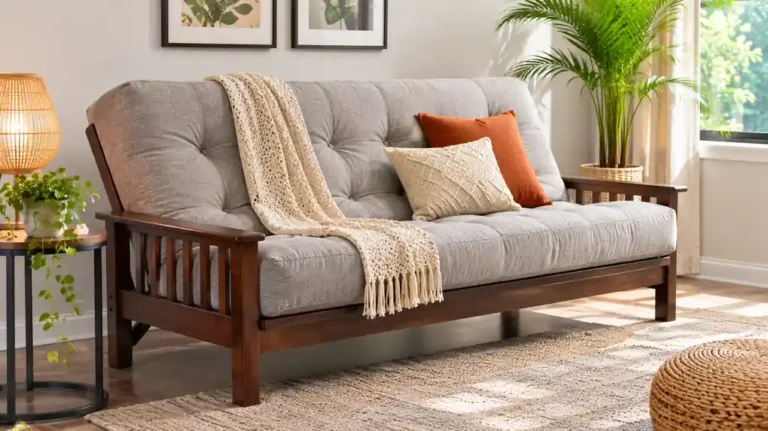 Futon Bed: What It Is, Futon vs Sofa Bed, Sizes and Mattress TipsA futon bed is a sofa by day and a bed at night, and it does the change in one simple move. It s a classic choiceRead more →
 Futon Sofa Bed Guide: Mattress Thickness, Frame Types, Sizes and Comfort TipsQuick answer: a futon sofa bed is a frame with a folding mattress that works as a couch by day and a bed at…Read more →
 Adjustable Bed Guide: Features, Zero Gravity, Mattress Compatibility, Split King and CostAn adjustable bed lets you raise the head, the feet or both at the push of a button. Some people use it for…Read more →