Small Dresser Guide: Sizes, Tall Narrow vs Short Wide, Drawers and Anchoring
A dresser is the hardest-working piece of furniture in a bedroom, and a small bedroom makes it harder. You need places for clothes, but a big dresser eats floor space, blocks the door and makes the room feel crowded. A well-chosen small dresser solves that. It holds what you need, fits the room and stays safe.
This article is part of our bedroom furniture guide, where you can compare related options.
A small dresser is a compact chest of drawers made for tight spaces. It may be a narrow tower, a short wide chest, a corner unit or a dresser that doubles as a nightstand. This guide explains the types, how to measure, how to think about drawers and depth, why anchoring matters, how to plan delivery and how to style and organize.
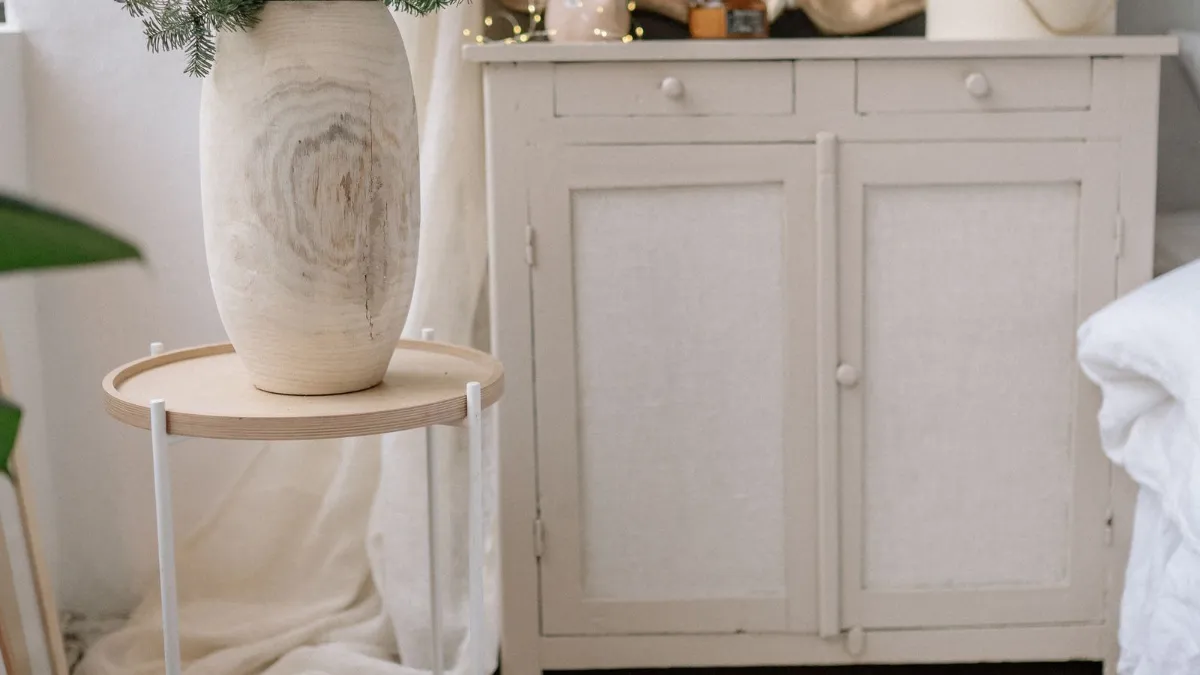
Tall Narrow vs Short Wide
The first decision is shape.
Tall and narrow: a tall, narrow dresser adds storage without taking much walking room. In a small apartment bedroom, a tall, narrow dresser can effectively replace a wider, shorter one without cutting storage. One guide says these units typically have five to six drawers and a footprint of about 40 to 60 centimeters (roughly 16 to 24 inches) wide. Example listings include a kids’ model about 17.7 inches wide and 45.7 inches tall, and a slim four-drawer unit with a 7.9-inch depth. These are product examples, not standards. Short and wide: a low dresser, often 3 to 4 drawers, that sits under a window or along a wall. It gives you a top surface for a mirror, lamp or TV. It takes more wall width but less height. Corner dresser: fits into a corner to use dead space. Dresser with mirror: combines storage and a mirror. Nightstand dresser: a small chest of drawers used beside the bed. See the nightstand guide. Wall-mounted or floating dresser: keeps the floor open and feels light. Needs secure mounting. Under-bed drawers: a different way to add clothes storage without a dresser.
| Shape | Footprint | Storage | Best for |
|---|---|---|---|
| Tall narrow | Small | Good vertically | Tight floors, narrow walls |
| Short wide | Wider | Medium | Under windows, long walls |
| Corner | Small | Medium | Unused corners |
| Nightstand dresser | Small | Low | Beside the bed |
How to Measure
- Measure the wall space where the dresser will go.
- Measure the drawer clearance. Measure the space the drawers need to open, not just the footprint. Deep drawers need clear space in front to open comfortably, and tight clearances can turn daily use into a shuffle.
- Check the height against windows, sloped ceilings, outlets, vents and wall art.
- Think about walkways. Leave enough room to walk past while the drawers are open.
- Check door swings for bedroom doors and closets.
- Tape the outline on the floor to see how it feels.
- Measure the delivery path: front doors, bedroom doors, narrow hallway corners and stairwells.
If the dresser is boxed flat, check the box size. If it arrives assembled, check that it fits through every door.
Drawers and Depth
Drawer size should match what you store.
Deeper drawers suit bulky items like sweaters and linens. Shallower drawers suit socks, underwear and accessories, and they help you see everything at a glance. More drawers mean more organization, but each one is smaller. Drawer glides. Smooth, full-extension glides make drawers easier to use. Check that drawers do not stick. Drawer fronts and handles. Make sure handles are comfortable and do not snag clothes. Soft-close mechanisms reduce noise.
Think about what you need to fit. Fold a few clothes and measure them against the drawer interiors.
Materials
Solid wood. Strong, lasts long, can be refinished. Heavier and costlier. See the wood dresser guide. Plywood. Strong and stable. MDF and particleboard. Common in flat-pack furniture and affordable, but lower-quality versions may sag or chip. Check the thickness and reviews. Metal. Slim and industrial. Rattan or cane. Adds texture. See the rattan dresser guide. Finishes. Painted, stained or laminate. Check for non-toxic finishes if the dresser is for a child.
Anchoring and Safety
This is the most important safety point. Because tall units are top-heavy, one guide says they require secure wall anchoring to prevent tipping. A product review adds that anchoring is still advised even if the dresser has an interlocking drawer system. The interlocking system is an extra safety measure, not a replacement for proper wall mounting.
Use the anti-tip kit that comes with the dresser, and screw it into a stud. Do not open several drawers at once, which can shift the center of gravity. Do not let children climb on dressers. Do not put heavy items, such as TVs, on top of a dresser unless it is designed for it. See the STURDY Act notes in the dresser guide. Place the dresser on a level floor. Check the weight rating for the top.
For renters, anchors leave small holes, but safety matters more. Ask your landlord, or use a method that causes minimal damage.
Small Bedroom Layout Ideas
Use a tall dresser in a narrow gap between the door and the wall. Place a short dresser under a window. Use the closet for a small dresser to free bedroom space. Combine with a mirror to bounce light. Use a dresser as a nightstand if both are tight. Choose a lighter color to keep the room feeling open. Use legs. A dresser on legs shows the floor, which makes the room feel bigger. Keep the top clear or limit it to a lamp and a tray.
Organizing a Small Dresser
Key points: fold clothes vertically (file-folding) so you can see everything; use drawer dividers to keep small items sorted; store by category: underwear, tops, bottoms; use the top drawer for items you reach for daily; keep heavy items low; rotate seasonal clothes to other storage; do not overstuff. Overloaded drawers stick and can break.
How to Choose a Small Dresser
Measure the space and the drawer clearance. Choose a shape: tall narrow or short wide. Check the number and depth of drawers. Pick a durable material. Check drawer glides and hardware. Plan wall anchoring. Measure the delivery path. Check the style and color. Read reviews for notes on assembly and sticking.
What mistakes should you avoid?
A few common mistakes are worth avoiding: measuring only the footprint (drawers need space to open); skipping the wall anchor; buying a thin particleboard dresser for heavy loads; ignoring the delivery path; overstuffing drawers; choosing a dresser too big for the room.
Frequently Asked Questions
What is the best dresser for a small bedroom?
A tall, narrow dresser often saves the most floor space while keeping storage.
How wide is a small dresser?
It varies. Narrow towers may be about 16 to 24 inches wide, and short wide chests are larger. Check the listing.
Do small dressers need to be anchored?
Tall units should be. Anchoring is recommended even with interlocking drawers.
How deep should the drawers be?
Deeper for sweaters, shallower for small items.
Can I use a dresser as a nightstand?
Yes, a small dresser beside the bed can work.
How do I measure for a dresser?
Measure the wall space, drawer clearance, height and the delivery path.
Is a wood dresser better?
Solid wood lasts long but costs more. Check engineered wood quality.
Conclusion
A small dresser lets you keep your clothes organized without crowding the room. Choose a shape that fits your space, measure the drawer clearance and check the delivery path.
Anchor tall units to the wall, choose sturdy materials and organize the drawers well. A good small dresser can make a small bedroom feel bigger and more orderly.
Related guides
 Dresser for Bedroom: How to Choose the Right Size, Style and Safe SetupA dresser is the workhorse of the bedroom. It holds your clothes, keeps floors clear and gives you a surface…Read more →
 Green Dresser: Paint Choices, Shades and Bedroom PairingsA green dresser adds color to a bedroom without taking over the room. You can buy one already green or paint an…Read more →
 Wooden Dresser Guide: Solid Wood vs Veneer and How to Tell the DifferenceA wooden dresser can be solid wood, wood veneer over MDF or plywood, or a wood-look piece made of…Read more →
 Baby Dresser Guide: Changing Table Dressers, STURDY Act, Wall Anchoring and CPSC Recall LessonsQuick answer: a baby dresser stores clothes and diapers and often doubles as a changing table with a topper.…Read more →