Green Sofa Decor Guide: Sage, Olive and Emerald Pairings, Wall Colors, Rugs and Metals
Quick answer: a green sofa works best when you match the shade to the right partners. Sage pairs with cream, beige, blush and muted gray. Olive suits warm earthy tones and benefits from clean white woodwork. Emerald loves navy, gold, charcoal and off-white. Choose a rug that either matches velvet’s richness or contrasts its texture.
This article is part of our sofa and couch buying guide, where you can compare related options.
Green sofas bring nature indoors. They can feel calm, bold or cozy depending on the shade. But green is also a color that can look off if paired wrongly, and sofa shades range from soft sage to deep emerald. This guide explains how to style each main shade, wall colors, rugs, pillows, metals, wood tones, lighting and layouts. Decor guidance is subjective, so treat these as starting points.
Choose Your Shade
Sage Green
Soft, gray-green and calming. Sage sofas are often paired with cream, beige, blush and muted gray walls for a calm look. One guide lists blush and soft pink as a classic partner for sage and olive. Light oak furniture suits sage, and linen cushions and simple textured rugs give a relaxed scheme.
Olive Green
Earthy and warm. Olive pairs well with warm, earthy tones such as terracotta, mustard, warm browns and brass. Mixing velvet, fabric, leather, bouclé and linen adds depth and prevents olive from feeling flat or heavy. One guide notes olive can look a bit drab if paired with the wrong colors. It often needs the contrast of clean white on the ceilings and woodwork to make it feel fresher and brighter.
Emerald Green
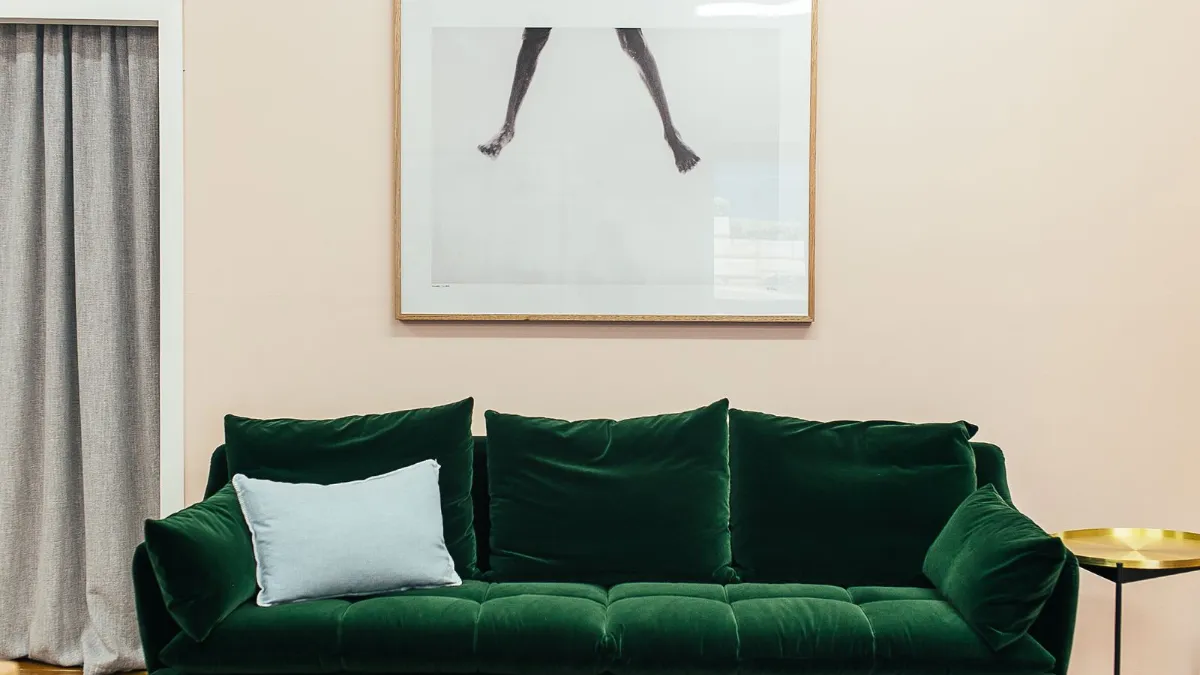
Rich and bold. Emerald suits bolder schemes: navy, gold, charcoal and off-white. For a richer look, a blue-leaning plum or deep aegean shade can work with an emerald velvet sofa, because of its blue undertones.
| Shade | Good partners |
|---|---|
| Sage | Cream, beige, blush, muted gray, light oak |
| Olive | Terracotta, mustard, warm brown, brass, white trim |
| Emerald | Navy, gold, charcoal, off-white, plum |
Wall Colors
Neutral backdrops. For a calmer room, one guide suggests letting the sofa stand alone against a neutral backdrop, such as white, cream or soft gray. Accent wall. Another suggests an emerald accent wall if a full green sofa feels like too much commitment. Deep walls. Navy or charcoal behind an emerald sofa feels dramatic. Warm walls. Blush, terracotta and warm beige work with sage and olive.
Test paint samples in your room’s light.
Rugs
For sage, one guide suggests a subtle rug in neutral or pastel colors that maintain the room’s serene vibe. For a green velvet sofa, a rug can either match the sofa’s richness or contrast its texture. Ruggable and Living Etc cover rug choices. For a more neutral floor, a textured neutral or jute rug softens the floor area, while a subtly patterned rug can tie your wall color and sofa tone together.
Avoid green-on-green rugs unless the shades are different enough.
Pillows and Throws
Key points: cream, ivory and oatmeal for a soft look; mustard, rust and terracotta for warmth; blush and pink for a romantic look; navy and gold for emerald; mixed textures: bouclé, linen, velvet and knit. See the decorative pillows guide for sizes and arrangements.
A throw in a natural fiber can anchor the sofa.
Metals and Wood
Metallics such as gold and brass work well with green. Brass lamps, gold frames and brass legs on tables add warmth. Black metal gives a modern edge. Wood tones: light oak with sage, walnut and teak with olive and emerald. See the black coffee table, oval coffee table and wood desk guides for table and wood ideas.
Plants and Art
Plants echo the green but avoid matching exactly. Use plants with varied leaf shapes. Art in warm neutrals, blush or gold frames ties in. Large abstract art or botanical prints work well behind a green sofa.
Lighting
Key points: warm bulbs make green feel cozy; a brass floor lamp near the sofa adds glow; layer ambient, task and accent lighting; natural light shows the true shade. Evening light can make emerald look almost black.
Layout Tips
Keep walkways clear. See the small sectional guide. Pair with a coffee table in wood, glass or marble. See the ottoman coffee table guide. Add an accent chair in cream, rust or navy. See the swivel accent chair guide. Use a rug large enough for front sofa legs. Balance a bold sofa with calmer surroundings.
Room Palettes to Try
| Palette | Walls | Rug | Accents |
|---|---|---|---|
| Soft and calm | Cream or warm white | Pale neutral or jute | Blush pillows, light oak table |
| Earthy and warm | White trim with warm beige walls | Terracotta or patterned | Mustard, brass, warm browns |
| Bold and rich | Navy or charcoal | Textured neutral | Gold, off-white, plum |
| Fresh modern | Pale gray | Subtle pattern | Black metal, white pillows |
These are examples built from the sources’ pairings. Test paint and fabric samples together, in daylight and at night.
Small Rooms and Open Plans
In a small room, choose a lighter sage or a slim-armed sofa, and keep walls light. Use a rug that is not too busy. In an open plan, a green sofa can define the living zone against a neutral dining area. See the u shaped couch and small sectional guides for layout lessons. Use mirrors and light curtains to bounce light.
Care Notes
The search covered decor only. For velvet care and cleaning codes, see the velvet couch guide. For leather, see the leather ottoman guide. Keep green fabrics out of strong direct sun, which can fade.
What are the main strengths and weaknesses?
On the plus side: fresh and natural; works in many styles; pairs with neutrals and metals; a focal point. On the downside: hard to match the exact shade; can clash with wrong colors; dark greens look heavy in small rooms; colors change with light.
How to Style a Green Sofa
- Identify the shade: sage, olive or emerald.
- Choose a wall color from the pairings.
- Choose a rug to match or contrast.
- Pick pillows in complementary colors.
- Add metals and wood.
- Add plants and art.
- Layer lighting.
- Test in daylight and evening.
What mistakes should you avoid?
A few common mistakes are worth avoiding: pairing olive with drab colors and no contrast; matching the rug to the sofa exactly; dark walls without enough light; too many greens; ignoring undertones; skipping texture.
Frequently Asked Questions
What color walls go with a green sofa?
Neutral backdrops for a calm look, or blush and cream for sage. Navy and charcoal for emerald.
What rug goes with a green velvet sofa?
One that matches its richness or contrasts its texture.
What metals go with green?
Gold and brass.
Does olive look drab?
It can without contrast. Clean white woodwork helps.
Can I use an accent wall instead?
Yes, if a full green sofa feels like too much.
What pillows work?
Cream, mustard, blush, navy or gold, depending on the shade.
Conclusion
A green sofa can be calm sage, earthy olive or rich emerald. Pair each shade with the right wall colors, rugs and metals, and mix textures for depth.
Test paint and fabric in your own light. With a plan, your green sofa becomes the best-loved piece in the room.
Related guides
 Sofa with Chaise: Left vs Right Facing, Measuring and What to CheckA sofa with a chaise is a sofa with one extended seat where you can stretch out your legs. Left-facing and…Read more →
 Small Sofa Guide: Loveseat and Apartment Sofa Sizes (48 to 84 Inches), Arms, Depth and Fit for Small RoomsQuick answer: a small sofa can be a compact loveseat (about 48 to 58 inches wide and 30 to 34 inches deep) or…Read more →
 Chesterfield Sofa Guide: Tufting, Rolled Arms, Leather vs Velvet, History and How to StyleQuick answer: a chesterfield sofa is defined by deep button tufting, rolled arms upholstered to the same height…Read more →
 Green Accent Chair: Shades, Fabrics and Colors That Go With ItA green accent chair works as a color anchor or as a quiet neutral, depending on the shade. Emerald and deep…Read more →