King Box Spring: Dimensions (76 x 80), Split King, Height, Do You Need One and Warranty Checks
Quick answer: a standard king box spring is 76 inches wide and 80 inches long, the same as a king mattress. A split king box spring is two twin XL units, each 38 by 80 inches. Height varies: low-profile units are about 4 to 5 inches and standard ones about 8 to 9 inches. You may need one if your frame has no slats or your warranty requires it.
This article is part of our mattress buying guide, where you can compare related options.
The king box spring is easy to overlook until delivery day, when a big one will not fit up the stairs. Choosing the right type means knowing its size, its height, whether to go split or one-piece and whether your bed even needs one. This guide explains the dimensions, how split and one-piece differ, what height to pick, when you need a box spring or a foundation, how warranty and frame support interact and how to check delivery access. Two spam results were disregarded.
What Is a Box Spring?
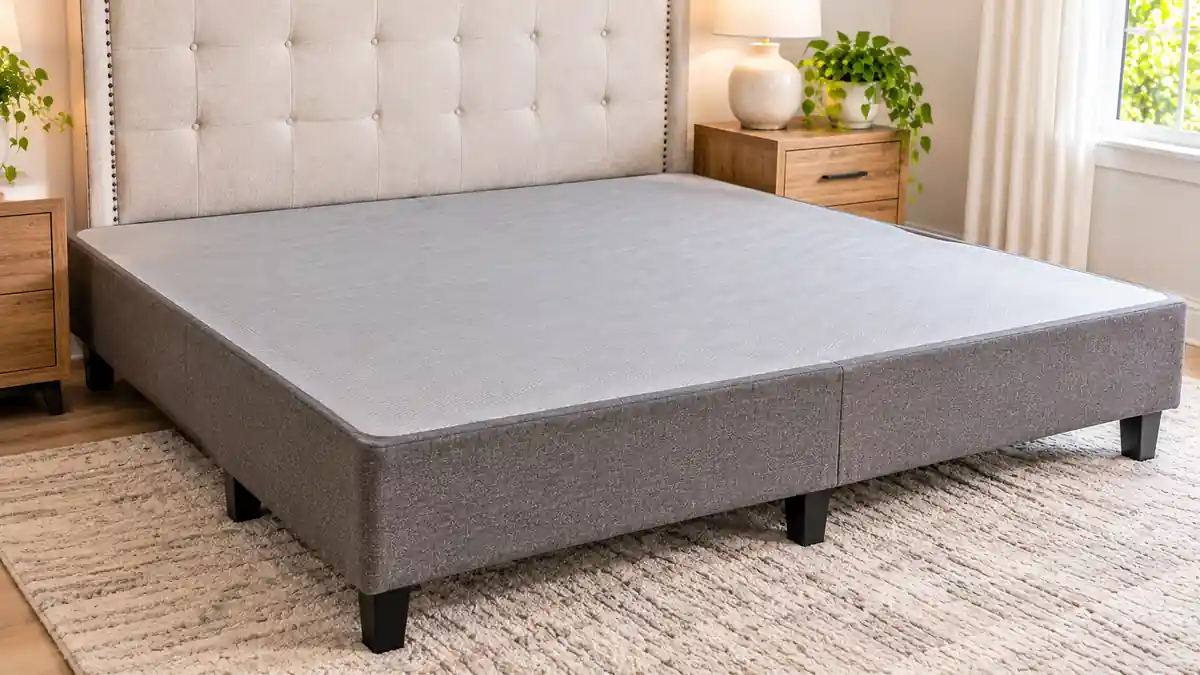
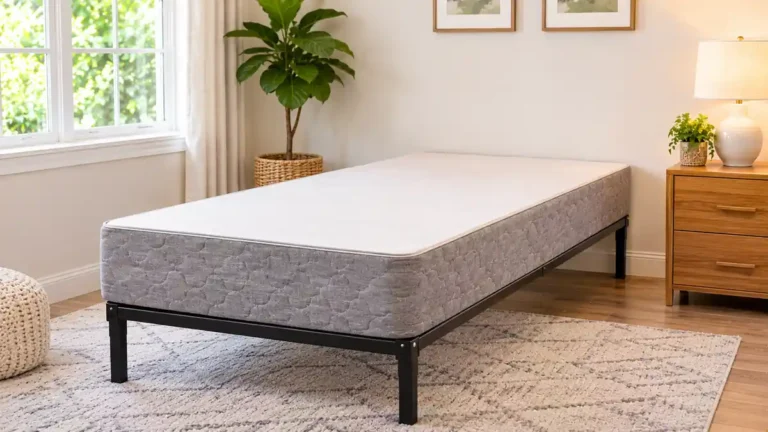
A box spring is a wood frame covered in fabric that sits under a mattress. Traditional box springs contain metal springs. Many modern “box springs” are actually foundations: a rigid frame with no springs that gives firm, flat support. The terms are often used loosely. The point of either is to raise the mattress, absorb some shock and give a stable base.
King Box Spring Dimensions
| Type | Width | Length |
|---|---|---|
| One-piece king | 76 inches | 80 inches |
| Split king (two units) | 38 inches each | 80 inches each |
A standard one-piece king box spring matches the mattress at 76 by 80 inches. A split king is made of two twin XL-sized units that together cover the same area. See the twin mattress dimensions guide for twin XL size. A California king is a different size (72 by 84 inches, general knowledge) and needs a matching box spring.
Split vs One-Piece
Why choose split: Delivery access. The main reason is access. Each half is easier to carry up stairs and around corners. If your staircase and hallways are wide enough for a one-piece unit, either works. Adjustable bases. Split king is required for split-king adjustable bases, where each side raises and lowers independently. Handling. Easier to move when you relocate.
Why choose one-piece: a single, continuous surface; no center seam; often a bit cheaper.
One note: split units can shift apart. Some frames include a bracket or strap to hold them together.
Height: Low-Profile vs Standard
One guide lists low-profile box springs at about 4 to 5 inches tall and standard at about 8 to 9 inches. Height changes the overall bed height.
Low-profile suits tall mattresses, platform-style looks and people who want an easier step in. Standard suits a classic higher bed. Total height: add mattress thickness. Check you can get on and off comfortably and that the bed suits your room.
For thick mattresses, a low-profile unit keeps the bed from towering.
Do You Need a Box Spring?
It depends on the frame and the mattress.
Metal frame without slats: a box spring is required, per the sources, for support. Platform bed with slats: often no box spring is needed. Check slat spacing against your mattress maker’s requirement (many makers specify a maximum gap). Adjustable base: no box spring, but may require split sizes. Warranty: most mattress warranties require a box spring or compatible foundation. A mattress laid on the floor or a poor base may void coverage. Check your warranty. Center support: one retailer notes queen and king box springs need a frame with a center support bar to prevent sagging.
See the wood bed frame and storage bed guides for frame types.
Box Spring vs Foundation vs Platform
| Option | What it is | Best for |
|---|---|---|
| Traditional box spring | Frame with springs | Innerspring mattresses |
| Foundation | Rigid frame, no springs | Foam, hybrid and latex mattresses |
| Platform bed | Slats or solid surface | Mattresses that do not need a base |
| Adjustable base | Motorized frame | Raising head and feet |
Memory foam and many hybrids work best on a firm, flat base. Check what the mattress maker recommends. This is general knowledge and the maker’s guide takes priority.
Delivery and Access
King-size pieces are big. Before ordering:
- Measure doorways, hallways and stair turns.
- Consider split if access is tight.
- Check the elevator size in apartments.
- Ask about white-glove delivery.
- Check the return and restocking terms.
Frame Compatibility
Check the frame’s listed mattress size (king vs California king). Check the weight rating and center legs. Check whether the frame holds two twin XL units securely. Check slat spacing and support bars. Check bed skirts and sheets fit the added height. See the fitted sheet guide.
Weight
The sources I found gave no reliable weight for king box springs (two results claiming ranges were spam), so check each product’s listing and shipping weight before you plan the move.
Cost
Prices vary widely by brand and construction. I did not find a verified price range. Compare the box spring price with a foundation or platform bed, which may replace it.
What are the main strengths and weaknesses?
On the plus side: raises the bed height; gives firm, flat support; split units are easy to carry; often needed for warranty and metal frames. On the downside: adds height and cost; split units can shift; not needed with some platform beds; old box springs can sag.
How to Choose a King Box Spring
Check your mattress warranty and maker guide. Check your frame: slats, center support, type. Choose one-piece or split. Choose low-profile or standard height. Measure delivery access. Check size: king vs California king. Check weight rating. Plan bedding for the final bed height. Read reviews and return terms.
What mistakes should you avoid?
A few common mistakes are worth avoiding: buying a California king box spring for a king; skipping the center support bar; ignoring the warranty; not measuring the stairs; using a box spring on a slat bed that does not need one; choosing a standard-height unit with a very thick mattress.
Frequently Asked Questions
What size is a king box spring?
76 inches by 80 inches.
What is a split king box spring?
Two twin XL units, each 38 by 80 inches.
How tall is a king box spring?
About 4 to 5 inches for low profile and 8 to 9 inches for standard, per one guide.
Do I need a box spring for a king bed?
If your frame has no slats or your warranty requires it, yes. Slat platform beds often do not need one.
Is split or one-piece better?
Split is easier to move and required for split-king adjustable bases. One-piece has no center seam.
Will a king box spring fit a California king?
No. They are different sizes.
Conclusion
A king box spring is simple: 76 by 80 inches, or two 38 by 80 inch units for a split king. The real choices are height, split vs one-piece and whether your frame and warranty require one.
Check your mattress warranty, measure your stairs and confirm center support before you buy.
Related guides
 Box Spring: What It Is, Box Spring vs Foundation and Whether You Need OneBox springs used to be standard under every mattress. Today, many people use platform beds and slatted bases…Read more →
 Twin Box Spring Guide: Size (38 x 75 Inches), Low Profile vs Standard Height, Split Options and When You Need OneQuick answer: a standard twin box spring is 38 inches wide by 75 inches long, the same as a twin mattress.…Read more →
 Full Size Box Spring Guide: Dimensions, Low Profile vs Standard, Foundations and WarrantyA box spring sits under your mattress, between the mattress and the bed frame. It raises the bed, absorbs some…Read more →
 Texas King Bed Guide: Size (80 x 98 Inches), Room Needed, Bedding, Cost and Who Needs OneQuick answer: a Texas king mattress measures 80 inches wide by 98 inches long, according to most sources. That…Read more →