Twin Mattress: Size, Types and How to Choose the Right One
A twin mattress is the smallest standard adult mattress, and it fits in more places than people expect. It works in a kid’s room, a dorm, a guest room or a small apartment. But “twin” can mean two different lengths, and buying the wrong one is an easy mistake.
This article is part of our mattress buying guide, where you can compare related options.
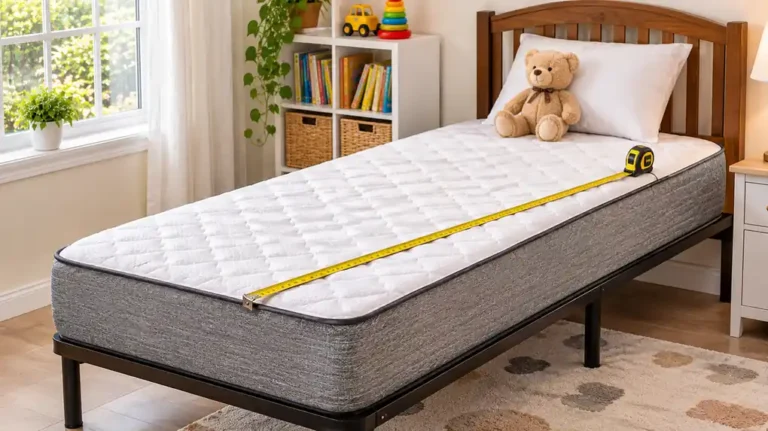
A twin mattress is a single-sleeper mattress that measures about 38 inches wide and 75 inches long. It’s also called a single mattress. A twin XL has the same width but is longer, which is why it’s popular for tall sleepers and college dorms.
This guide explains twin mattress dimensions, how a twin compares to a twin XL, who each one suits and which mattress types are worth a look. You’ll also get a buying checklist and answers to common questions.
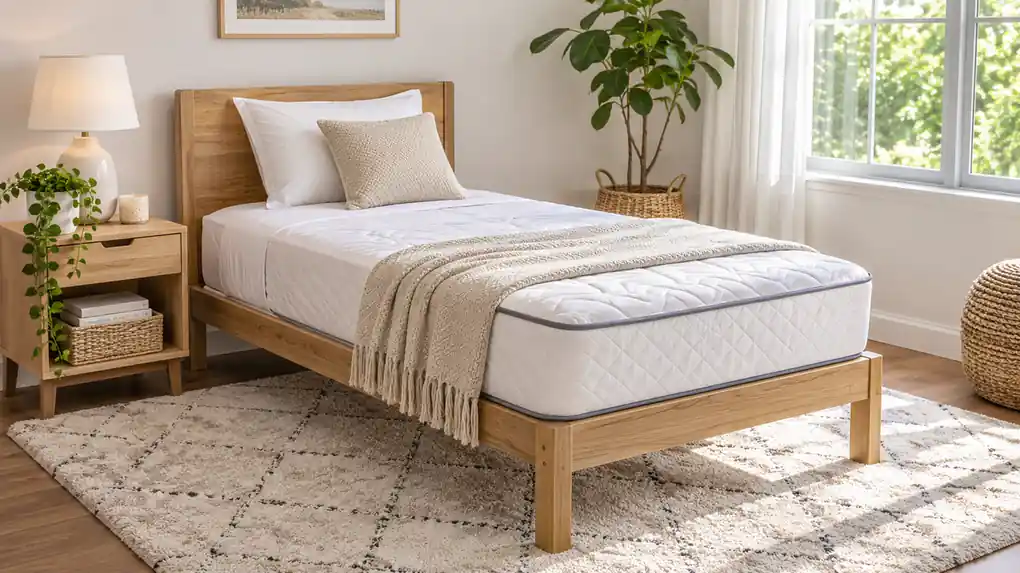
What Size Is a Twin Mattress?
A standard twin mattress at about 38 inches wide by 75 inches long. That works out to 2,850 square inches of sleeping space. A few brands list slightly different numbers, such as a 74-inch length or a 39-inch width, so it’s smart to check the product page before you buy sheets or a frame.
The thickness, or height, varies by mattress. Many twin mattresses are between 8 and 14 inches thick. A thicker mattress usually has more comfort layers, but it can make a bunk bed or a trundle too tight. If your bed frame has a height limit, check it before you order.
In feet, a twin is a little over 3 feet wide and about 6 feet long. That’s a small footprint. It leaves room for a desk and a dresser in a small bedroom, which is why twins are popular in kids’ rooms and shared spaces.
Twin vs Twin XL: What’s the Difference?
The only real difference is length. A twin XL is about 38 inches wide by 80 inches long. That’s five extra inches, and it brings the surface area to about 3,040 square inches.
Sleep experts commonly say a standard twin suits single sleepers under 6 feet tall. A twin XL is a better pick for people over 6 feet, and for teens who are still growing. Many college dorms use twin XL beds, so students often buy twin XL mattresses and sheets.
| Feature | Twin | Twin XL |
|---|---|---|
| Width | About 38 inches | About 38 inches |
| Length | About 75 inches | About 80 inches |
| Best for | Kids, shorter adults, small rooms | Tall sleepers, teens, dorm rooms |
| Cost | Usually lower | Usually higher |
| Sheets | Standard twin | Twin XL only |
Be careful with bedding. Twin sheets are five inches too short for a twin XL, so the corners won’t stay on. Twin XL sheets also won’t fit a standard twin correctly. Always check the label.
Who Should Buy a Twin Mattress?
A twin mattress works well for a few groups of people.
Children and growing kids: a twin is the natural step up from a toddler bed. Many kids use the same twin from age 3 into their teens. Small bedrooms and guest rooms: a twin leaves floor space, and two of them can share a room for siblings or guests. Bunk beds and trundles: most bunk beds and daybeds are built for twin mattresses, so a twin is the easy choice for these. Solo sleepers who like a small bed: some adults prefer a smaller bed to save space, especially in studios and dorms.
A twin isn’t the best choice for couples, for tall people or for someone who sleeps with a pet and wants room to spread out. If you’re over six feet tall, a twin XL or a full-size bed will feel better.
Types of Twin Mattresses
Most twin mattresses fall into four types. Each one feels and behaves a little differently.
Memory foam: this type hugs your body and relieves pressure. It tends to trap heat unless it has cooling layers or open-cell foam. It also does a good job reducing movement, which helps if a sibling shares the room. Innerspring: coils give a bouncy feel and good airflow. These mattresses usually cost less, though they tend to offer less pressure relief than foam. Hybrid: a hybrid mixes a coil base with foam or latex on top. It gives a good balance of bounce and cushioning, and many people find it comfortable in several sleep positions. Latex: latex feels springy and responsive. It’s often praised for durability and breathability, but it usually costs more.
For kids, a medium-firm mattress is a common pick, since it supports a growing body without feeling hard. For teens and adults, choose based on sleep position and comfort, and read the trial period details if you buy online.
How to Choose the Right Twin Mattress
Use these steps to narrow down your choice.
Measure your bed frame. Make sure it takes a twin, not a twin XL, and check the height limit. Check the sleeper’s height. If they’re close to six feet or growing, think about a twin XL. Pick a firmness level. Side sleepers usually like medium-soft to medium-firm. Back and stomach sleepers often prefer something firmer. Heavier sleepers may need a firmer mattress. Choose a type. Foam for pressure relief, hybrid for balance, innerspring for budget and latex for a springy feel. Think about temperature. If the sleeper runs hot, look for breathable materials or cooling layers. Read the trial and warranty terms. A sleep trial gives you time to test the mattress at home. Plan the bedding. Buy sheets that match the size, and add a mattress protector to keep the mattress clean.
Twin Mattress Buying Tips
Look at the foundation. Many modern mattresses need a solid or slatted base. Slats that are spaced too far apart can void a warranty, and some guides say to keep the gaps to about 3 inches or less. Check your mattress maker’s rules to be sure.
Think about how the mattress arrives. Boxed mattresses ship compressed and expand after you open them, which makes them easier to get up stairs. Give them a day or two to reach full shape.
Finally, think about long-term use. If the twin is for a child, a durable, washable cover and a protector are worth the small extra cost. If it’s for a dorm, check the school’s size rules first.
How to Care for a Twin Mattress
A good mattress lasts longer with a few simple habits. Use a mattress protector from day one. Rotate the mattress every few months if the maker says it’s safe to do so, since some foam mattresses are built to be used on one side only. Vacuum the surface now and then, and spot clean spills right away with mild soap and water.
Air out the bed when you change sheets, and keep it away from damp walls. If you notice sagging, lumps or aches when you wake up, those are signs the mattress may be near the end of its life.
Frequently Asked Questions
What are the dimensions of a twin mattress?
A standard twin is about 38 inches wide and 75 inches long. Some brands vary by an inch, so check the product listing before buying sheets or a frame.
Is a twin mattress good for adults?
Yes, for a single sleeper under about six feet tall. It saves space and costs less than larger sizes. Taller adults may prefer a twin XL or a full.
Can two people sleep on a twin mattress?
It’s not comfortable for most adults. At 38 inches wide, each person would get about 19 inches. A full or queen is a better choice for couples.
What’s the difference between a twin and a twin XL?
Both are about 38 inches wide, but the twin XL is five inches longer, at about 80 inches. Tall sleepers and dorm rooms often use twin XL.
Do twin mattresses need a box spring?
It depends on your frame. Many modern mattresses sit on a slatted base or a platform bed with no box spring needed. Check the mattress warranty and the frame’s guide.
How long does a twin mattress last?
It depends on the materials, the weight of the sleeper and how well you take care of it. Many mattresses last several years. Signs like sagging, noise or morning aches suggest it’s time to replace it.
Conclusion
A twin mattress is a smart pick for kids, solo sleepers and small spaces. It measures about 38 by 75 inches, and the twin XL adds five inches in length for taller sleepers. Match the size to the person and the frame, then choose a type and firmness that fit how they sleep.
Before you buy, measure the room, check the bed frame and compare trial and warranty terms. A twin that fits the sleeper and the space will feel comfortable and last for years.
Related guides
 Folding Mattress: Tri-Fold Foam Thickness, Sizes, Density and Who It SuitsA folding mattress is a foam mattress that folds into thirds so you can store it in a closet or carry it.…Read more →
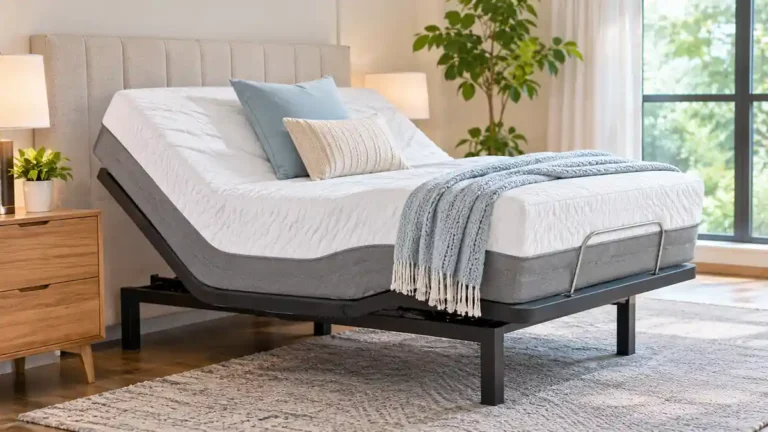 Adjustable Mattress Guide: Which Mattress Types Work on Adjustable Bases (Foam, Latex, Hybrid) and What to CheckQuick answer: most foam, latex and many hybrid mattresses work on an adjustable bed base. Casper rates memory…Read more →
 Inflatable Mattress Guide: Air Bed Height, Built-In Pumps, Leaks, Weight Capacity and CareQuick answer: an inflatable mattress, or air bed, is a mattress you fill with air for guests, camping or…Read more →
 Twin Mattress Dimensions: 38 x 75 Inches, Twin vs Twin XL vs Full, Sheets and Bed FramesQuick answer: a standard twin mattress measures 38 inches wide and 75 inches long (about 97 by 191…Read more →