Full Size Box Spring Guide: Dimensions, Low Profile vs Standard, Foundations and Warranty
A box spring sits under your mattress, between the mattress and the bed frame. It raises the bed, absorbs some shock and gives the mattress a flat, supportive base. For a full-size bed, you need a full-size box spring or foundation to match. The problem is that the term “box spring” is used loosely, sizes vary slightly between brands and heights range from very low to tall. If you pick the wrong one, your bed may be too high, too low or incompatible with your frame.
This article is part of our mattress buying guide, where you can compare related options.
A full size box spring is a base made for a full (double) mattress, usually about 54 by 75 inches. This guide explains full-size dimensions, standard vs low-profile heights, the difference between a box spring and a foundation, how it relates to platform beds and what to check about warranties. Always check your mattress maker’s requirements.
Full Size Dimensions
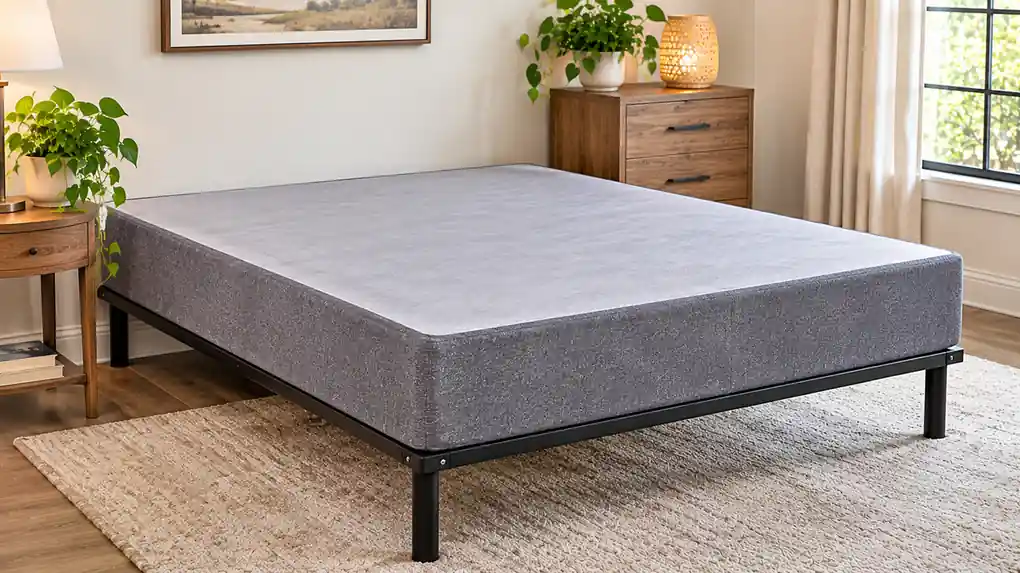
Full-size foundations are usually around 54 by 75 inches, though listings vary. Examples from retail listings: One low-profile full foundation lists 54 inches wide, 75 inches deep and 5 inches high. Beautyrest and Scott Living low-profile fulls are listed at about 53 inches wide and 74.5 inches deep, with heights of 5.5 and 6 inches respectively.
Check the exact figures for the specific product before buying. A box spring that is slightly smaller than the mattress keeps edges from overhanging, which many makers prefer. See the full vs queen guide for mattress dimensions.
| Product | Width | Length | Height |
|---|---|---|---|
| Typical full foundation | About 54 in | About 75 in | Varies |
| Example low-profile (one retailer) | 54 in | 75 in | 5 in |
| Example low-profile (others) | About 53 in | About 74.5 in | 5.5 to 6 in |
Standard vs Low Profile
Standard box spring: often about 9 inches tall. Raises the bed to a traditional height. Low-profile box spring: about 4 to 6 inches tall. One retailer notes that the low-profile version is 4 inches lower than a standard 9-inch-tall box spring. Ultra-low or flat foundation: about 4 inches or less. One Sealy listing says ultra-low is perfect for platform-style bed frames. That is a manufacturer’s marketing claim, so confirm compatibility with your frame’s maker.
Choose height based on: total bed height. Mattress plus foundation plus frame. Tall mattresses plus tall foundations make a very high bed; ease of getting in and out; frame requirements. Some frames need a certain height; headboard fit; style. Low beds look modern. High beds look traditional.
Box Spring vs Foundation
Traditional box spring: has a wood frame with metal springs inside. Gives some give. Foundation: a wood or metal frame with slats or a solid top, no springs. Provides firm, flat support. Many modern mattresses, especially foam and hybrid, are designed for foundations. Bunkie board: a thin, solid slab, often 1 to 3 inches, used on slats or platform beds.
Many people use the word “box spring” for any base. Check whether you are buying a spring-based box spring or a foundation. Foam mattresses generally need a firm, flat base. See the memory foam pillows and how to choose a mattress guides for foam notes.
Do You Need One?
Bed frames with a center rail and side rails often need a box spring or foundation to support the mattress. Platform beds with slats or a solid deck usually do not need one. See the platform bed and wood bed frame guides. Adjustable bases replace the box spring. Mattress warranties may require a specific base. Check your mattress warranty. Slats too far apart may require a foundation or a bunkie board.
When in doubt, check the mattress maker’s instructions and the frame maker’s instructions.
Warranty Notes
Warranty terms vary a lot. A Stearns and Foster low-profile full is listed with 120 months of parts and labor coverage, while a Sealy low-profile foundation lists a 10-year warranty. Read the warranty for the specific model, since these are retailer listings rather than warranty documents.
General points to check: Length of coverage. What counts as a defect. Whether the box spring must match the mattress brand. Whether using a different base voids the mattress warranty.
Keep receipts and warranty cards.
Types and Features
Metal box spring. Light, strong, sometimes with a cover. One listing is a 5-inch low-profile metal full box spring with a cover. Wood box spring. Common, sturdy. Split box spring. Two pieces, easier to move up stairs and into small rooms. One listing is a 4-inch low-profile split wood full box spring. Foundation with legs. Fabric-covered.
A split box spring is useful for narrow stairs and tight corners.
Choosing and Buying
Check your mattress’s requirements. Check your frame’s requirements. Measure the mattress (54 by 75 inches is typical for full). Choose a height (standard, low profile or ultra-low). Choose a type: box spring, foundation or split. Check weight capacity. Check the warranty. Check delivery access. Read reviews for squeaks and sagging.
Care
Key points: vacuum the cover occasionally; check for squeaks and loose parts; rotate with the mattress; replace when the base sags, cracks or squeaks badly; use a mattress protector to keep dirt off. See the mattress cover and mattress pad guides.
What mistakes should you avoid?
A few common mistakes are worth avoiding: buying the wrong size (a queen base does not fit a full); choosing a height that makes the bed too tall; using a box spring on a platform bed without checking; ignoring the mattress warranty; not considering delivery access; mixing up box spring and foundation.
Frequently Asked Questions
What size is a full box spring?
Usually around 54 by 75 inches, though some are about 53 by 74.5 inches.
How tall is a low-profile box spring?
Often 4 to 6 inches. One retailer says it is 4 inches lower than a standard 9-inch box spring.
Do I need a box spring for a full mattress?
It depends on your frame and your mattress warranty. Platform beds usually do not need one.
What is the difference between a box spring and a foundation?
A box spring has springs inside. A foundation is a firm, flat base with no springs. Many people use the terms interchangeably.
Can I use a full box spring on a queen bed?
No. Match the base to the mattress size.
How long do box springs last?
It varies. Warranties range from about 10 years to 120 months for different models.
Conclusion
A full size box spring is a simple part of your bed, but the details matter. Check your mattress and frame requirements, choose the right height and type, verify the dimensions and read the warranty.
If you use a platform bed, you may not need one at all. With the right base, your full mattress is supported, quiet and long-lasting.
Related guides
 Box Spring: What It Is, Box Spring vs Foundation and Whether You Need OneBox springs used to be standard under every mattress. Today, many people use platform beds and slatted bases…Read more →
 Twin Box Spring Guide: Size (38 x 75 Inches), Low Profile vs Standard Height, Split Options and When You Need OneQuick answer: a standard twin box spring is 38 inches wide by 75 inches long, the same as a twin mattress.…Read more →
 King Box Spring: Dimensions (76 x 80), Split King, Height, Do You Need One and Warranty ChecksQuick answer: a standard king box spring is 76 inches wide and 80 inches long, the same as a king mattress. A…Read more →
 Full Size Loft Bed: Dimensions, Ceiling Height, Weight Limits, Mattress Thickness and SafetyQuick answer: a full size loft bed holds a full mattress (about 54 by 75 inches) on a raised frame, leaving…Read more →