Wingback Chair Guide: History, Wing Styles, Size, Fabric, Comfort and Placement
The wingback chair is one of the most recognizable chairs in the world. Its tall back and curved side panels, called wings, wrap around the sitter like a shelter. It looks formal and cozy at the same time, and it has been in living rooms, libraries and hotel lobbies for centuries. Today it comes in everything from classic tufted velvet to sleek modern shapes.
This article is part of our accent chairs, recliners and seating guide, where you can compare related options.
A wingback chair is an upholstered armchair with a high back and side panels extending from the back toward the arms. This guide explains the history and the types of wings, how a wingback differs from other chairs, how to choose size and fabric, what to check for comfort, where to place one and how to care for it.
What Is a Wingback Chair?
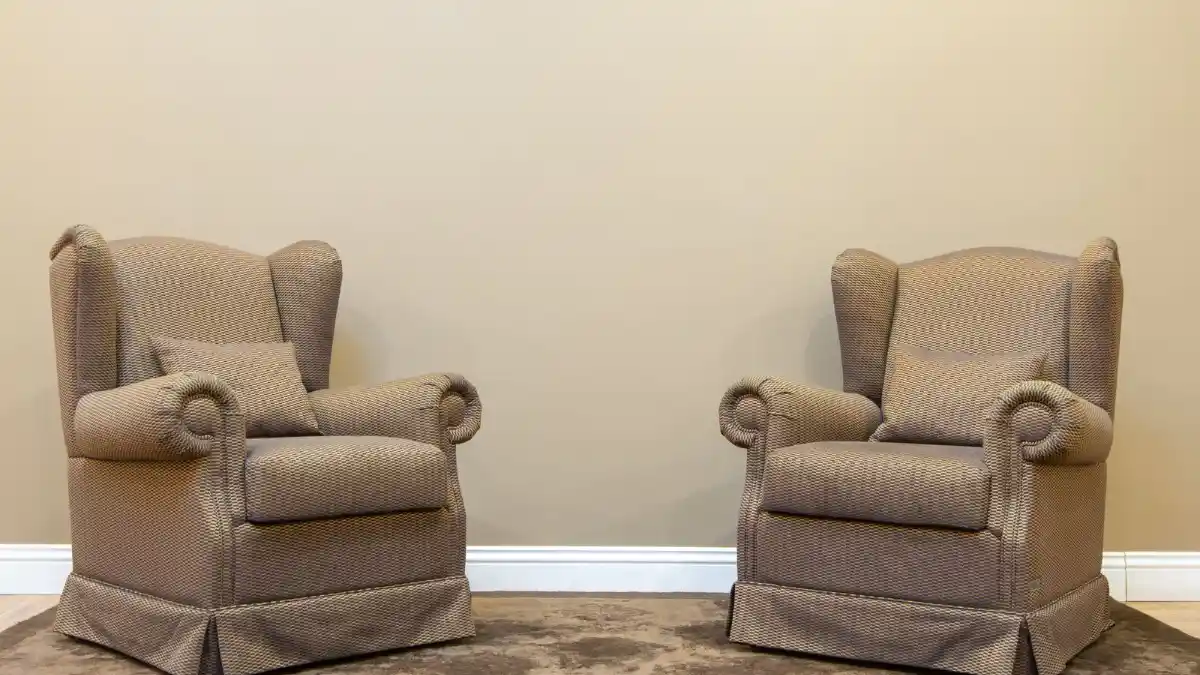
A wingback chair, or wing chair, has a tall back with “wings” on either side of the head. The wings frame the head, and historically they helped block drafts and hold in warmth from a fireplace. The chair usually has padded arms, a cushioned seat and short legs. It is a statement piece as much as a seat.
A Short History
A widely cited origin is 17th-century England, where these chairs were associated with comfort and status. The wings are said to have protected the sitter from drafts. The Queen Anne style, which is still popular, emerged in the early 18th century, according to one decor blog. Over the centuries, wing chairs appeared in many forms, from carved wood legs to upholstered styles. Modern designers keep the tall silhouette but simplify the shapes.
Dates vary between sources, so treat them as general.
Types of Wings
The two standard wing shapes are flat and scroll, with bat and butterfly wings and other variants, according to Wikipedia’s entry.
Flat wings: straight and angular. Tailored and classic. Scroll wings: curved outward at the top. More ornate. Bat wings: a graceful curved shape that resembles bat wings. A popular variant. Butterfly wings: wide, spread-out wings. Cutaway or low wings: shorter wings that give a more modern, open look.
Wingback Styles
Traditional wingback: rolled arms, carved wood legs, tufting, nailhead trim. Fits classic rooms. Queen Anne wingback: cabriole legs (curved) and a graceful shape. Chippendale wingback: decorative carved details. Mid-century modern wingback: slim wood legs, simple lines and clean upholstery. Contemporary wingback: sleek shapes, often in velvet or boucle. Livingetc has a roundup of modern wingback chairs described as structured, sumptuous and chic. Swivel wingback: rotates on a base. See the swivel chair guide. Recliner wingback: a winged recliner with a footrest. Ethan Allen suggests a club chair or a winged recliner may suit extended lounging better than a classic wingback. See the reclining chair and leather recliner guides. Wingback dining chair: a wing chair for the end of a dining table. Wingback office chair: a winged chair with casters.
Wingback vs Other Chairs
Key points: club chair. Low, wide and deep. Better for lounging; barrel chair. Rounded back. Cozy; armchair. A general term; accent chair. A broader category. See the accent chairs for living room guide.
Wingbacks typically have a high back, which suits reading and upright sitting but may not suit long lounging, according to Ethan Allen.
Choosing the Size
Measure the spot first, since the room determines how large a chair you can use. Chairish recommends assessing the available space before choosing a size. Pick a chair that fits without dominating the room.
Check: width and depth of the chair; back height. A tall back can block sightlines or touch a wall; seat height and depth. Feet should reach the floor; arm height; room walkway. Leave about 18 to 24 inches of space around the chair; wall clearance. Wingbacks usually sit against or near a wall; delivery path.
Tape the footprint on the floor. See the accent chairs guide for scale ideas.
Choosing the Fabric
Upholstery shapes the character and durability of the chair.
Velvet. Adds warmth and texture, per one retailer. Shows marks and pet hair. Leather. Adds sophistication and durability, per one retailer. See the leather chair and leather recliner guides. Linen and cotton. Casual looks, but wrinkle and stain. Performance fabric. Stain-resistant, good for families. Boucle and chenille. Cozy. See the boucle chair guide. Patterned fabrics. Stripes, florals and plaids suit traditional rooms. Solid neutrals. Flexible.
Choose a fabric that fits your household and your style.
Comfort
The sources consistently stress comfort and support, so test the seat in person before buying.
Key points: sit for a few minutes; check the seat depth against your legs; check the back support, especially the neck and lower back; check the cushion. High-density foam holds shape. Down-wrapped cushions are softer; check the wings. They should frame your head without feeling cramped; check the arms. They should be a comfortable height; check how it feels to get in and out.
A wingback is usually more upright than a recliner. Add a lumbar pillow if needed. See the lumbar pillow guide.
Where to Place a Wingback Chair
Key points: beside a fireplace, the classic spot; in a reading nook, with a floor lamp and a small side table. See the C table and couch table guides; in a bedroom corner; flanking a console or window in pairs; in an entryway; at the end of a dining table; in a home office, as a guest chair; facing a sofa, across a coffee table; by a window, for natural light.
Angle it slightly toward the room for a more relaxed look.
Style Match
Match the chair to your room’s aesthetic, whether traditional with tufting or modern with splayed legs. Living Etc quotes designers on this range. A bold wingback in a modern room can be a conversation piece, and a classic one anchors a traditional room.
Care
Key points: vacuum regularly with a soft brush; spot clean spills right away; follow the cleaning code on the tag; rotate cushions if removable; keep out of direct sun; condition leather as needed; check legs and joints.
What are the main strengths and weaknesses?
On the plus side: classic, timeless look; good back and head support; cozy, sheltered feel; many styles and fabrics; works as a statement piece. On the downside: high back can feel formal; takes up visual space; not ideal for lounging; quality varies; can be pricey.
How to Choose a Wingback Chair
Measure the space and tape the footprint. Pick a style: traditional, mid-century or modern. Choose a fabric for your household. Test the comfort. Check the frame and cushions. Check back height and wall clearance. Check the warranty and return policy. Read reviews.
What mistakes should you avoid?
A few common mistakes are worth avoiding: not measuring; buying for looks without testing the seat; choosing a fabric that does not suit kids or pets; placing it too close to a wall for the wings; expecting recliner-level comfort; ignoring scale.
Frequently Asked Questions
What is a wingback chair?
An upholstered armchair with a high back and side wings.
Why do wingback chairs have wings?
Historically, to block drafts and hold in warmth near a fireplace, per common accounts.
Are wingback chairs comfortable?
They support the head and back, but are more upright than a recliner. Test before you buy.
What fabric is best?
Velvet, leather, linen or performance fabric depending on your needs.
Where should I put a wingback chair?
Beside a fireplace, in a reading nook, by a window or flanking a table.
What is the difference between a wingback and a club chair?
A club chair is lower and wider, and better for lounging.
Conclusion
A wingback chair is a classic that still looks fresh. Choose a style and fabric that suit your room, test the comfort in person and measure the space carefully.
Place it in a spot with good light, and add a small table and a lamp. With the right wingback, you get a cozy corner that feels both elegant and welcoming.
Related guides
 Club Chair: What It Is, Typical Sizes, Leather Styles and Club Chair vs ArmchairA club chair is a deep, low-backed, heavily upholstered lounge chair, traditionally covered in leather. One…Read more →
 Barrel Chair: Dimensions, Styles, Swivel Options and How to Place OneA barrel chair is an upholstered armchair with a rounded, curved back that wraps around the sitter like the…Read more →
 Floor Chair Guide: Legless Chairs, Back Support, Cushion Thickness and Who Should Avoid ThemQuick answer: a floor chair sits on the floor and gives you a seat and back support without legs. Legless…Read more →
 Sleeper Chair Guide: Sizes, Comfort, Sleeper Chair vs Sofa Bed and How to ChooseA sleeper chair is a chair by day and a small bed by night. It fits in rooms where a sofa bed would be too big:Read more →