Corner Shelves Guide: Types, Mounting Into Studs, Weight Capacity and Styling Ideas
Corners are the most overlooked space in a home. They are usually empty, dusty or filled with a lonely plant. Corner shelves turn that dead space into storage and display, without using any floor area. They work in living rooms, bedrooms, bathrooms, kitchens and offices. They also fix an awkward problem: where to put things in a small room.
This article is part of our shelves, bookcases and storage furniture guide, where you can compare related options.
Corner shelves are shelves shaped to fit the corner where two walls meet. They can float on the wall, stand on the floor in a tiered tower or sit on a table. This guide explains the types, how to mount them (and why studs matter), how much weight they can hold, how to plan the layout and how to style them. Many weight numbers in the sources came from sellers and varied, so the manufacturer’s rating for your specific shelf should take priority.

Types of Corner Shelves
One vendor guide lists five configurations and notes that these cover almost every use case. Each solves a different problem. Common types:
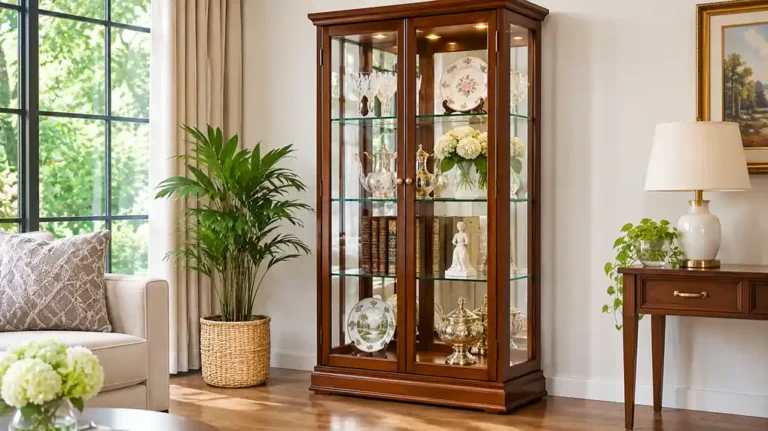
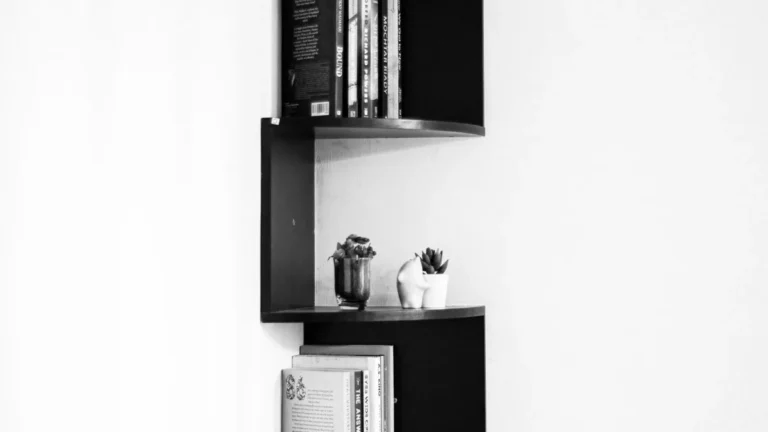
Floating (wall-mounted) corner shelf: a triangular or L-shaped shelf mounted on the walls. Clean look, no legs. Needs secure mounting. Tiered wall corner shelf: several stacked shelves in the corner. More storage. Floor-standing corner shelf (tower): a tall unit that sits on the floor. Often with 4 or 5 shelves. Anchoring recommended. Corner display shelf: a decorative shelf for collectibles, often with glass or a mirror back. Corner ledge or picture ledge: a shallow shelf for photos and small items. Corner bookcase: a larger unit made for books. See the small bookshelf guide. Corner shelf with a door: a cabinet for closed storage. Tabletop corner shelf: a small shelf for a counter or desk. Floating corner shelves in sets: several shelves arranged in a staggered pattern.
| Type | Mounting | Best for |
|---|---|---|
| Floating | Wall | Small items, clean look |
| Tiered wall | Wall | More storage |
| Floor tower | Floor and anchor | Books, plants |
| Display | Wall or floor | Collectibles |
| Cabinet | Wall or floor | Hidden storage |
One source describes the choice as between tall storage, a mounted display and a floating ledge.
Where to Use Corner Shelves
Living room. Display photos, plants and decor. See the display cabinet guide. Bedroom. Lamps, books and small decor. Bathroom. Towels, toiletries and plants. See the bathroom shelves and bathroom organizer guides. Kitchen. Spices, cookbooks and dishes. Home office. Files and supplies. See the small desk guide. Kids’ room. Toys and books. Keep shelves low and anchored. Entryway. Keys, mail and a plant. Over a toilet in a corner. Pairs well with a corner toilet layout. See the over toilet storage guide.
Mounting: Studs, Toggle Bolts and Anchors
Studs are the best option. One says stud-mounted shelves handle much more weight than those using drywall anchors. A corner shelf has two anchor points, one on each wall, so wall-mounted corner shelves rely on two points: one in each wall.
How to mount:
- Find the studs in both walls with a stud finder.
- Plan the height and mark it with a level.
- Check the shelf’s mounting points and where they land.
- Screw into studs where you can.
- Use toggle bolts for drywall. One installation guide suggests using toggle bolts approximately every 8 to 12 inches along the bracket where it spans between studs.
- Check that the shelf is level before tightening.
- Test the shelf with a light load first.
For plaster or tile walls, use appropriate bits and anchors. Avoid mounting through waterproofing in wet areas.
Weight Capacity
Figures differ across sources, and they come from sellers.
One vendor puts solid wood corner shelves with bracket mounts into studs at 20 to 30 pounds per shelf, while MDF shelves with drywall anchors typically max out around 10 to 15 pounds. Another gives both screws into studs at 25 to 35 pounds, one stud plus one toggle bolt at 15 to 25 pounds, and two toggle bolts with no studs at 10 to 15 pounds. A third suggests 35 to 50 pounds for a medium shelf when both anchor points hit studs, and if one or both hit drywall only, capacity drops by half.
| Mounting | Approximate capacity (seller figures) |
|---|---|
| Both points into studs | About 25 to 50 lb (varies) |
| One stud, one toggle | About 15 to 25 lb |
| Two toggle bolts, no studs | About 10 to 15 lb |
Use these only as rough guidance. The manufacturer’s stated rating for your specific shelf should take priority. Put heavy items on lower shelves, and do not exceed the limit.
Materials
Key points: solid wood. Strong and warm. Heavier; MDF and engineered wood. Common and affordable. Lower capacity with drywall anchors; metal. Strong and slim. Industrial look; glass. Looks light. Check weight limits; acrylic. Light; bamboo. Light and natural; rattan and cane. Decorative. See the rattan dresser guide.
For bathrooms and kitchens, choose moisture-resistant materials.
Planning the Layout
One guide suggests planning for stud locations, the exact shelf depth and the weight you will place on the shelf before you start.
Choose shelf depth. Deep shelves hold more but stick out into the room. In walkways, choose shallower shelves. Plan the height. Place display shelves at eye level. Place storage shelves within easy reach. Adjustable shelves. Useful if you plan to store items of different heights. Space between shelves. At least 10 to 12 inches for books and decor. Do not block windows, switches, outlets or doors. Think about traffic. Corners in hallways can be bumped.
Styling Ideas
Key points: group by theme or color; mix heights and shapes; use plants to soften the corner. Choose plants suited to the light; add small lights. LED strips or a mini lamp; use baskets for hidden storage; display art or framed photos; keep the top shelf light; match the finish to nearby furniture; leave some empty space so the shelf does not look cluttered.
Safety
Key points: anchor tall units to the wall; keep heavy items low; mount shelves above head height only when safe, and avoid fragile items there; do not let kids climb on shelves; round corners if the shelf is in a play area; check hardware regularly.
What are the main strengths and weaknesses?
On the plus side: uses unused corner space; saves floor space; adds display and storage; many styles and sizes; often easy to install. On the downside: lower weight capacity for drywall-only mounts; needs two secure anchor points; corner access can be awkward; dust collects on open shelves.
How to Choose Corner Shelves
Decide the use: storage, display or both. Measure the corner and the height. Choose a type: floating, tiered or floor tower. Check your wall type and stud locations. Check the weight rating and compare it with your load. Choose a material for the room. Plan hardware: screws, toggle bolts or anchors. Check the style and finish. Read reviews for sturdiness.
What mistakes should you avoid?
A few common mistakes are worth avoiding: mounting into drywall only for heavy loads; ignoring stud locations; overloading shelves; choosing shelves too deep for a walkway; forgetting to level the shelf; using MDF in wet areas.
Frequently Asked Questions
How much weight can a corner shelf hold?
It depends on the shelf and the mounting. Seller figures range from about 10 to 15 pounds on drywall anchors to 35 to 50 pounds into studs. Check the manufacturer.
Do corner shelves need to be mounted into studs?
Studs are best. Toggle bolts work for lighter loads in drywall.
What is the best corner shelf for a small room?
A floating or tiered wall shelf uses wall space and leaves the floor clear.
Can I put corner shelves in a bathroom?
Yes, with moisture-resistant materials and proper anchors.
How high should a corner shelf be?
Display at eye level and storage within reach. Keep heavy items low.
Are corner shelves hard to install?
They need two secure anchor points and a level. A stud finder helps.
Conclusion
Corner shelves turn dead space into useful storage and display. Choose a type that fits your room, check your wall and stud locations, and mount the shelf securely, with an eye on the weight rating.
Style it with a mix of items and leave a little space. With the right shelf and a solid mount, an empty corner becomes one of the best-used spots in the room.
Related guides
 Corner Bookcase Guide: Sizes, Narrow 12-Inch Models, Shelf Weight Limits and AnchoringQuick answer: a corner bookcase fits into a room corner to use otherwise wasted space. Large 5-shelf models are…Read more →
 Corner Shelf: Types, Weight Limits, Installation and Small-Space IdeasCorners are the most wasted space in a room. A corner shelf puts that space to work. It can hold books, plants,…Read more →
 Floating Shelves: How to Choose, Install and Use Them SafelyFloating shelves give a room storage without the bulk of a bookcase. They look clean because you can t see the…Read more →
 Corner TV Stand Guide: Sizes for 55 and 65 Inch TVs, Weight Capacity, Depth and Cable ManagementA corner TV stand turns an awkward empty corner into your entertainment center. It holds the TV, hides cables…Read more →