Porta Potty: Types, How They Work, Rental Costs and Waste Disposal
A porta potty is the bathroom you can take almost anywhere. You see them at construction sites, outdoor events, camping trips and farms, anywhere that has no plumbing. They solve a basic problem, and they come in more forms than most people realize.
This article is part of our toilet and bidet guide, where you can compare related options.
A porta potty, short for portable potty, is a self-contained toilet that doesn’t need a sewer line or running water. It collects waste in a tank or container and has basic ventilation and a seat. Some are large cabins that companies rent for events. Others are small camping toilets you can carry in one hand.
This guide explains the main types of porta potties, how they work, how waste is handled, what rental and buying options look like and what to check before you choose. You’ll also find a comparison table and answers to common questions.
What Is a Porta Potty Used For?
People use porta potties wherever a regular restroom isn’t available or isn’t enough.
Events: festivals, weddings, races and fairs rent units for guests. Construction sites: workers need a bathroom, and plumbing may not exist yet. Camping and RV trips: small portable toilets give you a private option at campsites or in a tent. Boats and vans: compact units fit tight spaces. Homes and emergencies: a portable toilet can help during a power or water outage, or when a bathroom is being remodeled. It also helps people with limited mobility who need a toilet near the bed. Farms and remote work areas: they’re handy where building a restroom isn’t practical.
Types of Portable Toilets
Sources group portable toilets in several ways. Here are the main types.
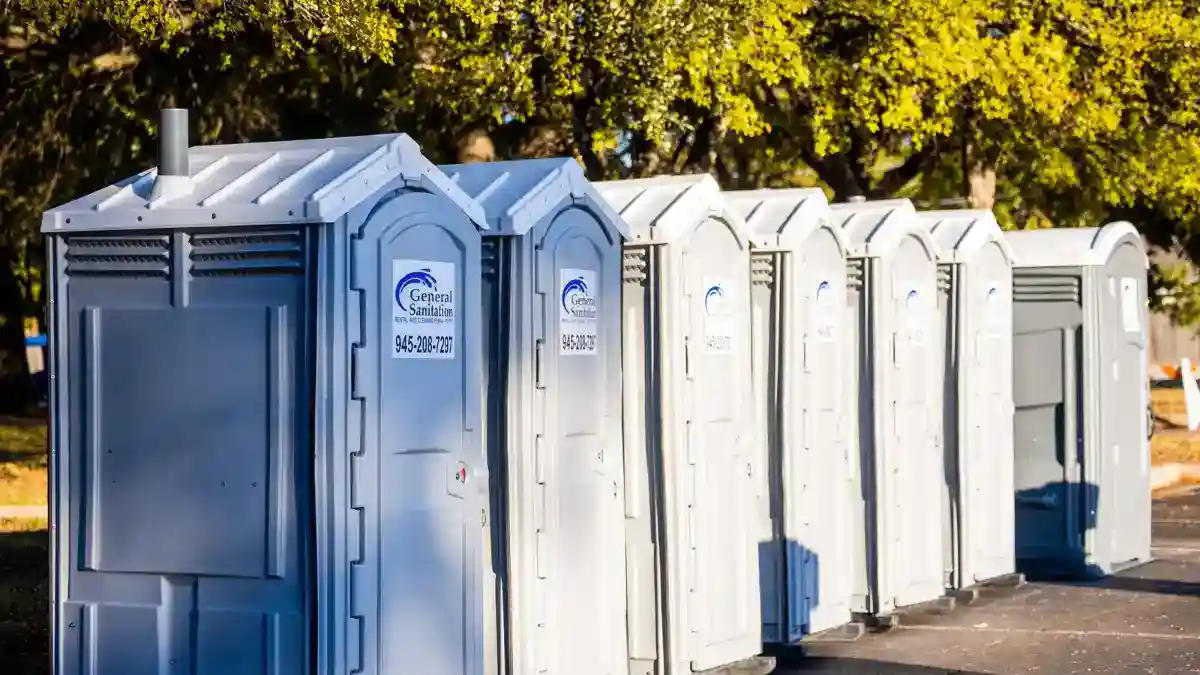
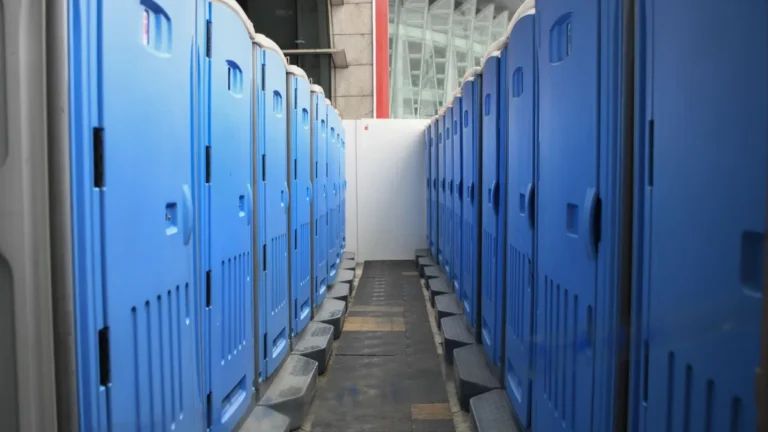
Standard event units: these look like the classic blue or gray cabins. They have a seat, a holding tank and a vent. They’re the most common type for events and job sites. Flush-style units: some event units include a flush mechanism and a small water tank. They’re closer to a home toilet in feel. Chemical or cassette toilets: these are common for camping and RVs. A small water tank sits on top, and a removable cassette holds waste below. A chemical additive helps reduce odors. When you flush, a valve opens and gravity moves waste into the lower tank. Bucket toilets: the simplest type. A bucket with a snap-on seat and waste bags. One source puts the cost at about $25 to $60. Composting toilets: they separate and handle waste so it breaks down over time. Some use a removable container that you empty at an approved site. Specialty units: these include ADA-accessible units for wheelchair users, restroom trailers with sinks and multiple stalls, and high-rise units for construction work.
| Type | Best for | Needs water? | Watch out for |
|---|---|---|---|
| Standard event unit | Events, job sites | Usually no | Needs service by a company |
| Flush-style unit | Longer events | Yes, small tank | Needs refilling |
| Chemical/cassette | Camping, RVs | Yes, for flush | Emptying at a disposal point |
| Bucket | Emergencies, basic camping | No | Basic comfort |
| Composting | Off-grid use | Little or none | Follow local rules |
| ADA or trailer | Large or public events | Often | Cost and delivery |
How Does a Porta Potty Work?
The idea is simple. You use the toilet, and the waste goes into a sealed tank or container. A vent helps move air and odor away. A chemical, if used, helps break down waste and reduce smell.
For a camping toilet, the steps are usually these. You add a little fresh water to the bowl, use the toilet, close the lid and press the flush. The flush opens a gate valve, and gravity moves the waste into the lower tank. Some units have a gauge to show when the tank is full.
Event units work in a similar way, but the tank is larger. The company that rents the unit returns on a schedule to empty, clean and restock it.
How Is Porta Potty Waste Disposed Of?
Waste handling depends on the type of toilet.
For event and job-site rentals, the rental company handles it. Trucks pump the waste out of the tanks, clean the unit and take the waste to a treatment facility. Disposal fees are often charged separately from the rental fee, according to one source.
For camping cassette toilets, you carry the cassette to a designated disposal point. Most campsites have a chemical disposal point. Don’t empty it in a regular toilet at a public restroom unless it’s allowed, and never dump it on the ground or in a stream.
For bucket toilets, you use waste bags and follow local rules for disposal. Some areas require packing out waste. Always check local regulations for the place where you’re camping.
A sanitation company is the most hygienic option for large or long-term needs, since they have the right equipment.
Porta Potty Rental: What to Expect
For events or work sites, renting is usually easier than buying. Here’s what to think about.
How many units: the number depends on guest count and how long the event lasts. Ask the rental company for their guidance. Sources I found didn’t give a standard ratio, so rely on the company. Cost: one source estimated a standard unit at around $100 per day and a luxury unit at $200 or more per day. Prices vary a lot by area, season and service level. Weekly or monthly rentals for job sites are often priced differently. Delivery and pickup: ask about fees, access to the site and flat ground. Units need a level, stable surface. Servicing: for longer rentals, ask how often the units are cleaned and restocked. Extras: hand sanitizer stations, sinks and lighting are common options. Large events may need units with handwashing sinks. Book early: rental companies advise booking ahead, because supply can be limited in busy warm months. Accessibility: if you have guests who use wheelchairs, ask for ADA units.
Buying a Portable Toilet for Camping or Home
If you plan to buy, think about these points.
Where you’ll use it. Tent camping, RV, boat or home emergency kit? Waste capacity. One source says camping toilet waste tanks range from about 1.3 to 5.8 gallons. A bigger tank lasts longer but is heavier to carry. Weight and size. Check how much it weighs when full and whether it fits in your vehicle. Seat height. Choose a comfortable height for the user. Stability. Look for a wide base and a solid seat. Cleaning. Smooth surfaces and an easy-to-remove tank make cleaning simpler. Disposal. Make sure you can empty it where you plan to camp. Chemicals. Check if the toilet needs a special additive and if it’s allowed where you camp.
Porta Potty Tips
Keep the toilet on level ground. Pack extra toilet paper made for portable toilets, if the maker recommends it. Don’t flush items that aren’t allowed, such as wipes and feminine products. Bring hand sanitizer and wipes for cleanup. Keep a small light inside for use at night. Empty and rinse the tank soon after use to reduce smells.
Frequently Asked Questions
What is a porta potty?
A self-contained portable toilet that collects waste in a tank, used where there’s no plumbing.
How does a porta potty work?
Waste goes into a sealed tank or container. A vent and, in some units, a chemical help control odor. Event units are emptied by a service truck, and camping units are emptied by hand at a disposal point.
How much does it cost to rent a porta potty?
One source estimates about $100 per day for a standard unit and $200 or more for a luxury unit. Prices vary, so ask for local quotes.
How do you empty a camping porta potty?
Remove the waste tank or cassette and empty it at a designated disposal point, such as a campsite chemical disposal station. Rinse and refill as the maker advises.
Do porta potties smell?
They can, but regular servicing, ventilation and chemicals help. Proper cleaning and timely emptying make a big difference.
Can I use a porta potty at home?
Yes, for emergencies, remodeling or limited-mobility needs. Choose a stable, comfortable model and plan for waste disposal.
Conclusion
A porta potty gives you a working toilet where plumbing isn’t available. The right type depends on the job. Event and job-site units are rented and serviced by a company, while camping and home use calls for a portable cassette, bucket or composting toilet.
Think about where you’ll use it, how long you’ll need it and how you’ll dispose of waste. For events, book early and ask the rental company for guidance on the number of units. For personal use, check capacity, weight and local disposal rules before you buy.
Related guides
 Toilet Dimensions: Standard Size, Rough-In and Clearance RequirementsA standard toilet is about 28 to 30 inches deep, roughly 20 inches wide and 27 to 32 inches high, and the most…Read more →
 Toilet with Bidet: Built-In vs Bidet Seat, Cost, Power Needs and DrawbacksA toilet with a bidet either has the washing function built into the bowl or uses a bidet seat that replaces…Read more →
 RV Toilet Guide: Gravity Flush, Macerating, Cassette and Composting Types ComparedQuick answer: the four main RV toilet types are gravity flush (simple and common), macerating (grinds waste for…Read more →
 Small Laundry Room Ideas: Stacked Machines, Folding Counters, Vertical Storage and Layouts That WorkQuick answer: the best small laundry room ideas are to stack the washer and dryer, add a folding counter or…Read more →