Towel Warmer: Types, Plug-In vs Hardwired, Size and Safety
Stepping out of a shower into a warm, dry towel feels like a small luxury. A towel warmer makes it happen every day. It also helps towels dry faster, which cuts down on the damp smell that builds up in humid bathrooms.
This article is part of our bath towel and bath mat guide, where you can compare related options.
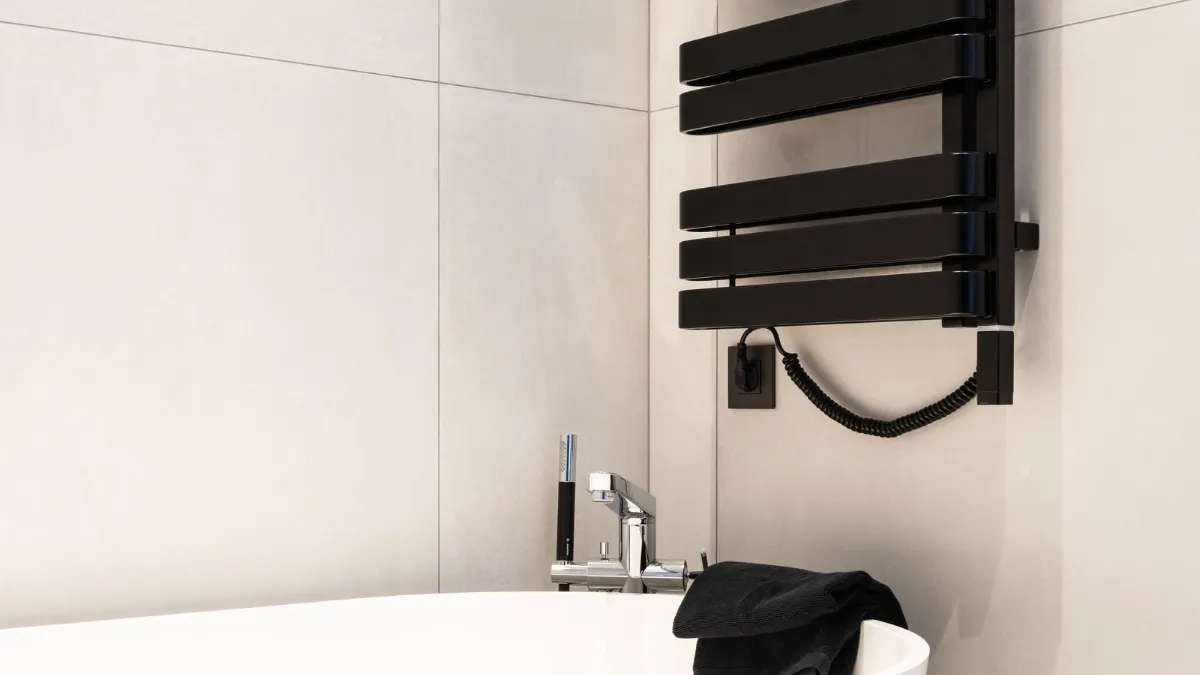
A towel warmer is a heated rack or cabinet that warms towels and robes. Most are electric. Some connect to a home’s hot water heating system. You hang the towels on bars or place them in a bucket-style warmer, and they heat up before you need them.
This guide explains the main types, the difference between plug-in and hardwired models, how to choose a size, which safety features matter and what it costs to run one. You’ll also find answers to common questions.
How Does a Towel Warmer Work?
An electric towel warmer uses a heating element to warm metal bars or a basket. Some models have a dry element, which heats the bars directly. Others are filled with a liquid, like oil or a water mix, that holds heat and spreads it evenly. The towel picks up warmth from the bars.
A hydronic towel warmer works differently. It connects to your home’s hot water system and heats the bars with hot water from a boiler. These are often found in new builds and big remodels, and they need a plumber to set up.
Most people use towel warmers on a timer or a switch. A towel can warm up in a short time, and many models have a built-in timer so the unit turns itself off. That saves power and adds a layer of safety.
Types of Towel Warmers
Wall-mounted ladder warmers: these look like a ladder with horizontal bars. They save floor space and hold several towels at once. They’re the most common type in bathrooms. Freestanding warmers: these stand on the floor and don’t need any wall mounting. They suit renters or anyone who doesn’t want to drill. You can move them around the bathroom. Bucket or basket warmers: you place a folded towel inside a closed warmer. The towel heats evenly and stays warm until you need it. They sit on a counter and are easy to store. Hydronic warmers: these tie into hot water heating. They use no electricity for heat but cost more to install.
| Type | Install | Best for | Watch out for |
|---|---|---|---|
| Wall-mounted electric | Mount to wall | Daily use, bigger bathrooms | Needs a clear wall space |
| Freestanding | None | Renters, small spaces | Takes floor space |
| Bucket warmer | None | Quick warm-ups | Holds fewer towels |
| Hydronic | Plumber | New builds, remodels | Higher installation cost |
Plug-In vs Hardwired Towel Warmers
Electric warmers come in two setups. A plug-in model has a cord that goes to an outlet. It mounts on brackets and starts working as soon as you plug it in. It usually costs a bit less and needs no electrician.
A hardwired model connects directly to the home’s electrical system. The wiring is hidden in the wall, so there’s no cord to see. It looks cleaner, but it needs an electrician. One guide estimates the electrician’s work adds about $100 to $400, though prices vary by area. Hardwiring can also take an hour or two, while mounting a plug-in unit often takes about 15 to 30 minutes.
Some “dual connect” models start as plug-ins and can be converted to hardwired later. If you think you might change your mind, that option gives you flexibility. A licensed electrician should handle any change so the unit keeps its safety approvals.
What Size Towel Warmer Should You Buy?
Think about how many towels you need to warm at once. A couple sharing a bathroom needs space for at least two bath towels. A family may want more bars or a larger unit. Many guides suggest buying a bit more capacity than you think you need, since other people tend to want warm towels too.
Measure the wall space where the warmer will go. Leave room beside it so towels don’t touch the floor or a sink. Check the height, width and how far the unit sticks out from the wall. The bathroom door shouldn’t hit it when it opens.
Also look at the weight. Wall-mounted warmers need strong anchors, ideally into studs, because wet towels are heavy. Follow the maker’s installation guide for the right hardware.
Safety Features to Look For
Bathrooms are damp, so safety is a big deal.
A recognized safety listing. Look for marks such as cULus or cETLus, which show that the product was tested to safety standards. A water-resistance rating. One vendor recommends an IP44 rating or better for a bathroom unit. This is about protection from splashes. Overheat protection. The unit should shut off if it gets too hot. Automatic shut-off or a timer. This keeps the unit from running all day. A GFCI outlet for plug-in models. A ground fault circuit interrupter outlet cuts power if there’s a fault. If your bathroom doesn’t have one, have an electrician add one before you use a plug-in unit.
Don’t drape heavy items over the warmer that block air flow, and don’t use it to dry things that aren’t meant for it. Read the manual for what you can and can’t hang on it.
How Much Does a Towel Warmer Cost to Run?
Running costs depend on the wattage and how long it stays on. One vendor lists models between about 60 and 240 watts, and one model at 90 watts. That’s roughly the power of a small light bulb to a small space heater.
You can save energy with a timer, so the unit only runs when you need it. Some dry-element models heat up and cool down quickly, which suits short sessions. To estimate your cost, multiply the wattage by the hours of use, then divide by 1,000 to get kilowatt-hours, and multiply by your local rate per kWh.
Heat-up time varies a lot. The search turned up one example, a model rated to reach about 122°F in around 30 minutes. Check the spec sheet for the model you’re considering, since makers often list time to reach target temperature.
How to Use a Towel Warmer
Hang the towel loosely so air can move around it. Folding it over many bars is fine, but don’t pack it too tightly. Turn the warmer on about 15 to 30 minutes before you shower, or set the timer. When you’re done, hang the damp towel back on the bars to dry it.
Clean the bars with a damp cloth now and then. Unplug the unit first. Don’t use harsh abrasives that could scratch the finish. If the bathroom has poor airflow, run the fan too, so moisture doesn’t build up.
Common Problems and Fixes
The warmer isn’t heating: check the plug, the outlet, the switch and the timer. If it’s hardwired, check the breaker. It heats slowly: thick towels take time. A larger unit or a higher wattage can help. Towels still feel damp: don’t overload the bars. Space towels out and leave a gap between them. The unit trips the breaker: stop using it and have an electrician check the circuit. Rust spots or finish wear: wipe the unit dry, and check that the finish suits wet rooms.
Frequently Asked Questions
Is a towel warmer worth it?
For many people, yes. It warms towels, helps them dry faster and cuts damp smells. If you don’t use it much, a basic plug-in or bucket model gives the benefit at a lower cost.
Do towel warmers use a lot of electricity?
Most use between about 60 and 240 watts, according to one vendor. A timer keeps the cost low by limiting the running time.
Can I plug a towel warmer into any outlet?
In a bathroom, use a GFCI outlet. If you don’t have one, an electrician should install it first.
Is it safe to leave a towel warmer on all day?
Many models are made to stay on, but a timer or auto shut-off is safer. Follow the maker’s instructions.
Do I need an electrician to install a towel warmer?
Not for a plug-in model, which just mounts and plugs in. A hardwired model needs a licensed electrician.
How long does it take to warm towels?
It varies by model. Check the product’s specifications for the time to reach its target temperature.
Conclusion
A towel warmer is a simple upgrade that makes the bathroom feel better. Plug-in models are easy and low-cost, hardwired ones look cleaner and bucket or freestanding warmers need no installation at all.
Measure your space, choose a size with a little extra capacity and look for safety listings, overheat protection and a timer. Use a GFCI outlet for plug-in units, and your towels will be warm when you need them.
Related guides
 Best Towels Guide: GSM, Cotton Types, Absorbency, Lint and How to Choose Bath TowelsA good towel does one job: it dries you. A bad towel moves water around, leaves lint on your skin or turns…Read more →
 Microfiber Towel Guide: GSM, Waffle vs Chenille Weave, Car, Gym and Hair Uses and Care Without Fabric SoftenerQuick answer: microfiber towels are made of very fine synthetic fibers that soak up water quickly. GSM (grams…Read more →
 Hand Towels Guide: Standard Size (50 x 90 cm), GSM, Materials, Hand vs Guest Towel and CareQuick answer: a standard hand towel is about 16 by 28 inches, or roughly 50 by 90 centimeters. A weight of 500…Read more →
 Small Laundry Room Ideas: Stacked Machines, Folding Counters, Vertical Storage and Layouts That WorkQuick answer: the best small laundry room ideas are to stack the washer and dryer, add a folding counter or…Read more →