Room Divider: Types, Privacy, Sound and Small-Space Ideas
A room divider splits one big space into two without building a wall. It can separate a bed from a living area in a studio, create a home office in a corner or hide a cluttered spot. The right one adds privacy, storage or style, and the wrong one can block light or get in the way.
This article is part of our shelves, bookcases and storage furniture guide, where you can compare related options.
A room divider is any freestanding or hanging piece that visually and physically separates areas of a room. Common types include folding screens, bookshelves, curtains and sliding panels. Some are temporary, and some are built in.
This guide explains the main types, how to choose based on your purpose, what to expect for sound and light, and how to use dividers in small apartments. You’ll also find a comparison table and answers to common questions.
Types of Room Dividers
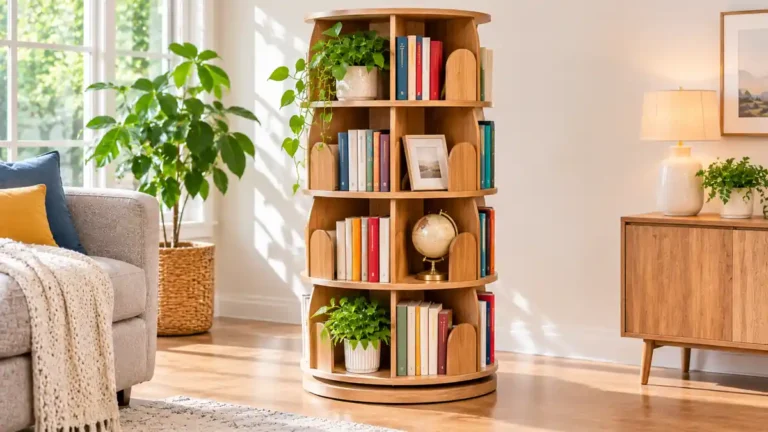
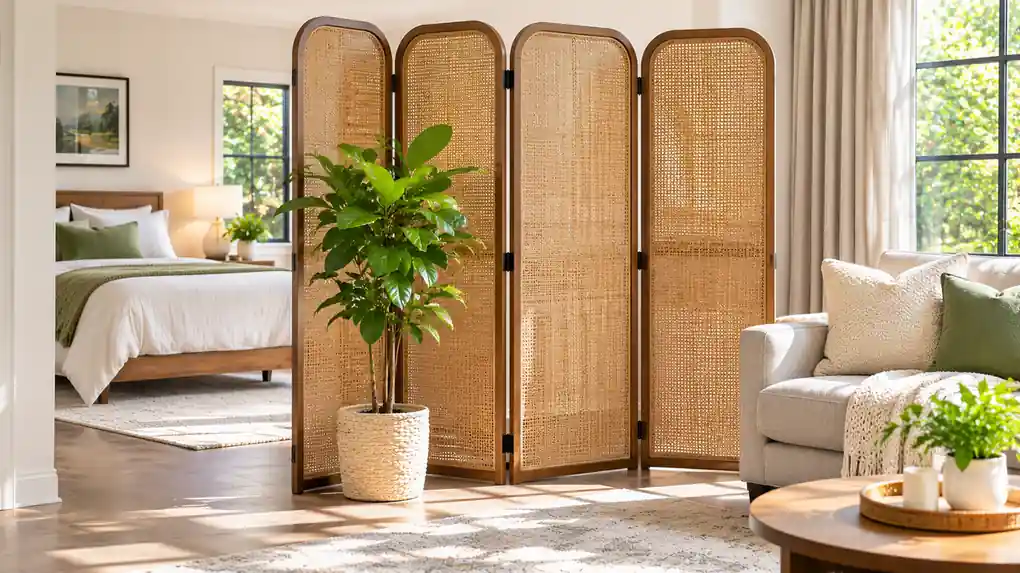
Folding screens: panels joined by hinges. They fold flat for storage and move easily. One small-space guide calls them a common pick for small homes. Bookshelf dividers: open shelves that double as storage. One source calls room divider shelves one of the most popular types. They split a large room or add storage in a small one. Curtains: hung from a ceiling track or rod. One guide notes that curtains are among the quickest ways to create privacy in a small room. Sliding panels or doors: panels that slide on a track. They can be glass, wood or fabric. Solid-core folding doors can block more sound than other types. Hanging screens: panels or beaded strands suspended from the ceiling. Glass dividers: let light through while still separating the space. One source notes glass may not offer full soundproofing. Plant walls or planter dividers: shelves with plants make a soft, natural border. Half walls or partition walls: a permanent option that may need construction.
| Type | Privacy | Light | Sound | Best for |
|---|---|---|---|---|
| Folding screen | Medium | Medium | Low | Flexible, temporary use |
| Bookshelf | Medium | Medium | Low | Storage and zones |
| Curtain | Medium to high | Depends on fabric | Low | Renters, quick fixes |
| Sliding panel | High | Depends | Medium to high | Permanent zones |
| Glass divider | Low to medium | High | Low to medium | Keeping light |
How to Choose a Room Divider
One guide recommends starting with purpose first, then measuring. Ask yourself why you need the divider.
Privacy: you need a visual barrier, such as a bed area in a studio. Choose solid panels or heavy curtains. Light: you want to keep a bright room. Choose glass, open shelves or sheer fabric. Traffic flow: the divider should not block walkways or doors. Noise: you want less sound between zones. Solid, heavy materials work better than light fabrics. Storage: a bookshelf or cabinet divider adds function. Permanence: renters often choose freestanding or hanging options. Owners may choose built-in panels.
Then measure. One source suggests a common height range of 5 to 7 feet. A divider around 5 to 6 feet blocks sight lines when standing, while a taller one gives more privacy. Measure the width you need to cover and the floor space the piece takes up. Leave walkways clear and avoid blocking outlets.
Room Dividers and Sound
Sound blocking varies a lot. One source says solid-core folding doors offer strong sound insulation and privacy. Another notes that curtain dividers offer limited sound insulation. Fabric alone does not block sound well, so don’t expect a curtain or a thin screen to make a room quiet.
For acoustics, a textile-faced or wool-backed panel absorbs mid-range frequencies better than steel or aluminum, according to one source. But absorbing sound inside a room is different from blocking it between rooms. If you need real sound blocking, you may need heavy, dense materials or a built-in wall. Sources here are retailer blogs, so check claims before you buy.
Room Dividers in Small Apartments
In studios and small homes, a divider can create the feeling of separate rooms.
Bed area. A folding screen, curtain or tall shelf can hide the bed from the living area. Home office. A bookshelf or screen sets up a work zone, and storage keeps supplies handy. Entry zone. A narrow divider makes a foyer in an open-plan space. Kitchen or dining. A half wall or shelf can separate cooking from relaxing.
One studio-focused guide suggests light fabrics for subtle separation and heavier materials for more privacy and sound dampening. It also warns that a solid divider can block light and make the space feel smaller. Choose open or translucent designs if your apartment has little natural light.
Think about multi-use pieces. A bookcase that divides the room and stores books beats a screen that only divides. A divider that folds flat can be tucked away when you need the full space.
Materials
Wood: strong and warm, but heavy. Solid wood panels give privacy. Fabric: light and easy to move. Choose washable fabrics for curtains. Metal: slim and modern. Often used for open frames. Glass: brings in light. Needs careful cleaning and safe installation. Bamboo and rattan: natural looks that suit casual rooms. Acrylic or plastic: light and affordable. Quality varies.
How to Set Up a Room Divider
- Mark the layout on the floor with tape.
- Check clearances. Doors, windows, vents and outlets.
- Place the divider and test the sight lines from the main seating areas.
- Secure it. Tall bookcases should be anchored to the wall. Folding screens need a stable base.
- Add lighting. Place a lamp on both sides if the divider blocks light.
- Style it. Add plants, art or baskets.
For hanging curtains, install the ceiling track into studs or use the right anchors. Follow the maker’s weight limits.
What mistakes should you avoid?
A few common mistakes are worth avoiding: blocking light (a solid divider in a dark room makes it gloomy); ignoring traffic paths (people still need to walk through); expecting soundproofing (fabric and thin panels don’t block noise well); choosing the wrong height (too short won’t give privacy); not anchoring tall pieces (tall shelves can tip); overlooking airflow (dividers can trap heat or block vents).
Frequently Asked Questions
What is a room divider?
A piece that separates one area of a room from another without building a wall.
What is the best room divider for a studio apartment?
It depends on your goal. Folding screens and curtains are flexible, bookshelves add storage and glass or open shelves keep the room bright.
How tall should a room divider be?
Many are 5 to 7 feet tall, according to one source. Choose the height based on how much privacy you want.
Do room dividers block sound?
Some do, some don’t. Solid-core folding doors block more sound. Curtains and thin screens offer limited sound insulation.
Can I use a bookshelf as a room divider?
Yes. An open shelf splits the space and adds storage. Anchor it to the wall for safety.
Will a room divider make a small room feel smaller?
It can, if it blocks light or is bulky. Light fabrics, glass and open shelving help keep the space feeling open.
Conclusion
A room divider helps you shape your space for privacy, light, storage or style. Start with your purpose, choose the type that fits and measure the area before you buy.
Remember that sound blocking needs heavy materials, that tall pieces should be anchored and that a divider should not block the paths people use. With the right choice, even a small home can feel like it has more rooms.
Related guides
 Floating Wall Shelves: Weight Capacity, Studs, Brackets and InstallationA floating shelf hides its brackets, so it looks like it s hovering on the wall. How much it can hold depends…Read more →
 Glass Cabinet: Tempered vs Regular Glass, Thickness, Safety and Wall AnchoringTempered or laminated glass is the safer choice for a glass cabinet, especially in a home with children.…Read more →
 Bench with Storage Guide: Entryway and Bedroom Sizes, Seat Height, Weight Ratings and Safety HingesQuick answer: a bench with storage gives you a seat and a hidden compartment. Most entryway and bedroom models…Read more →
 Living Room Sets Guide: What’s Included, Room Size, Mixing and ChoosingA living room set is a group of furniture that s designed to go together. It takes the guesswork out of…Read more →