
Sectional Couch Covers Guide: How to Measure, Stretch vs Fitted, Fabrics and Pet Protection
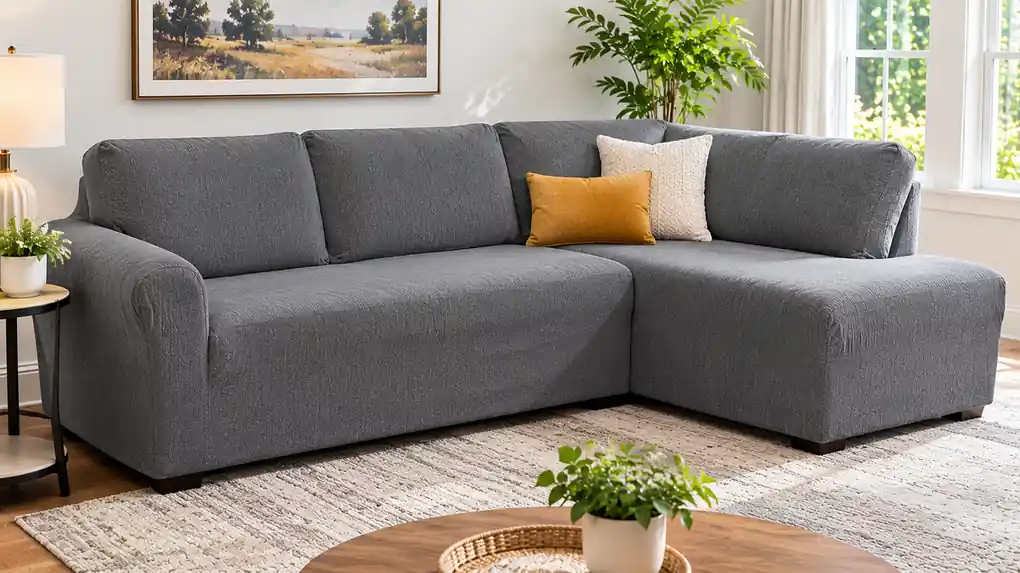
A sectional is a big investment, and also a big target: for spills, pet hair, claws, sun fading and kids with snacks. Couch covers protect it. A good cover can make an old sectional look fresh, hide stains and keep the original upholstery clean underneath. A bad one slides, bunches and looks like a bedsheet tossed over a sofa.
This article is part of our sofa and couch buying guide, where you can compare related options.
Sectional covers are harder than regular sofa covers because a sectional is not a single shape. It may have a chaise, a corner, a console or several modules. This guide explains how to measure, the differences between stretch and fitted covers, which fabrics suit pets and families, how to get a snug fit and how to care for the cover. Many search results were product pages on odd mirror domains, so the specifications in listings may not be reliable. Always compare your measurements with the manufacturer’s sizing chart.
Why Use a Cover?
Key points: protect new furniture from stains and wear; hide existing damage like stains, scratches or faded fabric; guard against pets, hair and claws; update the look without buying a new sectional; make cleaning easy since covers can be washed; protect against sun fading and spills.
Measuring a Sectional
Measurements are the most important step. One guide says to measure the full length of the sectional, including any consoles or chaise lounges, plus the total width (including armrests) and the seat depth. It also says to measure the corners if they are curved or angled.
Steps:
- Draw a sketch of your sectional, with each section.
- Measure the length of each side, from the outer edge of one arm to the other, including chaises and consoles.
- Measure the width including armrests and any pillows.
- Measure the seat depth, including cushions.
- Measure the height of the backrest.
- Note the number of seats and cushions.
- Note the layout: L-shaped, U-shaped or modular. Left or right chaise matters. See the L-shaped couch and U-shaped sectional guides.
- Measure the corners if curved or angled.
Product listings often say to add extra length beyond the sofa’s measured length, and some note that a sofa close to a cover’s maximum length should get the next size up. If the measurement is very close to the maximum length, choose a larger size.
Make Sure the Cover Is for Sectionals
Check whether a listing is designed for your shape. Some stretch covers are made for three-cushion sofas and will not work for sectional sofas. Sectional-specific covers are often sold as left or right chaise pieces, or as sets of two or more pieces. If your sectional is U-shaped or has several modules, you may need multiple covers.
Two-piece L-shaped sets are common. One listing says the pieces can be fitted by simply draping them over your couch and tucking the edges between the cushions for a secure fit.
Stretch Covers vs Fitted Slipcovers
Stretch covers: made of stretchy fabric like spandex blends. They hug the sofa and are easy to put on. One buying guide notes that stretch fits suit sofas with simple lines and budget shoppers, but may sag over time. Fitted (tailored) slipcovers: cut and sewn to the shape of the sofa with separate cushion covers. They look more like upholstery but cost more and can be harder to fit. Loose throw covers: drape over the sofa and tuck in. Casual, and easy to remove. Quilted covers: padded and soft, often used as protection. Waterproof covers: protect against spills and pet accidents. Listing claims about waterproofing may not be reliable, so check reviews.
| Type | Fit | Cost | Notes |
|---|---|---|---|
| Stretch | Hugs the sofa | Low | May sag, simple shapes |
| Fitted | Tailored look | Higher | Harder to install |
| Loose throw | Casual | Low | Slides |
| Quilted | Padded | Medium | Warm |
Getting a Snug Fit
One guide advises that the cover should be snug and secure on your sectional so it does not sag or shift.
Key points: tuck the edges between the cushions and the frame; use foam tuck-in strips (grip rods) to hold fabric in the crease; use elastic straps under the sofa; choose non-slip backing. Some sectional covers have a non-slip backing; smooth wrinkles after putting the cover on; use separate cushion covers to avoid sliding; re-tuck every few days at first.
If the cover keeps slipping, check that you chose the right size.
Fabrics
Choose a fabric for your household.
Key points: polyester. Common and durable. Many sectional covers are machine washable polyester; microfiber. Soft and easy to clean; cotton and cotton blends. Breathable. Can wrinkle and shrink; canvas and denim. Heavy-duty, good for multi-pet households; velvet. Soft but attracts pet hair; chenille. Cozy; waterproof-backed fabrics; quilted fabrics.
For pets, one guide points to microfiber, canvas or denim based on how much your pet drools, scratches or sheds. Those product suggestions came from a content-farm article, so verify them before buying. Smooth, tightly woven fabrics resist claws and hair better than loops or loose weaves. See the boucle chair guide for fabrics to avoid with pets.
Pet and Kid Protection
Key points: choose durable, tightly woven fabric; get a waterproof layer if accidents happen; use lint rollers and rubber gloves to remove hair; trim pets’ nails; keep an extra cover to wash while using the other; choose darker or patterned colors to hide stains; vacuum the sofa under the cover now and then.
Care
Follow the care label. Many covers are machine washable. Wash on a gentle cycle in cool or warm water. Dry on low heat or air dry. High heat can shrink covers or damage elastic. Put the cover back while slightly damp to reduce wrinkles, if the label allows. Wash regularly, every month or two, or more with pets. Check seams and elastic for wear.
What are the main strengths and weaknesses?
On the plus side: protects the sofa; easy to wash; updates the look cheaply; hides damage. On the downside: can slip or sag; fit varies across brands; cheap covers can look baggy; sectionals need multiple pieces; some covers feel slippery or crinkly.
Alternatives
Key points: throw blankets over the seats; sofa protectors under the cushions; washable performance fabric upholstery next time; reupholstering for a permanent fix; cushion covers only.
How to Choose Sectional Couch Covers
Sketch and measure your sectional carefully. Identify the shape: L-shaped, U-shaped, chaise left or right. Make sure the cover is made for sectionals. Choose stretch or fitted. Pick a fabric for your household. Check non-slip features. Check the care instructions. Compare your measurements with the sizing chart, and size up if near the maximum. Read reviews for fit and durability. Check the return policy.
What mistakes should you avoid?
A few common mistakes are worth avoiding: measuring only one section; buying a cover made for a regular sofa; ignoring the chaise side; choosing the wrong size; washing on high heat; trusting waterproof claims without reviews.
Frequently Asked Questions
How do I measure a sectional for a cover?
Measure the full length including chaises and consoles, the total width including armrests, the seat depth and the corners.
Do regular sofa covers fit sectionals?
Not always. Some stretch covers are made for three-cushion sofas and will not work for sectionals.
Are stretch covers good?
They are easy to fit and affordable, but may sag over time.
What fabric is best for pets?
Tightly woven fabrics like microfiber, canvas or denim are often suggested. Verify before buying.
How do I keep the cover from slipping?
Tuck the edges, use foam strips or straps and choose non-slip backing.
Can I wash sectional covers?
Many are machine washable. Check the label.
Conclusion
Sectional couch covers protect your investment and freshen the look, but fit is everything. Measure every section, choose covers made for sectionals, pick a fabric that suits your household and tuck everything snugly.
Compare your measurements with the sizing chart and read reviews, because listings can be unreliable. With a good cover, your sectional stays clean and looks great.
Related guides
 Couch Covers: Types, How to Measure and How to Choose the Right OneA couch cover can save a sofa you love. It hides stains, protects the fabric from pets and kids and gives an…Read more →
 Couch Covers for Dogs: Waterproof vs Water-Resistant, How to Measure, Fit, Anchoring and WashingQuick answer: the best couch covers for dogs are washable, truly waterproof if accidents happen and held in…Read more →
 Fainting Couch: What It Is, Real History, Myths and How to Use One TodayA fainting couch is a long, narrow couch with a raised end, made for reclining with the legs up. It was popular…Read more →
 Couch Table Guide: Sofa Table Height, Width, Depth and Walkway SpaceWhen people search for a couch table, they often mean one of two things: a narrow table that sits behind the…Read more →







One Comment