Shower Caddy: Types, Rust-Proof Materials, Weight Limits and Tips
A shower caddy keeps your shampoo, soap and razor off the tub edge and out of the way. It sounds like a small thing, but the wrong one rusts in a month, slides down the wall or drops a bottle on your toe. The right one stays put, drains well and lasts.
This article is part of our shower guide, where you can compare related options.
A shower caddy is a rack or shelf that holds shower products. Some hang over the shower head or a rod. Some stand on the floor. Some stick to the wall with adhesive or suction, and others wedge between the floor and the ceiling on a tension pole.
This guide explains the main types, which materials resist rust, how weight limits work, how to match a caddy to your shower and how to keep it clean. You’ll also find a comparison table, a checklist and answers to common questions.
Types of Shower Caddies
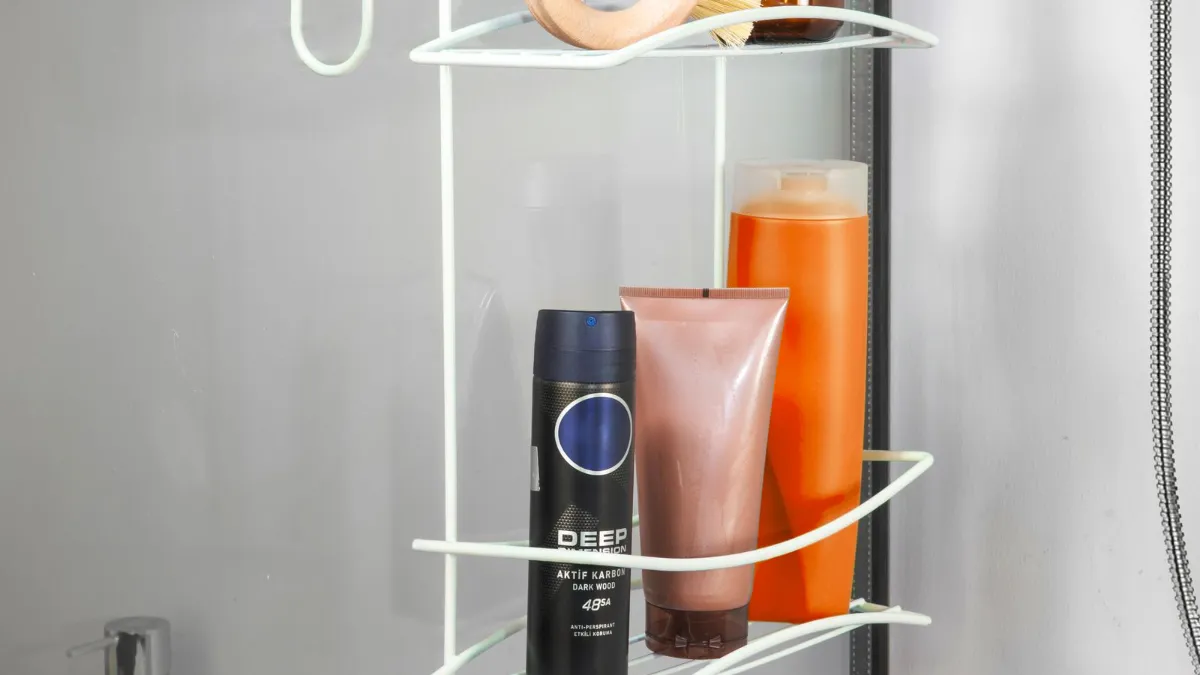
Hanging caddies: these hook over the shower head or a rod. They install in seconds and need no drilling. A hanging model works well if you rent. Some sway, so look for stabilizers. One review praised a design that uses a hook, adhesive and suction together to reduce sway. Corner caddies: made to sit in the corner of a tub or stall. Some are wall-mounted, and some are tension-pole units. Tension-pole caddies: a pole wedges between the shower tray and the ceiling, and the shelves attach to it. They suit smaller cubicles and don’t need drilling. Adhesive (stick-on) shelves: attach to smooth, non-porous tile or glass. They install easily and come off cleanly, but their load limits depend on the surface and the quality of the adhesive. Suction-cup caddies: similar to adhesive types, but use suction. They work on smooth, flat surfaces. Wall-mounted (drilled) shelves: screwed into the wall for the strongest hold. They take more work to install and need waterproof sealing around the holes. Freestanding floor caddies: stand in the corner of a shower or tub. Good for large showers, but they take floor space and can be knocked over. Shower niche inserts: built into the wall during construction or renovation.
| Type | Install | Holds | Best for |
|---|---|---|---|
| Hanging | No tools | Light to medium | Renters, quick fix |
| Tension pole | No tools | Medium | Small showers |
| Adhesive/suction | No tools | Light | Smooth tile or glass |
| Drilled wall shelf | Tools | Heavy | Permanent setups |
| Freestanding | None | Medium | Large showers |
Rust-Proof Materials
Showers are damp, so material matters most.
Aluminum: naturally rust-resistant, light and strong. One source notes aluminum is inherently rust-resistant, and anodized aluminum is a good choice. Stainless steel: often sold as rust-proof, but quality varies. One source notes that some stainless grades can pit in high-chloride environments. Look for a higher-grade stainless steel, such as 304. Plastic: won’t rust. Quality plastic holds up well, but cheap plastic can crack, warp or yellow. Coated metal: chrome-plated or powder-coated steel can look good, but the coating can chip and the metal underneath can rust. If you choose a coated metal, look for a quality finish and a rust-free guarantee. Bamboo and teak: look warm and natural. They need care to avoid mold and warping, and not all are treated for wet areas.
Uncoated metal caddies will discolor and eventually break apart, according to one source, so choose anodized aluminum or quality plastic if you want worry-free use.
Weight Capacity
Weight ratings vary widely. The products in the reviews I found range from about 10 to 50 pounds, often per shelf, and some listings give no figure. Hanging and suction models with a 40-pound rating are common in reviews.
Check the manufacturer’s stated limit, and don’t overload the caddy. Overloading can cause slipping or damage to fittings. Add up the weight of what you want to store. A full-size shampoo, conditioner, body wash and a few other items can be heavier than you think. A wet bar of soap and a large bottle of conditioner add up quickly.
Adhesive and suction caddies are the most sensitive to weight and surface. Make sure the surface is clean, dry and smooth before you attach them, and follow the instructions on curing time. Drilled shelves hold the most weight when anchored properly.
How to Choose a Shower Caddy
Look at your shower. Is it a tub, a stall, a glass enclosure or a tiled niche? Pick the mounting type. Hanging for renters, tension pole for small showers, drilled for permanent. Check the surface. Adhesive and suction need smooth, non-porous tile or glass. Textured tile, stone and painted walls don’t work. Match capacity to what you store. Think about bottle sizes and the number of users. Choose a rust-resistant material. Anodized aluminum, quality stainless steel or good plastic. Check the shelf height. Adjustable shelves help if you use tall bottles. Look at drainage. Slotted or mesh shelves let water drain so soap doesn’t sit in puddles. Check for hooks and extras. Razor hooks, a soap dish or a squeegee holder. Think about cleaning. Fewer crevices means less scum. Read reviews for notes on rust, slipping and sway.
How to Install a Shower Caddy
Hanging caddy: hang it over the shower head or arm. Make sure it sits level and doesn’t press on the shower head. Add stabilizers if it sways. Tension pole: set the pole between the floor and ceiling. Twist to tighten. Check that it’s firm before loading the shelves. A pole needs a solid ceiling. Don’t use it with a weak or textured ceiling. Adhesive or suction: clean the surface with rubbing alcohol and let it dry. Press the caddy firmly for the time given in the instructions. Wait before loading it, as the maker advises. Drilled shelf: mark the holes with a level. Use the right drill bit for tile, and wall anchors suited to the wall. Seal the holes with waterproof sealant. If you aren’t sure how to drill tile, hire a pro.
How to Keep a Caddy Clean
Soap scum and mildew can build up. Wipe the caddy weekly with a mild cleaner. Rinse thoroughly. Take items out now and then and clean underneath bottles, where water sits. Dry the caddy with a cloth if you can. Wash plastic and metal baskets with warm, soapy water. Replace a rusty or moldy caddy instead of trying to restore it, since rust can stain your tub or tile.
Choose a design that lets water drain. A caddy that holds water breeds mold and rust.
What mistakes should you avoid?
A few common mistakes are worth avoiding: overloading (heavy bottles can pull a caddy off the wall); using adhesive on textured tile (it won’t stick); buying uncoated metal (it rusts); hanging a caddy on a shower head that can’t take the weight (check that the shower arm is secure); forgetting about drainage (standing water leads to mildew); not checking for rattling (a loose caddy can slip).
Frequently Asked Questions
What is the best material for a shower caddy?
Anodized aluminum, quality stainless steel and good plastic are the most common rust-resistant choices.
How much weight can a shower caddy hold?
It depends on the type. Listings range from about 10 to 50 pounds, often per shelf. Check the manufacturer’s rating.
Do adhesive shower caddies work?
They can on smooth, clean tile or glass, if you follow the instructions and don’t overload them.
Are hanging shower caddies stable?
Some sway. Look for stabilizers, such as hooks, adhesives or suction, to reduce movement.
Can I use a shower caddy on textured tile?
Adhesive and suction caddies usually won’t stick. Use a hanging, tension-pole or drilled caddy instead.
How do I stop my shower caddy from rusting?
Choose rust-resistant materials, dry it when you can and replace it if rust starts.
Conclusion
A good shower caddy keeps your bathroom neat and your shower products within reach. Choose a type that suits your shower and surface, pick rust-resistant materials and check the weight rating.
Install it carefully, let water drain and clean it often. With the right caddy, your shower stays tidy and the bottles stay put.
Related guides
 Roll-In Shower: Size, Threshold, Slope and What Accessibility Rules Usually RequireA roll-in shower is a shower with no curb, so a person using a wheelchair can roll straight in. Vendors…Read more →
 Shower Shelf: Tension Pole, Adhesive and Built-In Types, Weight and RustThere are three main types of shower shelf: tension-pole caddies, adhesive-mounted shelves and glued-in or…Read more →
 Camp Shower Guide: Solar Shower Bags, 5-Gallon Capacity, Heating Time, Water Temperature Safety and SetupQuick answer: a camp shower is a portable shower for camping, RV trips and beach days. The most common type is…Read more →
 Shower Squeegee Guide: How to Use It Daily, Prevent Mold and Hard Water Spots, Blade and Handle TipsQuick answer: a shower squeegee removes water from glass, tile and fixtures right after you shower, before it…Read more →