
Shower Squeegee Guide: How to Use It Daily, Prevent Mold and Hard Water Spots, Blade and Handle Tips
Quick answer: a shower squeegee removes water from glass, tile and fixtures right after you shower, before it dries and leaves mineral spots, soap scum or mold. Squeegee after every shower, use horizontal strokes on tile to push water toward the drain and a final vertical pass, wipe the blade with a microfiber cloth and choose a silicone blade with a handle you can reach comfortably.
This article is part of our bathroom cleaning and mold prevention guide, where you can compare related options.
A shower squeegee is a $10 tool that can save hours of scrubbing. Water left on shower surfaces evaporates and leaves minerals behind. Soap scum builds on that, and mold grows in damp corners. A 30-second squeegee habit prevents most of it. This guide explains why squeegeeing works, how to do it step by step, what to look for in a squeegee, what else helps and what the evidence does and does not show. Several claims on blogs, such as percent reductions in moisture or scum, are unverified, so I do not use them. The search said little about handle length and nothing comparing blade materials.
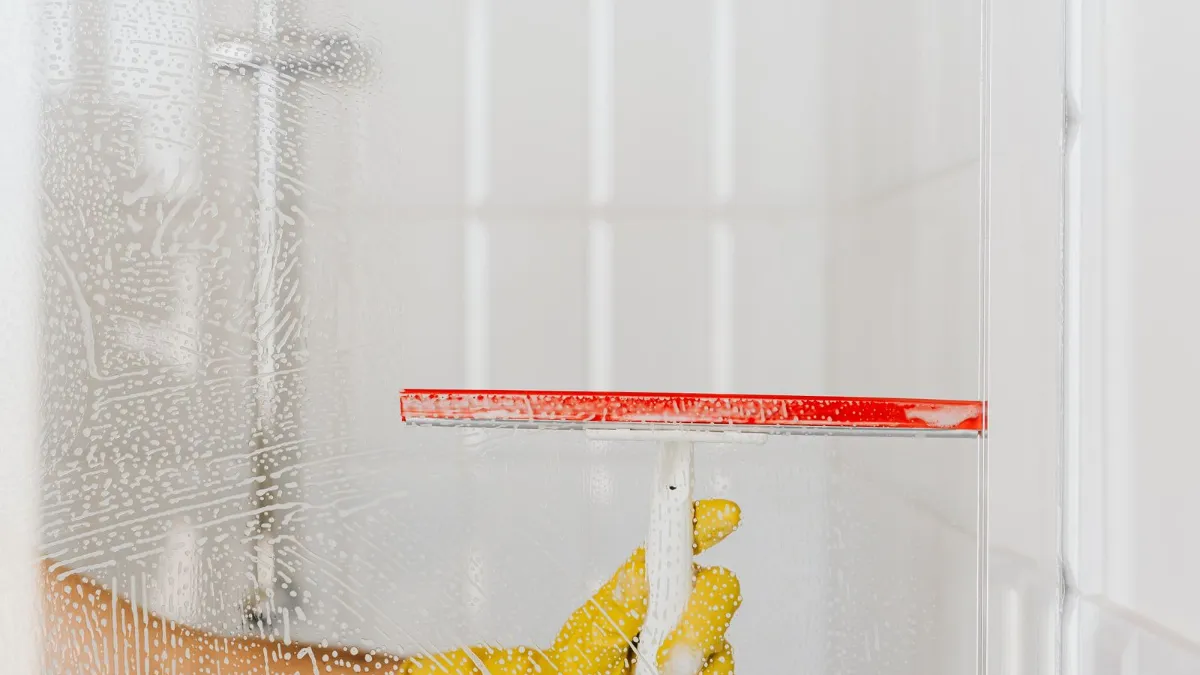
Why Squeegee After Every Shower?
One guide says using a squeegee after every shower prevents soap scum, hard water stains and mold growth by removing excess water before it can evaporate and leave mineral deposits. Another notes that minerals in hard water leave visible deposits within hours. Daily use is still best for mold prevention even with soft water, per one guide.
Mold needs moisture. Removing standing water and improving ventilation reduce it. See the eucalyptus in shower and how to clean a shower curtain guides for humidity and mildew notes.
How to Use a Shower Squeegee
- Finish your shower and turn off the water.
- Start at the top of the glass door or wall.
- Pull the squeegee down in a straight line with light pressure, or use horizontal strokes across the glass. Press the blade flat to the surface.
- For tile, use horizontal strokes on tiled surfaces to direct water into grout lines, then a final vertical stroke to clear them, per one suggestion.
- Wipe the blade with a microfiber cloth after each pass or at the end to prevent mineral buildup.
- Squeegee fixtures and the shower floor edge if useful.
- Dry the squeegee and hang it on a hook.
Overlap each stroke slightly to avoid streaks. Work from top to bottom so you do not drip on cleaned areas.
Where to Squeegee
Key points: glass doors and panels. The biggest benefit; tile walls. Some people squeegee tile too; shower floor edges; chrome and metal fixtures, with a small cloth for details; acrylic or fiberglass walls. See the shower inserts guide for surface care. Use light pressure.
Drying matters most on glass doors, metal fixtures and tile.
Choosing a Squeegee
Blade
A Bob Vila review describes the Gütewerk squeegee as having an ergonomic design with a silicone blade that ensures streak-free cleaning on various surfaces. I found no comparison of silicone against other blade materials. In general (not from the search), silicone blades stay flexible and do not harden quickly, and rubber blades can wear and streak. Replace blades when they nick or harden.
Handle
The results do not address ideal handle length directly. One review notes that a telescoping handle made it easier to access hard-to-reach spots without a step stool. Choose a handle that lets you reach the top of the door comfortably. Shorter handles are easier to store. Longer handles suit tall showers.
Size and Fit
Key points: a 6 to 10 inch blade suits glass doors (general knowledge); a hanger or suction hook keeps it in place; check for a comfortable grip; a magnetic or hook holder keeps it dry.
Bob Vila tested the best shower squeegees. Check independent tests for ongoing quality.
Build the Habit
Key points: keep the squeegee in the shower at arm’s reach; squeegee while the glass is still wet; make it part of your routine as you step out; hang it to dry; keep a microfiber cloth in the bathroom.
Homes and Gardens describes a five-step post-shower cleaning routine, and calls a $9 squeegee a humble tool. Those pieces include unverified claims, such as 90 percent humidity reduction, so I do not use those numbers.
What Else Helps
Ventilation. Run the exhaust fan during and after the shower, or open a window. Weekly cleaning. Use a mild cleaner for scum. White vinegar solutions are common for hard water spots (check the surface; vinegar can damage natural stone). Wipe corners and seams. Mold likes seals and caulk. Dry the shower curtain. Spread it out. Keep soap dishes draining. See the soap dish guide. Replace cracked caulk. Use a water softener if your water is very hard (ask a plumber).
Hard Water and Soap Scum
Hard water leaves white mineral spots. Soap scum is a film of soap and minerals. Both are easier to prevent than to remove. A squeegee reduces the water that dries on glass. For existing buildup, use a cleaner made for soap scum, as the manufacturer directs, and test on a hidden spot.
Mold Prevention
Key points: squeegee daily; ventilate; keep the shower dry between uses; clean mold spots early with a mold cleaner, wearing gloves, and ventilate. Ask a professional for large infestations; check for leaks.
Hunker and AOL publish simple tips for keeping mold and mildew out of your shower.
What are the main strengths and weaknesses?
On the plus side: cheap and quick; prevents scum, spots and mold; cuts down on heavy cleaning; easy to learn. On the downside: needs to become a habit; doesn’t reach every corner; blades wear out; may streak if used poorly.
How to Choose a Shower Squeegee
Choose a silicone blade of a good width. Choose a comfortable handle you can reach with. Consider a telescoping handle for tall doors. Choose a holder (hook or suction). Check replacement blades. Read independent tests. Keep a microfiber cloth nearby.
What mistakes should you avoid?
A few common mistakes are worth avoiding: only squeegeeing occasionally; not wiping the blade; pressing too hard on delicate surfaces; leaving the squeegee wet and unhung; skipping ventilation; believing unverified percent claims.
Frequently Asked Questions
Should I squeegee after every shower?
Yes, one guide says daily use is best for preventing scum, stains and mold.
How do I squeegee tile?
Use horizontal strokes to push water into grout lines, then a final vertical stroke.
What blade is best?
A silicone blade is commonly used. I found no comparison with other materials.
How long should the handle be?
The search did not say. A telescoping handle can help reach high spots.
Does a squeegee prevent mold?
It helps by removing water, along with ventilation and cleaning.
How often should I replace the blade?
When it nicks, hardens or streaks.
Conclusion
A shower squeegee is a simple habit that keeps glass clear and prevents scum, hard water spots and mold. Use it after every shower, wipe the blade and choose a comfortable silicone-blade tool.
Pair it with ventilation and weekly cleaning. A 30-second routine saves a lot of scrubbing.
Related guides
 Eucalyptus in the Shower: How to Hang It, How Long It Lasts, Benefits and SafetyQuick answer: tie a bundle of fresh eucalyptus stems together and hang it from the shower head or a hook where…Read more →
 Pink Mold in Shower: It’s Usually Bacteria, Not Mold. Causes, Safe Cleaning and PreventionThe pink slime in your shower is usually not mold at all. It is most often a bacterium called Serratia…Read more →
 Black Mold in Shower: Causes, Safe Cleaning, Prevention and When to Call a ProBlack mold in a shower grows where moisture sits, usually from poor ventilation, steam and damp grout or caulk.…Read more →
 Roll-In Shower: Size, Threshold, Slope and What Accessibility Rules Usually RequireA roll-in shower is a shower with no curb, so a person using a wheelchair can roll straight in. Vendors…Read more →



11 Comments