L-Shaped Desk: Sizes, Left vs Right Return and How to Choose
An L-shaped desk gives you a lot of work surface without taking over the whole room. It wraps around a corner, so you can keep a computer on one side and papers or a laptop on the other. People use them for home offices, gaming setups and study rooms.
This article is part of our home office desk guide, where you can compare related options.
An L-shaped desk is a desk with two connected sections that form the letter L. The long section is the main desk. The shorter section is called the return. Together they create a corner workspace where most things you use are within arm’s reach.
This guide explains typical L-shaped desk sizes, how to pick a left or right return, how to arrange your space for comfort and what to check before you buy. You’ll also find a comparison table and answers to common questions.
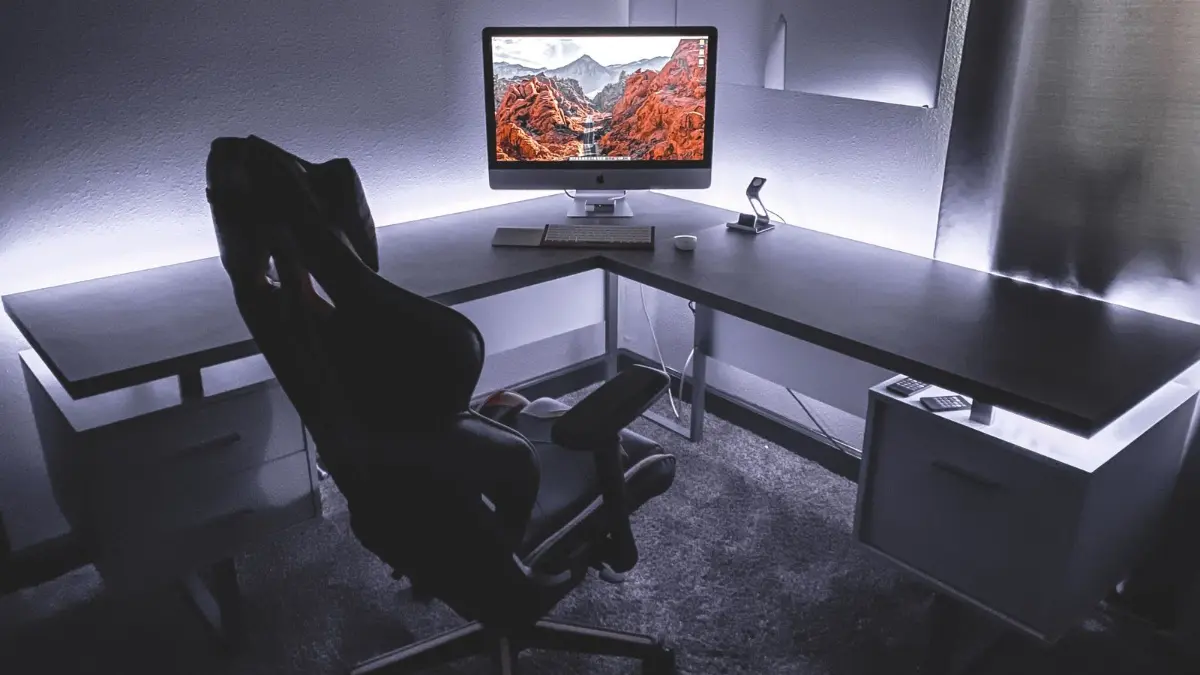
Why Choose an L-Shaped Desk?
The main benefit is space. Two work surfaces mean you can spread out. You might keep your monitor and keyboard on the main side and use the return for a printer, a second screen or paper work.
An L shape can also improve comfort. Keeping the tools you use most within easy reach reduces stretching and leaning. A corner layout leaves the middle of the room open for a guest chair, a filing cabinet or a clear walkway.
There are some drawbacks. L-shaped desks are larger than straight desks, so they take more room. They’re harder to move, and they can be more expensive. Think about the footprint carefully before you buy.
L-Shaped Desk Sizes
One guide gives a typical main-side length of 60 to 70 inches and a return of 48 to 58 inches. Depth is often 20 to 30 inches, and height around 29 to 30 inches.
Popular mid-size L-shaped desks are about 60 by 48 inches or 63 by 47 inches, according to one seller of adjustable desks. For rooms smaller than about 10 by 10 feet, the same source suggests 48 by 48 inches or 55 by 55 inches.
| Room size | Desk footprint to consider |
|---|---|
| Small (under 10 x 10 ft) | About 48 x 48 or 55 x 55 inches |
| Medium | About 60 x 48 or 63 x 47 inches |
| Large | Larger L-shapes with storage or hutches |
Don’t forget chair space. One UK guide advises leaving about 80 to 100 cm (roughly 31 to 39 inches) behind the desk for the chair and movement. Add that to the desk’s depth when you plan the layout.
What Is a Left Return or a Right Return?
The return is the shorter wing of the desk. Its side is defined from where you sit. A left return means the shorter section is on your left when you face the main surface. A right return means it’s on your right.
Some say the return should match your dominant hand, so you can write beside your writing hand. Others say the choice should depend on your room layout, door position and where the wall or window is. In practice, let the room decide first. A left return often suits a wall or window on your right, and a right return suits one on your left.
Some desks are reversible, so you can build the return on either side. If you rent or you might move, a reversible desk gives you flexibility. Check the product listing to see if it’s reversible.
Desk Height and Ergonomics
A desk that’s comfortable for your body prevents strain. Fixed-height desks are usually about 28 to 30 inches tall. A good rule is to have the desk surface near your elbow height when you sit with your shoulders relaxed. Adult typing height often sits around 72 centimeters (about 28 inches), according to one UK guide.
Your chair matters as much as the desk. A chair set too high or too low can ruin an otherwise good setup. Adjust the chair so your feet rest on the floor and your arms are at a comfortable angle.
For monitors, a common guide is arm’s length from your eyes, with the top of the screen at or slightly below eye level. One source suggests about 20 to 25 inches. Adjustable-height or sit-stand L-shaped desks help you switch between sitting and standing during the day.
Depth also matters. A UBC ergonomics checklist says usable computer work surface depth should be 30 inches or more, and that 24-inch-deep desks are not ideal. Many L-shaped desks are shallower, so a monitor arm can help you place the screen at a good distance.
How to Arrange Your L-Shaped Desk
- Put your main screen on the main side. Face it directly so your neck stays straight.
- Use the return for secondary tasks. Keep a laptop, printer, notebooks or a second monitor there.
- Keep daily items within reach. Phone, mouse, notebook and water should be close.
- Manage cables. Check for grommet holes and cable trays. Make sure the ports line up with your wall outlets.
- Add good lighting. Use a desk lamp to avoid glare on your screen.
- Keep the corner useful. The corner of an L is a dead zone for reaching. Use it for a lamp, plant or speaker.
- Leave room to roll. Make sure your chair moves freely between the two sides.
How to Choose an L-Shaped Desk
Measure your room. Include the corner, windows, doors and outlets. Compare the desk’s footprint. Check both arms of the L. Choose the return side. Base it on your room. Consider a reversible model. Decide on height. Fixed, or adjustable if you want to stand sometimes. Check the depth. Deeper desks allow better monitor distance. Look at storage. Drawers, shelves and hutches add function but also size. Check the weight rating. Make sure it can hold your monitors and equipment. Pick the material. Wood, engineered wood, metal and glass all work. Think about scratches, spills and cleaning. Read the assembly info. L-shaped desks can be heavy, and many need two people.
What mistakes should you avoid?
A few common mistakes are worth avoiding: ignoring the footprint (an L-shaped desk is much larger than a straight desk. Measure first); picking the return side by habit (check the door, window and outlets before you decide); forgetting chair space (you need room behind the desk to move); choosing a desk that’s too shallow (your monitor will sit too close); skipping cable management (without it, cords end up in a tangle).
Frequently Asked Questions
What size should an L-shaped desk be?
Common sizes are about 60 by 48 inches or 63 by 47 inches. For small rooms, 48 by 48 or 55 by 55 inches may fit better. Measure your room and leave space for the chair.
Should I get a left or right return?
Choose based on your room layout, door and window positions. Some people also match it to their dominant hand. Reversible desks avoid the decision.
How tall should an L-shaped desk be?
Fixed desks are usually about 28 to 30 inches tall. The best height puts the desk near your elbow when you sit, with your feet flat on the floor.
Is an L-shaped desk good for small rooms?
It can be, because it uses a corner. Pick a compact size and make sure you can walk around it. A straight desk may suit very small rooms better.
Are L-shaped desks good for gaming?
Yes. The extra surface holds multiple monitors, a console or accessories. Check the depth for monitor distance.
How much space do I need behind an L-shaped desk?
One guide suggests about 80 to 100 cm (roughly 31 to 39 inches) for your chair and movement.
Conclusion
An L-shaped desk gives you more work surface and a flexible layout in a corner. Measure your room first, pick a size that leaves space for your chair and choose the return side based on your layout.
Check the desk height, depth and weight rating, and plan your cable management. With a good setup, an L-shaped desk keeps your tools within reach and your workspace comfortable.
Related guides
 L Shaped Standing Desk Guide: Size, Height Range, Weight Capacity, Dual Motors and StabilityQuick answer: an L shaped standing desk is an L-shaped desktop on a motorized frame that raises and lowers.…Read more →
 L Shape Desk Guide: Sizes, Left vs Right Return, Corner Placement and ClearanceQuick answer: an L shape desk has a main work surface and a shorter side piece called a return. The main wing…Read more →
 Desk Shelf Guide: Clamp-On Shelves, Risers, Hutches, Sizes and Weight CapacityQuick answer: a desk shelf adds a second level to your desk for a monitor, books or supplies. Main types are…Read more →