
Baby Bath Tub Guide: Types, Safety Rules, Water Depth and Temperature
Bath time can be one of the sweetest parts of the day with a new baby. It can also be one of the riskiest. A baby is slippery, small and can be in danger in very little water. The right baby bath tub helps you hold and wash your baby more easily, but no tub replaces your full attention.
This article is part of our bathtub guide, where you can compare related options.
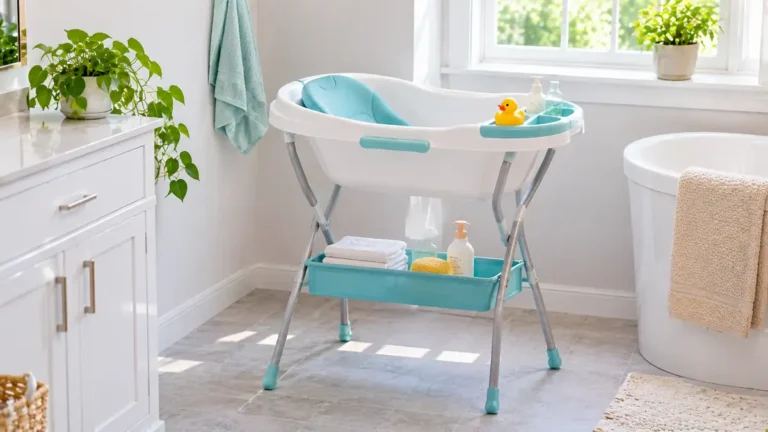
A baby bath tub is a small tub made for bathing an infant. It may sit in a sink, on a counter or inside a regular tub. Most are small, lightweight plastic and portable. Some are shaped to support a newborn’s head and back. Others fold flat for storage or travel.
This guide explains the types of baby tubs, key safety rules, how deep and warm the water should be and how to choose and care for a tub. It is general information and not medical advice. Always follow your pediatrician’s guidance and check the maker’s instructions. You’ll also find a comparison table, a checklist and answers to common questions.

The Most Important Rule: Never Leave Your Baby Alone
Every source agrees on constant attention. The American Academy of Pediatrics (AAP) parent site, HealthyChildren.org, says bath seats can tip over, and a child can drown in just a few inches of water, even when using an infant tub or seat. The Bump adds that an infant should never be left alone in a bath, even briefly.
What this means in practice: Stay within arm’s reach at all times. Gather supplies before you start: towel, washcloth, baby soap, a clean diaper and clothes. Do not leave to answer the phone or the door. Take the baby with you wrapped in a towel, or let it ring. Do not rely on older siblings to watch the baby. Do not treat a bath seat or ring as a safety device.
A baby tub is a tool to help you wash. It does not make the bath safe if you look away.
Types of Baby Bath Tubs
Bucket-style tub: one guide describes bucket-style tubs for newborns to about 6 months, which need head support. The baby sits more upright in a deep, small bucket. Slanted or sloped tub: supports a newborn on a gentle incline, with a drain plug. CHKD names slanted tubs among common styles. Sink insert or sink tub: fits in a kitchen or bathroom sink. Saves your back, but check that the sink is clean and the faucet is covered. Foldable or travel tub: collapses for storage. One guide notes foldable or travel tubs for up to 24 months can feel less stable. Inflatable tub: light and easy to store, but check stability and durability. CHKD lists inflatable tubs among styles. Spa-style or deluxe tub: includes a built-in seat, drain and sometimes a temperature indicator. Convertible tub: changes from newborn mode to toddler mode. Bath seat or ring (caution): healthyChildren.org warns that bath seats can tip over. They should not replace supervision.
| Type | Age range (typical) | Notes |
|---|---|---|
| Bucket-style | Newborn to about 6 months | Needs head support |
| Slanted | Newborn | Drain plug helpful |
| Sink insert | Newborn | Saves your back |
| Foldable | Up to about 24 months | Check stability |
| Inflatable | Varies | Check durability |
Water Depth
One source says a pediatrician-style rule is no submerged baths until the umbilical cord falls off, then one to two inches. Another says two to four inches is safest. A third says a few inches, enough to wash without fully submerging the baby.
Follow your pediatrician’s advice. Keep the water shallow, and keep one hand on your baby at all times. Do not run the tap while the baby is in the tub. Consumer Reports advises against running water while a baby is in the tub because of the risk of sudden temperature changes.
Water Temperature
The AAP recommends a maximum faucet temperature of 120 degrees Fahrenheit to help prevent scald burns. Many families set the water heater to 120 degrees or lower.
Checking the water with your wrist or elbow, and one cites about 98 to 100 degrees Fahrenheit as a comfortable target. Use a bath thermometer if you like. Test the water before you put your baby in, and swirl it to remove hot spots.
Never put a baby into water you haven’t tested.
When to Start Tub Baths
One source says the AAP advises sponge baths until the umbilical cord stump falls off, usually within one to three weeks. Ask your pediatrician about when to start tub baths, especially for babies with special health needs or after circumcision.
Bath frequency is also a question for your pediatrician. Many families bathe newborns just a few times a week. Ask what’s right for your baby’s skin.
What You Need
Key points: a baby bath tub; soft washcloths; mild, fragrance-free baby wash; a hooded towel; a cup for rinsing; a clean diaper and clothes; a non-slip mat under the tub if it sits in a larger tub; a bath thermometer (optional); a towel or pad on the counter.
How to Bathe a Baby Safely
- Gather everything before you start. Keep it within reach.
- Check the room. It should be warm and free of drafts.
- Prepare the tub. Place it on a stable, non-slip surface.
- Fill with a few inches of water. Test with your wrist or elbow.
- Undress the baby and keep a towel nearby.
- Lower the baby feet first while supporting the head and neck.
- Keep one hand on the baby at all times.
- Wash gently, from face to toes. Use a cup to rinse.
- Lift and wrap the baby in a towel right away.
- Empty the tub and put it out of reach of children.
Never leave water in a tub after the bath. Empty it right away, and keep bathrooms secure.
How to Choose a Baby Bath Tub
Think about your baby’s age. Newborn tubs are different from toddler tubs. Choose a stable base. A wide, non-slip base resists tipping. Look for head and body support. Check the size for your sink or tub. Check for a drain plug. Look for smooth, rounded edges. Check the material. Easy-to-clean plastic is common. Check for safety certification. Look for current safety standard labels. Consider storage. Foldable tubs save space. Read the instructions and recalls before using.
Check the Consumer Product Safety Commission site for recalls of baby products.
Cleaning and Care
Key points: rinse the tub after each use; wash with mild soap and warm water, and let it dry fully; disinfect as the maker advises; check for cracks, mold or loose parts; replace the tub if it’s damaged; store it dry, out of reach of children.
What mistakes should you avoid?
A few common mistakes are worth avoiding: leaving the baby alone, even briefly (this is the most dangerous mistake); using too much water (keep it shallow); not testing the temperature (scalds happen fast); running the tap with the baby in the tub (temperature can change suddenly); relying on a bath seat or ring (they can tip); using a tub on an unstable surface (place it on a flat, non-slip surface); starting tub baths too early (ask your pediatrician).
Frequently Asked Questions
What is the safest baby bath tub?
No tub is a substitute for constant adult supervision. Choose a stable tub with head support and follow safety rules.
How deep should baby bath water be?
Keep it shallow. From one to four inches, depending on the baby’s age. Ask your pediatrician.
What temperature should baby bath water be?
The AAP recommends a maximum faucet temperature of 120 degrees Fahrenheit. A comfortable bath temperature is around 98 to 100 degrees Fahrenheit, according to some sources. Test with your wrist or elbow.
When can I start giving my baby tub baths?
Sponge baths are advised until the umbilical cord stump falls off, usually within one to three weeks. Ask your pediatrician.
Are bath seats safe?
HealthyChildren.org warns that bath seats can tip over and a child can drown in just a few inches of water. They don’t replace supervision.
Can I use a sink for a baby bath?
Many parents do, with a sink insert or a clean basin. Keep a hand on the baby and cover the faucet.
Conclusion
A baby bath tub makes washing a newborn easier, but safety comes from you. Stay within arm’s reach, keep the water shallow and test the temperature before every bath. Choose a stable, easy-to-clean tub with good head support, and never rely on seats or rings to keep your baby safe.
Check the AAP’s guidance and talk to your pediatrician about when to start tub baths and how often to bathe. With the right tub and safe habits, bath time can be a calm, happy routine.
Related guides
 Baby Bath: Tub Types, Safety Rules and the Right Water TemperatureFor a safe baby bath, use a stable tub with a non-slip surface, keep the water warm but not hot (sources cite…Read more →
 Foot Bath Guide: Safe Soaking, Water Temperature, Epsom Salt Facts and Why Diabetics Should Ask a Doctor FirstQuick answer: a foot bath is a basin or spa for soaking your feet. Medical sources say people with diabetes…Read more →
 Clawfoot Tub Guide: Types, Weight, Floor Support, Faucets and Installation CostA clawfoot tub is a freestanding bathtub that stands on four decorative feet, often shaped like a claw gripping…Read more →
 Bath Robe Guide: Terry vs Waffle vs Microfiber, Fit, Length, Weight and CareQuick answer: a bath robe dries and warms you after a bath. Terry cotton is the classic, absorbent but heavy.…Read more →





One Comment