Outdoor Shower Guide: Cold vs Hot Water, Drainage, Privacy and Winterizing
An outdoor shower is a simple pleasure. You rinse off sand after the beach, wash off the pool or cool down after yard work, all without tracking dirt through the house. It can be as simple as a hose and a nozzle or as fancy as a hot-water spa station. The difficult parts are water supply, drainage and winter.
This article is part of our shower guide, where you can compare related options.
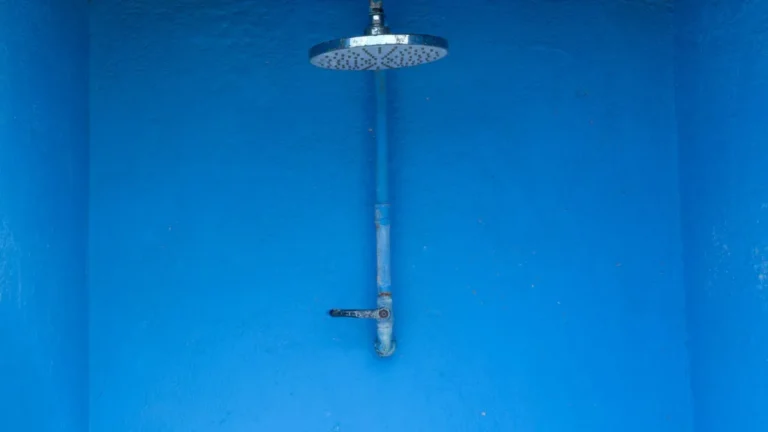
An outdoor shower is a shower installed outside, usually against the house, a fence or a freestanding frame. Some are cold-water only. Others connect to the home’s hot water line. They need a floor or base, a drain and often a screen for privacy.
This guide explains cold-only and hot-water setups, drainage, privacy, materials, winterizing, costs and permits. It’s general information, and plumbing and local rules vary. You’ll also find a comparison table, a checklist and answers to common questions.

Cold-Only vs Hot-Water Outdoor Showers
Search results point to a few consistent themes: cold-only setups are simple, hot water is where the difficulty starts, and drainage and winterizing are easy to underestimate.
Cold-only: cold-only showers can hook to an outdoor spigot or hose. This is the simplest option. A hose-connected shower head on a post or a wall mount takes little time and cost. Water from a sunny hose often warms up on its own in summer. Hot-water: adding hot water means running a supply line and a mixing valve. One source describes plumbing hot water as adding a hot water supply line extended from the home’s interior plumbing and a mixing valve. A pressure-balance valve to guard against scalding. Tie-in is usually professional work. Connecting an outdoor shower to your home’s plumbing system is not a typical DIY project. Solar or portable: a solar shower bag or a portable pressure sprayer gives warm water without plumbing.
| Type | Complexity | Cost | Best for |
|---|---|---|---|
| Hose-fed cold | Low | Low | Beach house, pool, garden |
| Hot-water plumbed | High | Higher | Year-round comfort |
| Solar or portable | Low | Low | Camping, temporary use |
A practical plan: a cold-only DIY shower on a hose bib is the simplest path. For hot water, plan for a licensed plumber, permits, a mixing valve and a drain-down valve, and get drainage designed before the base is built.
Drainage
Water collects in the ground beneath the shower, so drainage needs planning early. Poor drainage leads to standing water, erosion, mud, mosquito breeding and, most seriously, water pooling near your home’s foundation.
Options: Gravel base (dry well). A pit with gravel lets water soak into the soil. Works in well-draining soil. Decking or pavers with gaps. Water drains between them to the ground below. Slab with a drain. A concrete slab sloped to a drain, connected to a drain line. Connected to a sewer or greywater line. Needs a plumber and permits. Away from the house. Slope the ground away from the foundation.
If you’re on a septic system, keep runoff away from the drain field. Greywater rules vary by locality, so check first. Soap and shampoo can affect plants, so choose biodegradable products if the water drains into a garden.
Privacy
Choosing a spot with natural screening, or adding a door, curtain or slatted wooden screen for privacy.
Key points: wood slat screen. Looks natural and lets air flow; fence panels. Use a fence or wall; curtain. A weather-resistant outdoor curtain; plants. Bamboo, shrubs or tall grasses; frosted panels. Translucent plastic or glass; location. Place it on the side of the house away from neighbors’ views.
Think about wind, too. A solid screen can block wind and make the shower more comfortable.
Materials
Outdoor showers face weather, so materials matter.
Fixtures: brass, stainless steel and marine-grade fittings resist rust. Pipes: copper, PEX or PVC (cold only), as local code allows. Floor: cedar slats, teak, pavers, gravel, stone or concrete. Choose a non-slip surface. Frame and walls: cedar, redwood, treated wood, composite or metal. Hardware: stainless steel or galvanized screws.
Seal wood with a water-resistant finish. Choose materials that dry quickly to resist mildew.
Winterizing
In cold climates, water left in pipes can freeze and burst them. Winterizing is a must.
One source suggests installing hot and cold shutoff valves inside the house, plus a drain-down valve outside in the shower so the line can be emptied each year. Another advises that blowing the lines out will help prevent them from freezing and causing damage. Disconnect hoses and store them inside. Drain the shower head and the supply lines. Cover or remove fixtures if needed. Check the plumbing in spring before use.
If you live where it freezes, plan the plumbing so it can drain completely.
Cost
A basic DIY setup might cost a few hundred dollars, while a more elaborate design with state-of-the-art amenities could run into the thousands. Adding hot water lines and advanced fixtures raises the cost. Hiring a plumber adds labor. Get quotes for any plumbing, drainage or permit work. Costs vary by region.
Permits and Rules
Check local building codes and permit requirements before starting. One source notes that local councils may have rules on hot water lines and on drainage. Some areas require backflow prevention on outdoor taps, and some restrict where greywater can go. Ask your building department.
One plumbing company says DIY installations are often plagued by buckled or cracked tiles and inadequate drainage. That’s a vendor’s claim, so weigh it accordingly, but it points to the importance of drainage and a stable base.
Safety Tips
Key points: use a non-slip floor; use a pressure-balance or thermostatic mixing valve to prevent scalding; keep electrical items away from the shower; don’t use extension cords near wet areas; make sure the shower has a sound footing; take care in freezing weather. Wet surfaces can ice over; supervise children.
How to Plan an Outdoor Shower
Decide on cold-only or hot water. Choose a location near a water supply with good privacy and drainage. Check local codes and permits. Plan drainage first. Choose the base and materials. Plan privacy. Choose fixtures. Plan winterizing. Set a budget. Hire pros for plumbing and electrical work.
What mistakes should you avoid?
A few common mistakes are worth avoiding: ignoring drainage (mud and pooling water near the foundation); skipping winterizing (pipes can freeze); cheap fixtures (they rust); slippery floors (use non-slip surfaces); not checking codes (fines and delays); forgetting privacy (plan the screen early).
Further reading: EPA guidance on mold and moisture in the home.
Frequently Asked Questions
How do you set up an outdoor shower?
For a cold-only shower, connect a shower head to an outdoor hose bib. For hot water, extend a supply line and install a mixing valve, usually with a plumber.
Do outdoor showers need hot water?
No. Cold-only showers are common and simple. Hot water adds comfort but also cost and complexity.
How do you drain an outdoor shower?
Use a gravel pit, pavers with gaps or a sloped slab with a drain. Direct water away from the foundation and septic system.
How do you winterize an outdoor shower?
Install shutoff valves inside and a drain-down valve outside, drain the lines and consider blowing them out to prevent freezing.
How much does an outdoor shower cost?
A basic DIY setup might cost a few hundred dollars. Elaborate hot-water designs can run into the thousands.
Do I need a permit for an outdoor shower?
Possibly. Check local codes, especially for hot water lines and drainage.
Conclusion
An outdoor shower is a handy and fun addition, from a simple hose-fed setup to a full hot-water station. Plan drainage first, think about privacy and choose rust-resistant materials.
Winterize in cold climates, check local codes and hire a plumber for hot-water tie-ins. With a good plan, your outdoor shower can be useful for many seasons.
Related guides
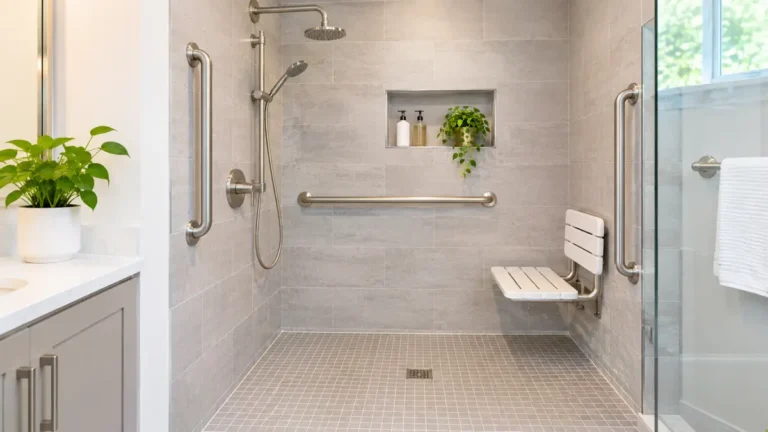 Roll-In Shower: Size, Threshold, Slope and What Accessibility Rules Usually RequireA roll-in shower is a shower with no curb, so a person using a wheelchair can roll straight in. Vendors…Read more →
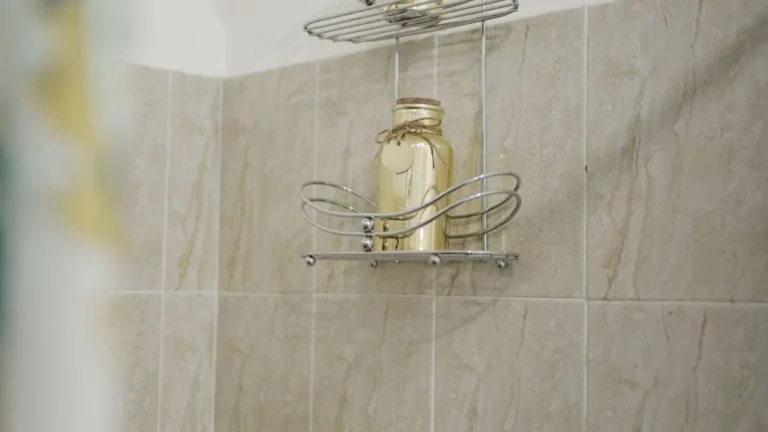 Shower Shelf: Tension Pole, Adhesive and Built-In Types, Weight and RustThere are three main types of shower shelf: tension-pole caddies, adhesive-mounted shelves and glued-in or…Read more →
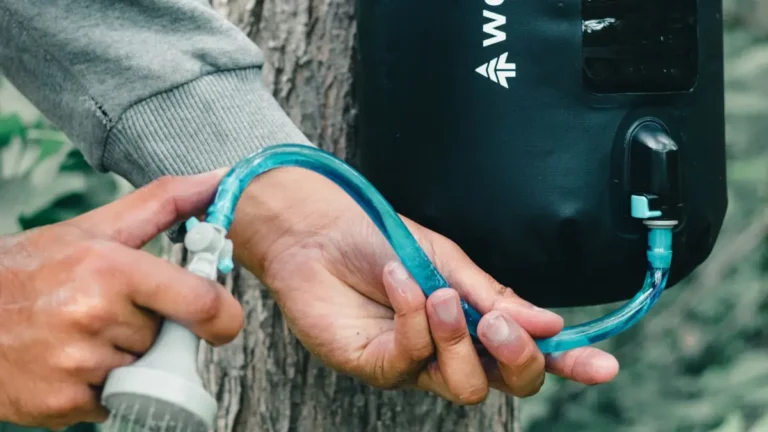 Camp Shower Guide: Solar Shower Bags, 5-Gallon Capacity, Heating Time, Water Temperature Safety and SetupQuick answer: a camp shower is a portable shower for camping, RV trips and beach days. The most common type is…Read more →
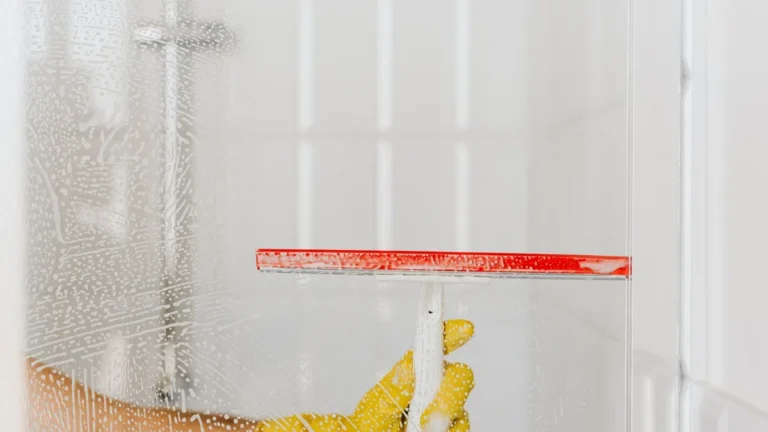 Shower Squeegee Guide: How to Use It Daily, Prevent Mold and Hard Water Spots, Blade and Handle TipsQuick answer: a shower squeegee removes water from glass, tile and fixtures right after you shower, before it…Read more →