Best Mattress Toppers: Types, Thickness, Firmness and How to Choose
A mattress topper is a quick, lower-cost way to change how your bed feels. If your mattress is too hard, a soft topper adds cushion. If it’s starting to sag, a firm one adds support. If you sleep hot, a breathable one can help. The trick is picking the right type for the problem you’re trying to solve.
This article is part of our mattress buying guide, where you can compare related options.
A mattress topper is a layer, usually 1 to 4 inches thick, that sits on top of your mattress. It’s not the same as a mattress pad, which is thinner and mostly protects the mattress. A topper changes the feel of the bed, and it can be made of foam, latex, feathers, wool or fiber.
This guide doesn’t pick one winner, because the best topper depends on your mattress, your sleep position and your temperature. Instead, it explains the main types, how thickness and firmness work, how to match a topper to your problem and how to care for it. You’ll also find a comparison table and answers to common questions.

What Does a Mattress Topper Do?
A topper can do three main jobs.
Soften a firm mattress: add a plush layer on top for more cushion. Add support to a worn mattress: a firm, high-density topper can even out a slightly sagging surface. It can’t fix a mattress that’s badly broken. Change the temperature: some toppers sleep cooler, and others hold more heat.
A topper can also protect your mattress, but a mattress protector is better at that. If your mattress is more than several years old and has deep dips, a new mattress may be a better choice than any topper.
Types of Mattress Toppers
Memory foam: the most popular type. It gives a sinking, pressure-relieving feel. It tends to retain heat, so it suits hot sleepers poorly unless it’s gel-infused or open-cell. Latex: contours to your body but bounces back faster than memory foam. It runs cooler and feels more responsive. One source notes that some people dislike its rubbery smell. Feather and down: the softest and most plush. They add less support, so they work best on a mattress that’s already supportive. Wool: helps regulate temperature, which can suit many sleepers. Polyester fiber (fiberfill): soft and low in cost, but it may flatten faster. Gel or cooling toppers: foam with gel or cooling features. Results vary, so read reviews carefully.
| Type | Feel | Heat | Best for |
|---|---|---|---|
| Memory foam | Sinks, hugs | Can run warm | Pressure relief |
| Latex | Springy | Cooler | Hot sleepers, responsive feel |
| Feather/down | Plush, fluffy | Moderate | Softening a supportive bed |
| Wool | Soft, balanced | Regulates | All-year comfort |
| Fiberfill | Soft | Moderate | Low-cost softness |
How Thick Should a Mattress Topper Be?
A common rule of thumb is 2 inches for a subtle change and 3 to 4 inches for a dramatic one. Thicker toppers add more cushion but also change the height of your bed and can make sheets hard to fit.
Side sleepers generally need more cushioning, since their shoulders and hips press into the mattress. One source suggests a thicker memory foam or latex topper for better pressure relief. Back and stomach sleepers usually do better with a thinner, firmer topper.
If you’re unsure, start with a thinner topper and add a thicker one later if you need it. Remember to buy deep-pocket sheets for a thick topper.
Matching a Topper to Your Problem
Your bed feels too hard: choose a softer topper made of memory foam, latex or feathers for cushioning. Your bed feels too soft or sags slightly: choose a firm, high-density topper for support. You sleep hot: choose latex, wool or a breathable cover. Avoid dense, traditional memory foam. You have shoulder or hip pain: choose a thicker topper with good pressure relief, and talk to a doctor if the pain continues. You share the bed with a partner: memory foam and latex help reduce motion. You need a quick guest bed upgrade: a mid-thickness fiber or foam topper can make a spare bed more comfortable.
Firmness and Density
Firmness describes how hard the topper feels. Density describes how much material is in the foam. Higher density foams tend to last longer but may cost more. A firm topper can still feel soft on the surface if it has a plush cover. Read product descriptions for both numbers where they’re listed.
How to Choose a Mattress Topper
Identify the problem. Too hard, too soft, too hot or too worn? Check your mattress. A very old or sagging mattress may need replacement. Pick the material. Foam, latex, feather, wool or fiber. Choose the thickness. 2 inches for subtle, 3 to 4 inches for dramatic. Check the firmness. Match it to your sleep position and weight. Look at the cover. Removable, washable covers are easier to keep clean. Check for anchors. Straps or elastic corners hold the topper in place. Look at certifications. CertiPUR-US for foam, for example. Read the trial and return policy. Toppers can feel different after a few nights. Plan your bedding. Deep-pocket sheets may be needed.
How to Care for a Mattress Topper
Care depends on the material, so check the label. One source says memory foam and latex are easier to maintain than feather or down, which need regular fluffing, and wool typically needs dry cleaning. Some covers are machine washable. One UK test found most toppers stated a wash up to 40°C on a gentle cycle, and some up to 60°C, but hot water can shrink a cover, so follow the instructions.
Use a mattress protector over the topper to keep it clean. Air the topper out now and then. Don’t fold foam toppers sharply. Rotate the topper to even out wear if the maker allows it.
What mistakes should you avoid?
A few common mistakes are worth avoiding: expecting a topper to fix a dead mattress (it can’t); choosing too thick (a very thick topper can feel unstable and raise your bed height); ignoring heat (memory foam can trap heat); skipping the cover check (a cover you can’t wash can be hard to keep fresh); not allowing it to expand (compressed foam toppers need time to rise after unboxing, and they may have a smell at first).
Further reading: the Sleep Foundation mattress information hub.
Frequently Asked Questions
What is the best material for a mattress topper?
It depends on what you need. Memory foam gives pressure relief, latex feels cooler and bouncier, feather and down feel plush and wool helps with temperature.
How thick should a mattress topper be?
Two inches for a subtle change, and 3 to 4 inches for a bigger one. Side sleepers often prefer thicker toppers.
Can a mattress topper fix a sagging mattress?
A firm, high-density topper can help with slight sagging, but it won’t fix a badly worn mattress.
Can I wash a mattress topper?
Some covers and toppers are machine washable. Check the label. Feather and wool toppers have special needs.
Do mattress toppers sleep hot?
Memory foam can. Latex, wool and breathable covers are usually cooler.
How long does a mattress topper last?
It depends on the material, quality and use. Replace it when it flattens, develops lumps or no longer feels comfortable.
Conclusion
The best mattress topper is the one that fixes your specific problem. Choose a soft topper for a too-hard bed, a firm one for light sagging and a breathable one if you sleep hot. Thickness changes how dramatic the effect is.
Check the label for care, read the return policy and don’t expect a topper to rescue a badly worn mattress. With the right choice, you can get a more comfortable night’s sleep without buying a new bed.
Related guides
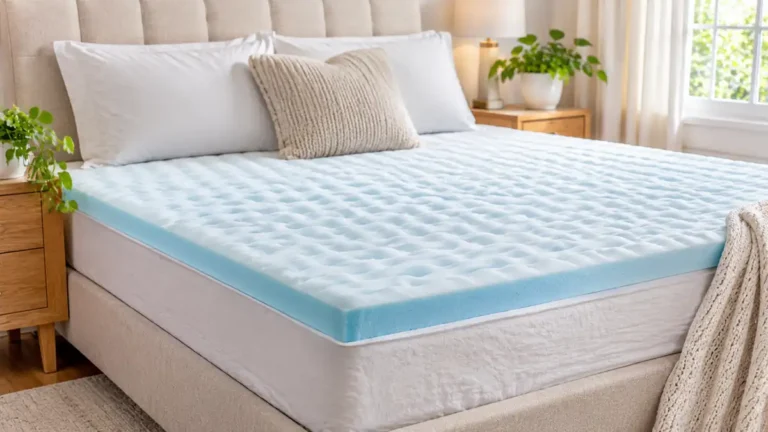 Best Cooling Mattress Topper: Latex vs Gel Foam vs Wool and How to ChooseSources generally rank latex as the coolest topper material, gel-infused memory foam as a middle ground between…Read more →
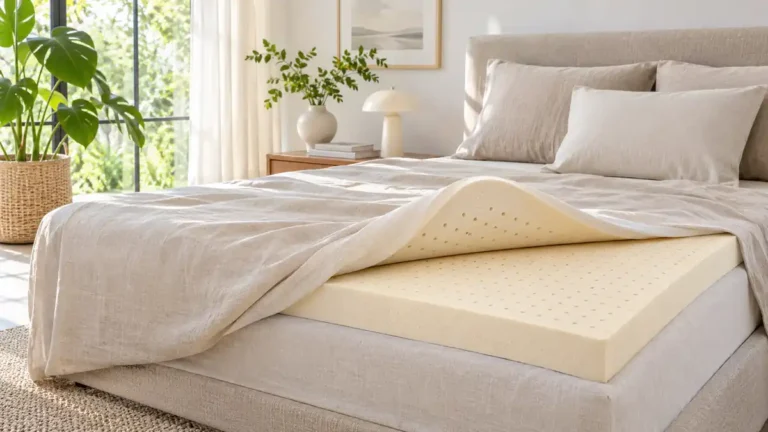 Latex Mattress Topper Guide: Dunlop vs Talalay, Feel, Cooling, Durability and Natural ContentQuick answer: a latex mattress topper is a layer of latex foam placed on top of a mattress to change its feel.…Read more →
 Folding Mattress: Tri-Fold Foam Thickness, Sizes, Density and Who It SuitsA folding mattress is a foam mattress that folds into thirds so you can store it in a closet or carry it.…Read more →
 Full vs Queen Mattress: Size Difference, Couples, Room Size, Price and How to ChooseFull and queen mattresses are two of the most popular sizes in the country, and they look close on a size…Read more →