
Small Bookshelf Guide: Sizes, Materials, Anchoring and Ideas for Tight Spaces
A small bookshelf can do a lot in a small home. It holds your favorite books, fills an awkward corner and adds personality to a bare wall. But a small shelf also has less room for mistakes. A weak shelf sags under heavy books. A tall, narrow one can tip. A poorly chosen size either wastes space or fills the room.
This article is part of our shelves, bookcases and storage furniture guide, where you can compare related options.
A small bookshelf is a compact shelving unit made for tight spaces such as studios, bedrooms, hallways, dorm rooms and corners. It may be a short bookcase, a narrow tower, a ladder shelf, a corner unit or a set of wall shelves. This guide explains the types, how to measure, what materials hold up, how to anchor safely, how to style and organize and what mistakes to avoid.
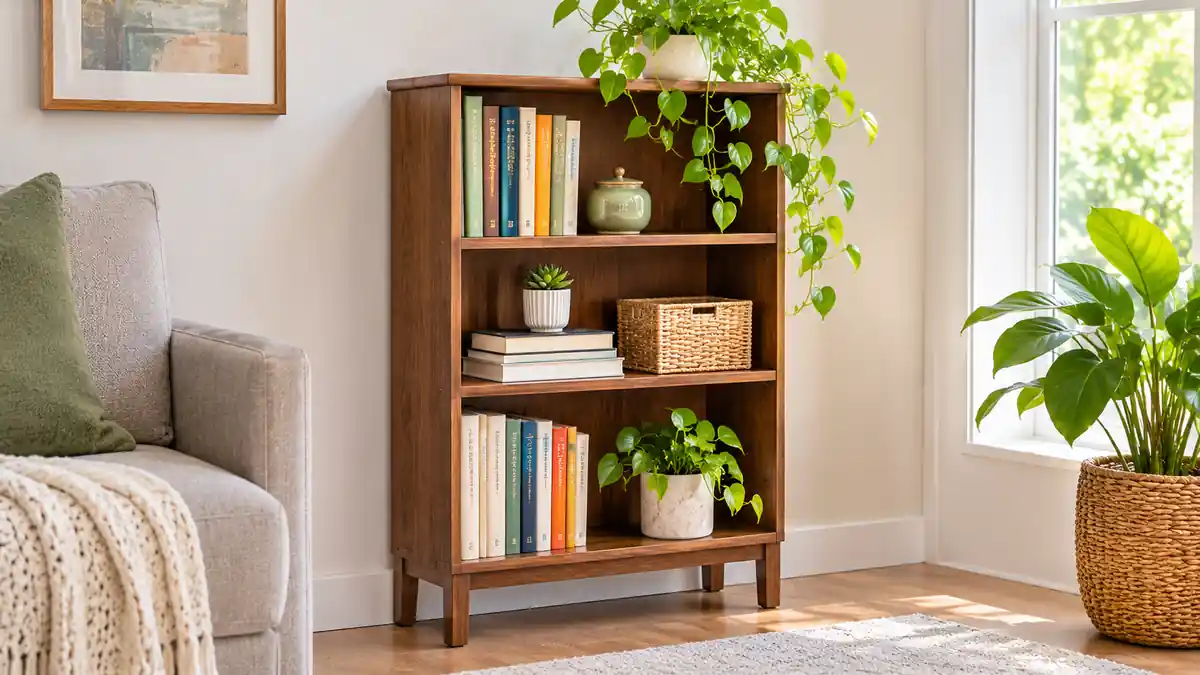
Types of Small Bookshelves
Short bookcase: a low, wide unit that sits under a window or beside a sofa. Good for paperbacks, baskets and plants on top. Narrow tower or slim bookcase: tall and thin, to use vertical space when you only have a small amount of floor. One design guide notes that sometimes you only have about 24 inches of wall space, or less, and narrow footprints make sense. Ladder shelf: a leaning unit with a slanted profile. Takes little floor space and fits well in a corner or beside a bed. Corner shelf: a triangular or L-shaped unit that fits into an unused corner. Floating (wall-mounted) shelves: keep the floor open and can be arranged in patterns. Need secure mounting. Cube organizer: a grid of cubes, sometimes with fabric bins. Rolling cart: a narrow shelf on wheels. Moves where you need it. Etagere: a frame with open shelves, often metal and glass. Offers stability in a light look. Multi-function bookcase: a shelf with built-in seating, a room divider or a desk. See the room divider guide. Arched small bookcase: a decorative shape that adds softness. See the arched bookcase guide.
| Type | Best for | Watch out for |
|---|---|---|
| Short bookcase | Under windows, beside sofas | Low capacity |
| Slim tower | Narrow walls | Tipping |
| Ladder | Corners, bedrooms | Anchoring |
| Floating | Open floors | Weight limit, studs |
| Cube | Mixed storage | Cheap versions sag |
| Rolling cart | Flexible use | Stability |
Measure Before You Buy
One guide advises measuring the height, width and depth of the space before choosing a type, and looking at the layout to see where the bookshelf will use the floor area best.
Measure the wall or corner where it will go. Measure the depth you can spare. Many small shelves are 8 to 12 inches deep. Paperbacks fit in shallow shelves, and large books need more depth. Check the height against ceilings, windows, vents and outlets. Measure your books. Large coffee table books and binders need taller and deeper shelves. Check clearance for doors, drawers and walkways. Tape the outline on the floor to see how it feels. Check the delivery path for boxed flat-pack units.
Leave a little extra room around the shelf. A cramped corner can feel stuffy.
Materials: What Holds Up
Material and thickness matter more than the label on the box.
Solid wood. One source says solid wood at 3/4 inch or thicker stays straight under books. It is strong and can last for years. Plywood. Strong and stable, often a good value. Particleboard and MDF. Common in flat-pack furniture. One source says particleboard under 5/8 inch thick will sag under books within a year. Thicker boards perform better, but check the weight rating. Metal. Strong and slim, often used in etageres and industrial-style shelves. Glass. Looks light, but needs careful loading. Bamboo. Light and strong when well made.
For anything meant to last beyond a few years, one source recommends solid wood or plywood. Shallow shelves have limited load capacity, so use thicker material, metal brackets or anchor them into studs.
Weight Limits
Books are heavy. A single shelf of hardbacks can weigh dozens of pounds. Check the weight rating per shelf and for the whole unit. If the listing does not say, ask the seller. Keep heavy books on the lowest shelves. Use bookends to keep books upright. See the bookends guide. Avoid overloading adjustable shelves, and make sure the shelf pins are seated properly.
Anchoring and Safety
Tall, narrow bookshelves can tip, especially if drawers or shelves open, books are pulled from the top or children climb.
Anchor tall units to the wall. Use the anti-tip hardware that comes with the shelf, and screw it into a stud if you can. Use wall anchors rated for the load if you cannot reach a stud. For renters, one source suggests securing shallow units to wall studs and using trim as a reversible option. Check your lease and minimize wall damage. Do not let children climb on shelves. Place heavy items low. Check for wobble after assembly and tighten all screws. Keep shelves away from heat sources.
See the arched bookcase guide for step-by-step anchoring.
Small Space Ideas
Go vertical. A tall, narrow shelf uses wall space and leaves floor open. Use a corner. Corner shelves make use of dead space. Place a shelf behind a sofa. A low shelf behind a sofa works as a divider and a display surface. Under a window. A short bookcase below a window adds storage without blocking light. Beside the bed. A narrow shelf replaces a nightstand. Over the door. A shallow shelf above a doorway uses wasted space. In the hallway. A slim shelf or floating shelves. Use stairs or alcoves. Built-in or custom shelves can fit odd spaces. Combine with a desk. A bookshelf with a desk surface or a ladder desk. See the small desk guide. Mix shelves and baskets. Baskets hold small items and keep the look tidy.
How to Style and Organize a Small Bookshelf
Key points: mix books and objects. A few books, a plant, a frame and a small bowl; stack some books horizontally to add variety; group by color or size for a calm look; leave empty space. A crowded shelf looks messy; use baskets and boxes to hide clutter; put favorite books at eye level; use a lamp or a small light to make the shelf a feature; rotate items with the seasons; keep heavy items low and light items high.
Cleaning and Care
Key points: dust shelves regularly with a dry cloth; wipe wood with a slightly damp cloth, and dry it; check screws and brackets every few months; keep books out of damp areas and sunlight to prevent damage.
How to Choose a Small Bookshelf
Measure the space and your books. Choose the type that fits your room. Check the material and thickness. Check the weight rating per shelf and per unit. Plan wall anchoring. Think about style and finish. Check the assembly. Read reviews for notes on sagging and wobble.
What mistakes should you avoid?
A few common mistakes are worth avoiding: buying a thin particleboard shelf for heavy books (it will sag); skipping the wall anchor (tall units can tip); not measuring depth (the shelf juts out); overloading shelves; ignoring delivery access; crowding every shelf (the look gets cluttered).
Frequently Asked Questions
What is the best small bookshelf for tight spaces?
Slim towers, ladder shelves, corner units and floating shelves use vertical or dead space.
What material is best?
Solid wood or plywood last longest. Thin particleboard can sag.
Do small bookshelves need to be anchored?
Tall or narrow ones should be.
How deep should a small bookshelf be?
Many are 8 to 12 inches deep. Check your books.
How do I stop shelves from sagging?
Use thicker boards, shorter spans and do not overload them.
Can I put a small bookshelf in a bedroom?
Yes, beside the bed or under a window.
Are floating shelves good for books?
Yes, if mounted into studs and within the weight limit.
Conclusion
A small bookshelf can store your books, show off your style and fit even the tightest corner. Measure carefully, choose solid materials, check weight ratings and anchor tall units.
Style the shelf with a mix of books and objects, leave a little empty space and keep heavy items low. With the right choice, a small bookshelf becomes one of the most useful pieces in your home.
Related guides
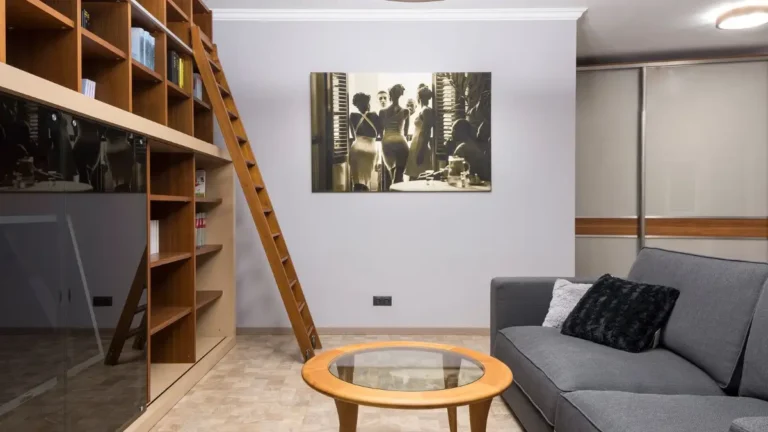 Ladder Bookshelf Guide: Leaning Angle, Depth, Weight Capacity and Why You Should Anchor ItQuick answer: a ladder bookshelf leans against a wall, with a wide base and narrowing shelves that step back…Read more →
 White Bookshelf Guide: Shelf Depth, Weight Capacity, Anchoring, Finishes and StylingQuick answer: a good white bookshelf matches its shelf depth to your books (about 15 to 20 centimeters for…Read more →
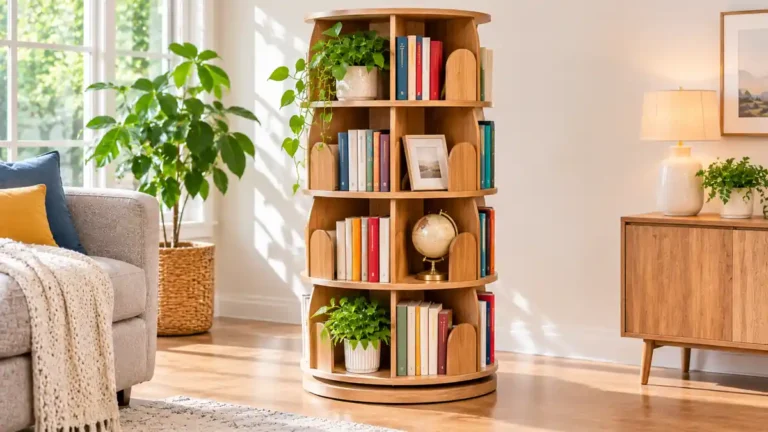 Rotating Bookshelf Guide: Sizes, Clearance, Weight Capacity and How to ChooseA rotating bookshelf lets you spin your books around to find the one you want. It stores a lot of books in a…Read more →
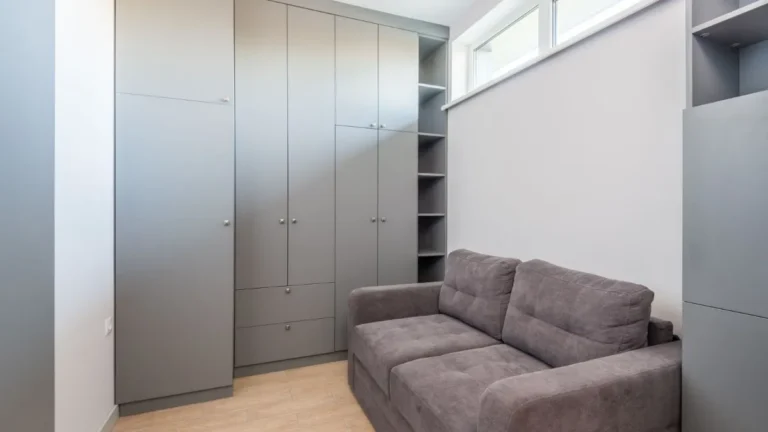 Small Sofa Guide: Loveseat and Apartment Sofa Sizes (48 to 84 Inches), Arms, Depth and Fit for Small RoomsQuick answer: a small sofa can be a compact loveseat (about 48 to 58 inches wide and 30 to 34 inches deep) or…Read more →





One Comment