Floating Shelves: How to Choose, Install and Use Them Safely
Floating shelves give a room storage without the bulk of a bookcase. They look clean because you can’t see the brackets. But that same hidden hardware is also the part that decides whether your shelf stays up. A pretty shelf on a weak wall mount is a problem waiting to happen.
This article is part of our shelves, bookcases and storage furniture guide, where you can compare related options.
A floating shelf is a shelf that attaches to the wall with hidden brackets or rods, so it looks like it has no support. The shelf slides over the brackets, or it’s mounted with a hidden rail. You’ll see them in living rooms, kitchens, bathrooms and bedrooms, holding books, plants, photos and small decor.
This guide covers how floating shelves work, how much weight they can hold, how to install them and how to choose the right size. You’ll also find a few mistakes to avoid and answers to common questions.
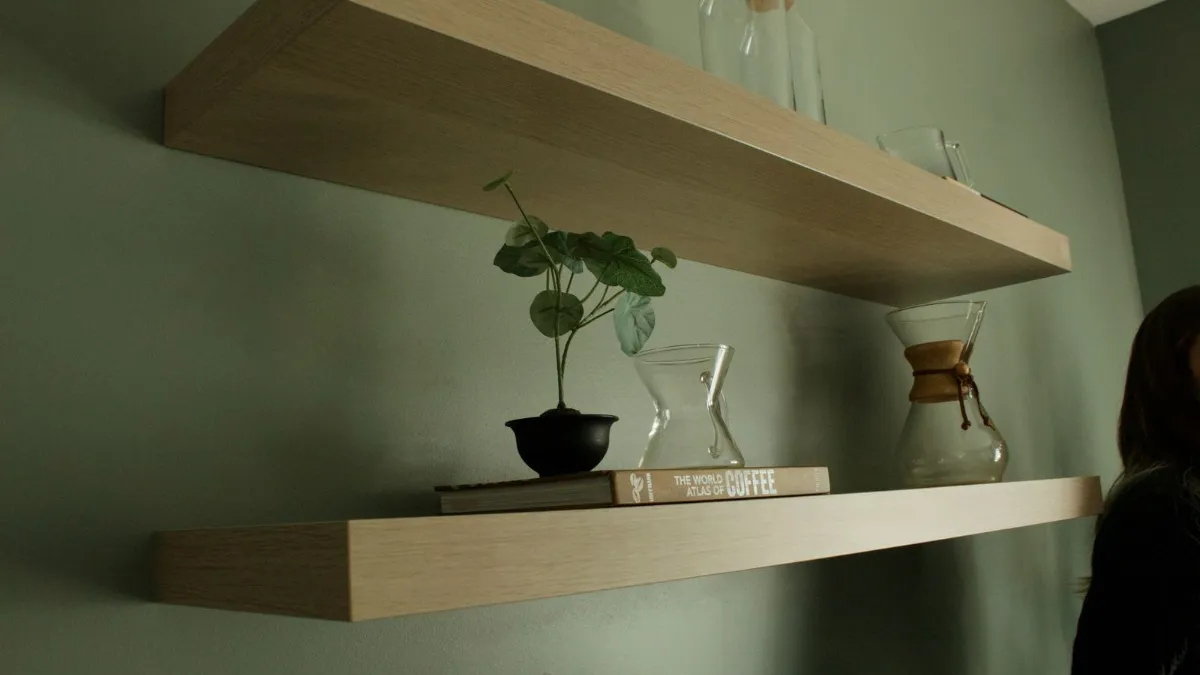
How Do Floating Shelves Work?
Most floating shelves use one of two systems. The first is a bracket with metal rods that stick out from the wall plate. The shelf has holes along its back edge, and you slide it onto the rods. The second is a hidden rail or cleat that screws into the wall, and the shelf hooks over it.
The load on the shelf pulls forward and down. That puts stress on the screws and on the wall behind them. Deeper shelves create more leverage, which means more strain on the mounting. This is why a 6-inch shelf can hold more than a 12-inch shelf made the same way.
The wall matters just as much as the shelf. Drywall is soft and crumbles under heavy pulling. Studs, which are the wooden or metal frames behind the drywall, are much stronger. That’s why nearly every guide tells you to anchor floating shelves into studs when you can.
How Much Weight Can a Floating Shelf Hold?
There isn’t one number that fits every shelf. Capacity depends on the bracket design, the shelf depth, the screws and the wall. Still, general guides give a rough idea. One guide estimates that a shelf mounted into two studs can hold around 30 to 50 pounds. Another says a single stud supports less and only suits small, light shelves.
Anchors in drywall are weaker. One guide says toggle bolts in drywall often handle about 25 to 50 pounds per fastener, while wood screws going into studs can hold more.
Your best source is the maker’s rating for your exact bracket. If the package gives a weight limit, use that. Then stay well under it. A shelf that’s rated for 30 pounds shouldn’t be loaded with 30 pounds of books. Leaving room under the limit keeps the shelf safe over the years.
How to Install Floating Shelves
Good installation takes a little time, but it isn’t hard. You’ll need a stud finder, a pencil, a level, a drill and the screws that come with your shelf. Read the maker’s guide first, since each system is a little different.
- Pick your spot. Decide on the height and mark it lightly on the wall. Keep in mind where people will sit or stand, so heads and elbows stay clear.
- Find the studs. Use a stud finder and mark each stud. Studs are usually spaced 16 inches apart, though your house may differ.
- Mark a level line. Use a level and draw a straight line where the top or bottom of the bracket will sit.
- Hold the bracket in place. Line it up with the studs if you can. Mark the screw holes with a pencil.
- Drill pilot holes. Small holes keep the wood from splitting and make the screws go in straight.
- Screw in the bracket. Make sure it’s tight and level before you add the shelf.
- Slide on the shelf. Push it all the way back. Some shelves have a set screw underneath to lock them in.
If a stud isn’t where you want the shelf, use strong anchors rated for the weight. Choose toggle bolts or similar heavy-duty anchors made for drywall. Plastic push-in anchors are fine for small decor, but they’re not the right pick for books.
Choosing the Right Size, Depth and Material
Start with the room and the job. A shelf over a sofa works better if it’s shorter than the sofa, so it looks balanced. A kitchen shelf for jars needs enough depth for the jars. A bathroom shelf for towels needs room for rolled towels to sit without hanging off.
Depth changes how much the shelf can carry and how it looks. Shallow shelves of about 5 to 6 inches suit photos and small decor. Medium shelves of 8 to 10 inches fit books and plants. Deeper shelves look bold but need stronger brackets and well-placed studs.
Common materials include solid wood, engineered wood, metal and glass. Solid wood is strong and can be sanded or stained. Engineered wood costs less and often has a smooth finish. Metal shelves are slim and strong, and glass shelves look light but need careful loading. Choose a material that fits the humidity of the room, since wood can warp in damp spaces.
| Shelf depth | Good for | Notes |
|---|---|---|
| 4 to 6 inches | Photos, small plants, candles | Easy to mount, low weight |
| 8 to 10 inches | Books, baskets, kitchen items | Needs good stud support |
| 11 inches and deeper | Large decor, tall plants | Needs strong brackets |
Where to Put Floating Shelves
Floating shelves work in almost any room, but the best spot depends on what they hold.
In the living room, they suit books, framed photos and a few decor pieces. They also work above a TV stand or a console table to add a layer of storage without crowding the floor. In the kitchen, they give you open storage for mugs, jars and cookbooks. In the bathroom, they hold towels and toiletries. In the bedroom, they can replace a nightstand shelf or add a small reading nook.
Keep the shelf away from heat sources like stoves. Avoid placing shelves where people might bump their heads, like beside a doorway or low over stairs. Also check for pipes and wires in the wall before drilling. A stud finder with wire detection can help, and when in doubt, ask a pro.
What mistakes should you avoid?
A few common mistakes are worth avoiding: relying on drywall alone (drywall anchors can pull out under real weight. Use studs when you can); ignoring the weight rating (a shelf might look strong and still be rated for much less than you plan to load); skipping the level (a shelf that’s slightly off looks worse than you’d think, and things can slide off); overloading one side (spread heavy items across the shelf and keep the heaviest ones near the wall); picking a shelf that’s too deep for the space (deep shelves stick out into the room and make walking tight); forgetting about the finish (check that the color and the wood tone match your room before you drill holes).
Styling Tips That Keep Shelves Safe
Pretty shelves don’t need to be crowded. Group items in odd numbers, such as three small objects, and mix heights to keep the eye moving. Place heavier items like books at the ends near the studs, not in the middle of a long, unsupported span.
Leave some empty space. A shelf that’s full from edge to edge looks heavy and puts extra load on the wall. A few plants, a framed photo and one or two books are often enough. If you rent, check your lease before drilling, and patch the holes when you move out.
Frequently Asked Questions
Can floating shelves hold books?
Yes, if they’re mounted well. Books are heavy, so use brackets rated for the load and attach them to studs. A single row of paperbacks is much lighter than a row of hardcovers, so check the weight before you stack them.
Do floating shelves need to go into studs?
For anything heavy, yes. Most guides say at least one screw should go into a stud, and two studs is better. For light decor, strong drywall anchors may be enough, but always check the shelf’s rating.
How far apart should floating shelves be?
A common range is about 10 to 14 inches between shelves, depending on what you store. Leave enough space for the tallest item on each shelf, and a little extra so it’s easy to reach.
Can I install floating shelves on drywall without studs?
You can, using heavy-duty anchors like toggle bolts. Capacity will be lower than with studs, so keep the load light and stay well under the anchor’s rating.
How high should I hang a floating shelf?
It depends on the room. Above a desk, leave enough space for your head and your screen. In the kitchen, keep the shelf within easy reach. In living rooms, many people place shelves at or just above eye level.
How do I make floating shelves look neat?
Keep a few items per shelf, mix heights and use a limited color range. Line up the shelves with window frames or furniture edges so the wall looks planned.
Conclusion
Floating shelves add storage and style without taking floor space, but they depend on good mounting. Find your studs, check the weight rating for your exact bracket and pick a size that fits both your room and what you want to store.
Before you drill, make a plan: where the shelf goes, what it holds and which studs support it. Stay under the weight limit, use a level and spread the load. With a little care, a floating shelf can stay solid and look great for years.
Related guides
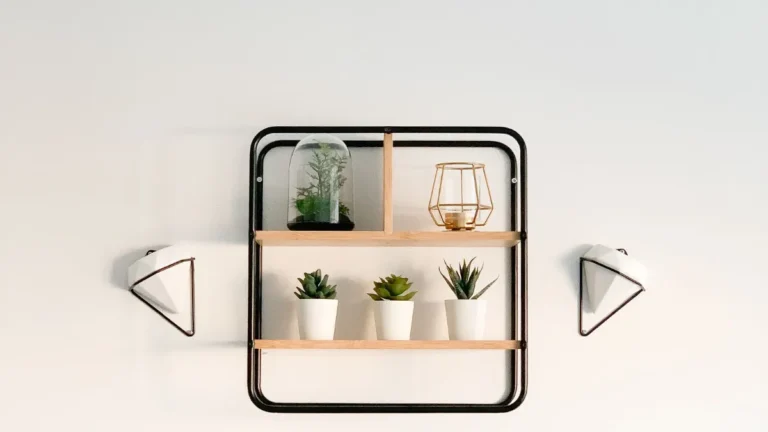 Floating Wall Shelves: Weight Capacity, Studs, Brackets and InstallationA floating shelf hides its brackets, so it looks like it s hovering on the wall. How much it can hold depends…Read more →
 Floating Bookshelves Guide: Hidden Brackets, Weight Capacity, Length, Studs and LayoutsFloating bookshelves look like magic. The books seem to sit on a slab hovering on the wall, with no brackets in…Read more →
 Corner Shelves Guide: Types, Mounting Into Studs, Weight Capacity and Styling IdeasCorners are the most overlooked space in a home. They are usually empty, dusty or filled with a lonely plant.…Read more →
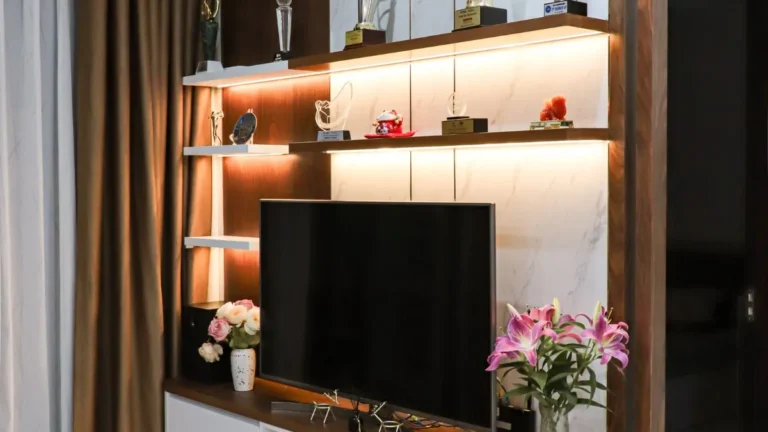 Floating TV Stand: Mounting Height, Weight Capacity, Studs and CablesA floating TV stand hangs on the wall instead of standing on the floor. It leaves the floor clear, makes…Read more →