
Entryway Bench: Size, Seat Height, Storage and Placement Tips
An entryway bench gives you a place to sit when you put on your shoes, drop your bag or wait for someone. With storage underneath, it also keeps shoes off the floor and out of the way. It’s one of the simplest ways to make a small entry tidy and welcoming.
This article is part of our shelves, bookcases and storage furniture guide, where you can compare related options.
An entryway bench is a bench placed near the front door. It might be a simple wooden seat, a bench with cubbies or a shoe rack, a storage bench with a lift-up lid or an upholstered bench with a cushion. It’s sometimes called a shoe bench or hall bench.
This guide explains the best seat height, how wide and deep a bench should be, how to leave room for the door and walkway, what cushions and storage to choose and how to style it. You’ll also find a size table, a checklist and answers to common questions.

Entryway Bench Seat Height
Most storage benches fall between 17 and 20 inches high, according to The Brick, which makes them easy to sit down on and stand up from while changing footwear. Ashdeco treats 18 inches as the comfort default, with each extra inch adding a shoe tier at the cost of a less comfortable seat.
Test the height against the shortest person who will use the bench regularly. If shoe capacity is your priority, a taller bench can hold more tiers, but check that it is still comfortable to sit on. For kids, a lower bench or a separate step stool may help.
Entryway Bench Width
Ashdeco’s category sizes are 24, 36, 48 and 60 inches. They fall into four width categories: compact (24 inches), standard (36 inches), large (48 inches) and extra-large (60 inches).
A smaller bench, about 24 to 36 inches, is ideal for one person or a compact foyer, leaving space for movement. For entryways under 36 inches wide, one guide suggests a bench between 20 and 24 inches wide with 12 inches of depth.
To find your range, Ashdeco suggests measuring the entryway wall width and subtracting 4 to 6 inches for breathing room on each side. For example, a 72-inch wall leaves 60 to 64 inches for the bench.
| Bench width | Good for |
|---|---|
| 24 inches | One person, tiny foyers |
| 36 inches | Couples, standard entries |
| 48 inches | Families |
| 60 inches | Large entries |
Larger households need wider benches or extra tiers. For families with five or more, one guide suggests pairing a bench with a wall-mounted shoe rack above, or choosing a wider 72-inch model.
Entryway Bench Depth
Depth matters more for large feet. For men’s shoe sizes 11 and above, one source suggests choosing a shoe bench with at least 14 inches of depth. A shallow bench may cause heels or toes to overhang the edge, especially with men’s US size 10 (EU size 44) and above.
For small spaces, a 12-inch depth works for many shoes. If you wear boots, measure the length and think about angled shelves.
Keep a Clear Path and Door Clearance
Placement is as important as size. Measure the width of your hallway or foyer and plan for at least 36 inches of clear traffic space. Leave at least 36 inches between the bench and the fully opened front door. This prevents the door from hitting the bench and allows comfortable entry.
In a hallway entry, center the bench on the wall. One source notes that a perfectly centered bench on a wide wall looks institutional, so you may want to offset it and add a plant or lamp on one side. Check for outlets, radiators and vents, and don’t block them.
Types of Entryway Benches
Simple bench: an open seat with legs. Light and airy. Bench with shoe shelf: an open shelf or two under the seat holds shoes. Storage bench: a lift-up lid or drawer hides items. Good for hiding clutter. Bench with cubbies: cubbies or baskets under the seat. Bench with back and hooks: combines a seat, hooks and sometimes a shelf. Also called a hall tree. Upholstered bench: padded for comfort. Wingback or settee: a formal, decorative option. Built-in bench: custom to your space. Folding or stackable bench: for tight spaces.
Cushions and Comfort
A cushion adds comfort for longer sitting. But a removable cushion collects dirt from the entryway, as one guide notes. If you add one, choose a washable cover.
Fabrics that suit entryways include performance fabrics, leather, faux leather and tightly woven cotton. Avoid light, delicate fabrics near muddy shoes. Seat pads with non-slip backing stay in place.
If you prefer a clean look, choose a smooth wood or woven seat that’s easy to wipe.
Storage Options
Key points: open shelves. Easy access, but shoes are visible; cubbies with baskets. Baskets hide clutter and keep items sorted; lift-top lid. Stores bulky items like hats and gloves; drawers. Keep small items neat; wall hooks above. Add hooks or a coat rack for coats and bags; wall shelf above. Holds keys, mail and decor.
Think about how many pairs of shoes your household owns. Keep daily shoes in reach, and store seasonal ones elsewhere.
Materials and Style
Solid wood: sturdy and long lasting. Engineered wood: lower cost, many finishes. Metal: slim and modern. Rattan or wicker: casual and textured. Upholstered: soft and cozy.
Match the finish to your door, floor and other furniture. Light colors make a small entry feel brighter. A durable finish stands up to scuffs and moisture.
How to Style an Entryway Bench
Add a rug underneath to catch dirt. Place baskets for shoes, scarves or toys. Hang a mirror above the bench. Add hooks or a coat rack on the wall. Place a tray or bowl for keys on a nearby shelf. Keep a plant or lamp beside the bench. Add pillows or a throw for a cozy feel, if the entry is dry and clean.
How to Choose an Entryway Bench
Measure the wall. Subtract 4 to 6 inches on each side. Check the door swing. Leave at least 36 inches from the open door. Check the walkway. Keep at least 36 inches of clear space. Pick the seat height. 17 to 20 inches, with 18 as a comfort default. Choose the depth. At least 14 inches for large shoes. Decide on storage. Open, cubbies or closed. Choose the material. Durable and easy to clean. Pick a cushion if you want one, with a washable cover. Check the weight rating. Read reviews for notes on assembly and stability.
What mistakes should you avoid?
A few common mistakes are worth avoiding: blocking the door (the door should open fully); choosing a bench that’s too deep for the space (it narrows the walkway); picking a bench that’s too shallow for shoes (toes and heels overhang); using a delicate fabric (entryway dirt will show); forgetting about wall hooks (coats need a place too); not measuring the shortest user (a too-high seat is awkward).
Frequently Asked Questions
How high should an entryway bench be?
Most are 17 to 20 inches high, with 18 inches as a comfortable default.
How wide should an entryway bench be?
Common widths are 24, 36, 48 and 60 inches. Measure your wall and subtract 4 to 6 inches on each side.
How deep should an entryway bench be?
At least 14 inches if you wear large shoes. A 12-inch depth can work in small spaces.
How much clearance do I need?
Plan for at least 36 inches of clear traffic space and 36 inches between the bench and the open door.
Should an entryway bench have a cushion?
A cushion adds comfort but collects dirt. Choose a washable cover.
What can I store in an entryway bench?
Shoes, hats, gloves, scarves, bags and small items.
Conclusion
An entryway bench adds a seat, storage and order to the first spot you see when you come home. Choose a height around 18 inches, a width that fits your wall and a depth that suits your shoes.
Leave 36 inches of clearance for walking and for the door. Add hooks, baskets and a rug, and you’ll have an entry that works every day.
Related guides
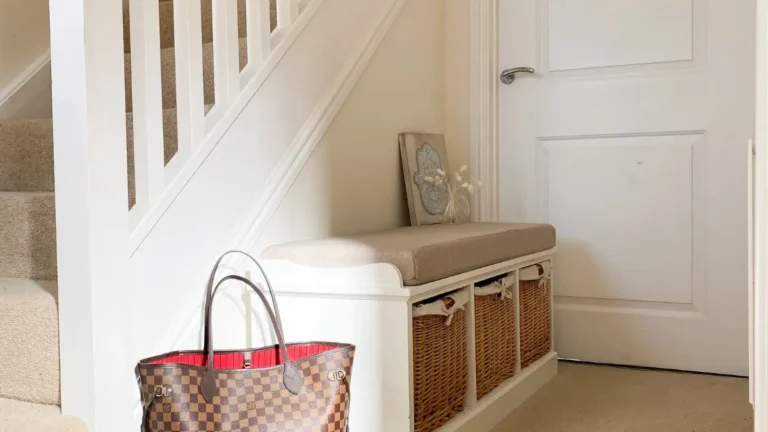 Bench with Storage Guide: Entryway and Bedroom Sizes, Seat Height, Weight Ratings and Safety HingesQuick answer: a bench with storage gives you a seat and a hidden compartment. Most entryway and bedroom models…Read more →
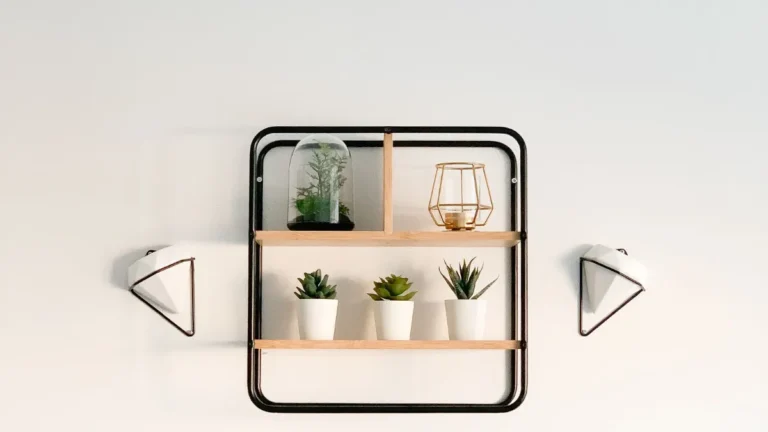 Floating Wall Shelves: Weight Capacity, Studs, Brackets and InstallationA floating shelf hides its brackets, so it looks like it s hovering on the wall. How much it can hold depends…Read more →
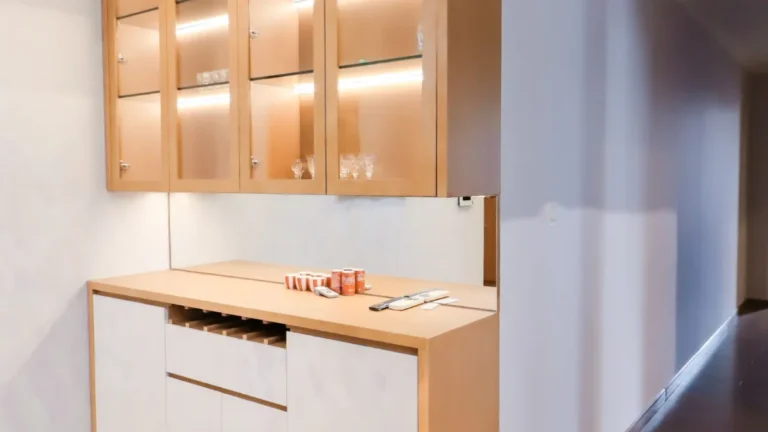 Glass Cabinet: Tempered vs Regular Glass, Thickness, Safety and Wall AnchoringTempered or laminated glass is the safer choice for a glass cabinet, especially in a home with children.…Read more →
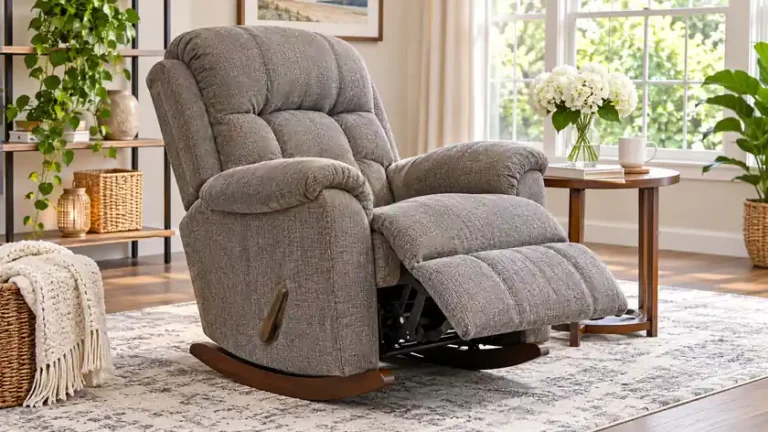 Rocker Recliner: Rocker vs Glider, Swivel Options and Whether It Suits a NurseryA rocker recliner combines a rocking or gliding motion with a reclining back and footrest. Rockers move in an…Read more →



One Comment