Bookends Guide: Materials, Weight, Stability and How to Choose
Bookends keep books upright and tidy. A weak pair slides or tips when you take out a book. The right pair holds your books and adds style.
This article is part of our shelves, bookcases and storage furniture guide, where you can compare related options.
Materials
Cast iron, steel and concrete. Heavy options for sturdy, heavy-duty use. Marble and stone. Heavy and stable, good for larger books. Solid wood. Warm in look. Lighter unless thick and solid. Glass and acrylic. Decorative, best for light books.
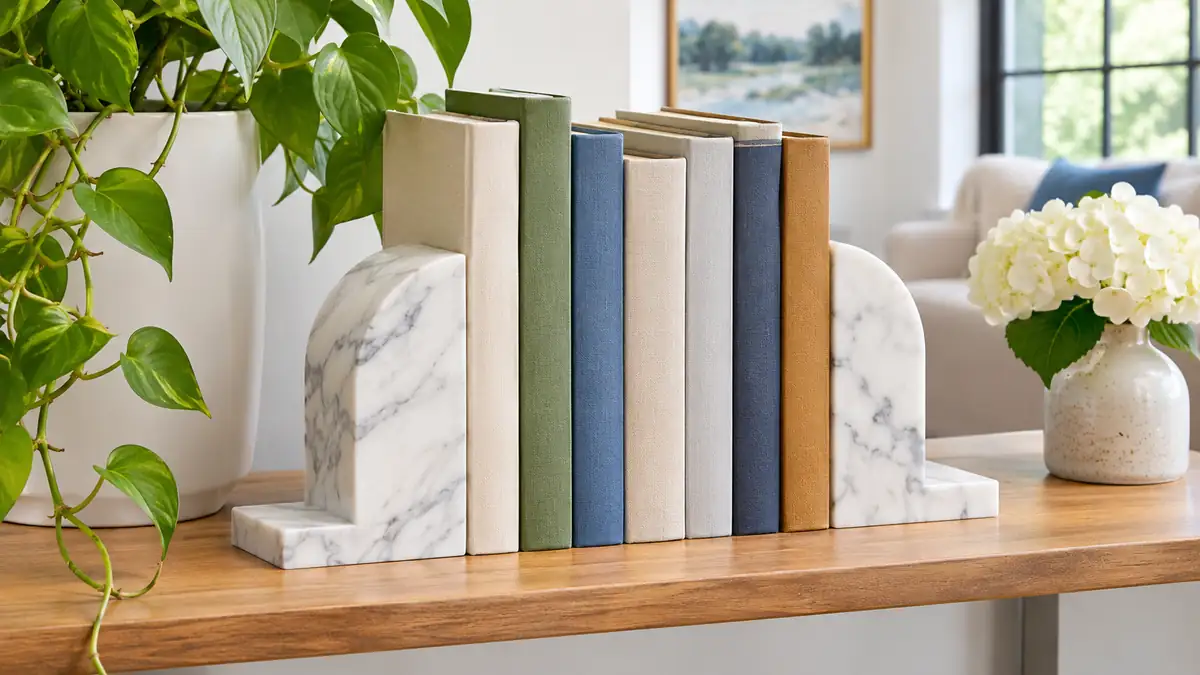
Metal, stone and solid wood offer superior stability.
Match Weight to Books
Oversize books and hardbacks need heavy bookends. Paperbacks stay upright with lighter ones. Bob Vila notes that the weight you need depends on the books you have.
Stability Tips
Look for a wide base and a non-slip pad, especially on smooth glass or laminate shelves. L-shaped designs use the weight of the books to stay in place. A tall, skinny bookend will not hold tall, heavy books. Check that the shelf can carry the combined weight of books and bookends. See the book shelf and arched bookcase guides.
Styling
Match bookends to your room: sleek metal for modern, wood for warm, marble for classic. Use them to hold a few books and display objects. Choose a size in proportion to the books.
Types of Bookends
Heavy L-shaped bookends: a flat plate slides under the books, and the weight of the books holds it in place. They are plain, strong and usually hidden. They work well for hardbacks and for shelves where you do not want a decorative piece. Freestanding sculptural bookends: these are heavy objects such as animals, geometric shapes or abstract forms. One goes on each end of the row. They add style but must have enough weight at the base to hold books upright. Block or cube bookends: solid cubes of marble, wood, concrete or metal. They are simple and modern, and they work as decor even when the shelf is not full. Stacking or gravity bookends: some designs hold a few books on top of a base, so the books themselves become part of the weight. Magnetic or clamp bookends: made for metal shelves or desks. They grip the surface, so they hold in place even when books are light. Check that they suit your shelf. Adjustable bookends: have a slider or telescoping plate, so you can fit different widths. Desk and file bookends: taller, slimmer pieces for papers, binders and magazines on a desk.
| Type | Best for | Watch out for |
|---|---|---|
| L-shaped metal | Heavy hardbacks | Plain look |
| Sculptural | Display shelves | Base weight |
| Block | Modern shelves | Can slide on glass |
| Clamp/magnetic | Desks, metal shelves | Needs a compatible surface |
How to Match Bookends to Your Shelves
Think about the shelf first. A glass or polished laminate shelf is slippery, so bookends there need a rubber or felt pad. A solid wood shelf grips better and may not need one. Check the shelf depth too. If the bookend is deeper than the shelf, it will stick out and catch on things. If it is much shallower than your books, it will tip.
Also think about how many books you have. A half-full shelf needs bookends to hold a short row. A full shelf needs none, because the books support each other. If you leave a gap, a bookend keeps the last few books from leaning and falling.
For very tall or very heavy books, you may need two bookends on each side, or a deeper base. For a mix of paperbacks and hardcovers, one medium-weight pair is usually enough.
Protecting Your Shelves
Metal and stone bookends can scratch painted or wood shelves. Stick felt pads on the bottom of each bookend. Replace pads when they wear out. Avoid dragging a bookend across the shelf; lift it. If you place heavy stone or iron bookends on a thin shelf, check the shelf’s weight rating first. Several kilograms of books plus bookends can bow a thin shelf over time. See the wall shelf and book shelf guides for tips on shelf strength.
Using Bookends as Decor
Bookends do not have to be boring. You can use them to hold more than books: Stand a framed photo between two small bookends. Place a plant between the books and a bookend for a soft touch. Use matching pairs for a formal look, or mismatched pairs for a relaxed feel. Choose a color that repeats something else in the room, like a lamp or vase. Group books horizontally in a small stack and use a bookend on top as a decorative accent. Leave a little empty space on each shelf so the display does not feel crowded.
In a children’s room, choose rounded, lightweight bookends in safe materials, and make sure heavy pieces cannot fall off a shelf at head height. Anchor tall shelves to the wall.
Care and Cleaning
Dust with a dry or slightly damp cloth. Polish metal gently, and check for rust in damp rooms. Wipe stone with a soft cloth. Avoid acidic cleaners on marble, which can dull the surface. Treat wood with a suitable polish if it dries out. Re-stick felt pads when needed.
How to Choose
Check the size and weight of your heaviest books. Pick a heavy material for large books. Choose a wide, non-slip base. Confirm the shelf strength. Match your style.
Bookends for Different Rooms
Home office: choose sturdy metal or stone bookends that hold binders, reference books and files. Clamp-on or desk bookends keep papers upright without taking up shelf depth. A simple design keeps the workspace calm. Living room: use bookends as part of the display. A pair of marble or wood pieces looks good on a console or built-in shelf. Mix books with candles, vases and framed photos, and use the bookends to anchor each group. Kids’ room: pick lightweight, rounded, shatter-resistant materials. Avoid sharp corners and top-heavy shapes. Keep the heaviest books on the lowest shelves. Teach children to take books out gently so a bookend does not topple. Bedroom: a small pair on a nightstand shelf keeps your current reads tidy. Choose quiet finishes and avoid anything that clinks against metal frames. Library or reading nook: large, heavy bookends fit long runs of hardbacks. Brass, bronze and cast iron suit a traditional look.
What to Look For Before You Buy
Weight. If the listing gives a weight, compare it with the weight of your books. A set of ten hardcovers can weigh over ten pounds, so a lightweight decorative bookend will slide. Base size. A wider base resists tipping. A narrow base needs more weight. Underside. Look for felt, cork or rubber. Bare metal will slide on glass and scratch wood. Height. The bookend should be at least as tall as most of your books, or at least two thirds of their height. Finish. Painted finishes can chip, and plated finishes can wear. Solid materials last longer. Pairs. Some are sold as singles. You usually need two. Reviews. Check whether buyers say the bookends hold their books or slide.
If you are not sure, start with a plain heavy L-shaped pair and add decorative pieces later.
How Bookends Fit Into a Shelf Layout
A good shelf mixes vertical stacks, horizontal stacks and open space. Bookends make the vertical groups neat. Try placing a small group of three to five books between two bookends and filling the rest of the shelf with objects. Vary the height of the groups so the eye moves along the shelf. Do not stretch one row across the whole shelf, because a long row of leaning books looks messy and puts more strain on the bookends.
What mistakes should you avoid?
A few common mistakes are worth avoiding: choosing light decorative bookends for heavy books; ignoring shelf strength; buying a bookend too small for the books.
Frequently Asked Questions
What are the best bookends for heavy books?
Cast iron, stone or thick metal.
Do bookends scratch shelves?
Some can. Choose a felt or non-slip pad.
How many do I need?
One pair per group of books.
Can bookends be decorative?
Yes, but weight still matters.
Are glass bookends strong enough?
Fine for light books.
Conclusion
Pick bookends by weight, base and shelf strength first, then style. The right pair keeps books tidy and looks good.
Related guides
 Floating Wall Shelves: Weight Capacity, Studs, Brackets and InstallationA floating shelf hides its brackets, so it looks like it s hovering on the wall. How much it can hold depends…Read more →
 Glass Cabinet: Tempered vs Regular Glass, Thickness, Safety and Wall AnchoringTempered or laminated glass is the safer choice for a glass cabinet, especially in a home with children.…Read more →
 Bench with Storage Guide: Entryway and Bedroom Sizes, Seat Height, Weight Ratings and Safety HingesQuick answer: a bench with storage gives you a seat and a hidden compartment. Most entryway and bedroom models…Read more →
 Rocker Recliner: Rocker vs Glider, Swivel Options and Whether It Suits a NurseryA rocker recliner combines a rocking or gliding motion with a reclining back and footrest. Rockers move in an…Read more →