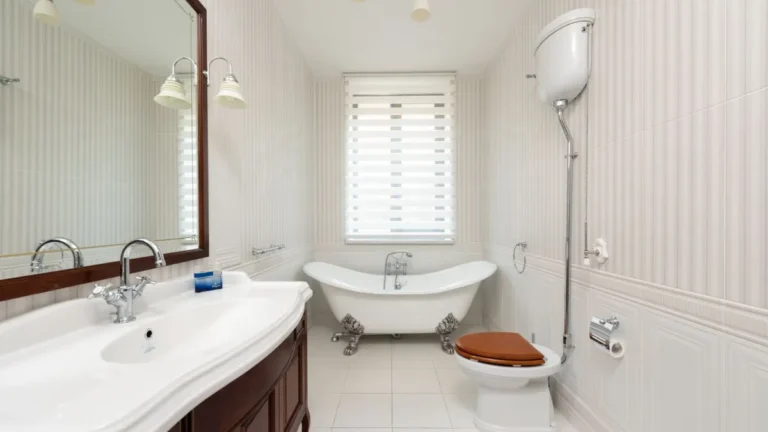
Over the Toilet Storage: Cabinets, Shelves, Clearance and Installation Tips
The space above your toilet is some of the most wasted room in a small bathroom. It’s wall space you can’t walk through, and it’s right where you need towels, toilet paper and spare toiletries. Over-the-toilet storage turns that gap into a handy cabinet or shelf without taking any extra floor space.
This article is part of our toilet and bidet guide, where you can compare related options.
Over-the-toilet storage is any shelf, cabinet or rack that sits above the toilet tank. Some units stand on the floor and straddle the toilet. Others mount on the wall. Both types give you extra shelves for towels, baskets, decor and supplies.
This guide explains the main types, how much clearance to leave above the tank, what size and weight limits to expect, how to install each type and how to avoid common mistakes. You’ll also find a comparison table, a checklist and answers to common questions.

Types of Over-the-Toilet Storage
Freestanding etagere (floor unit): a frame with shelves that stands on the floor around the toilet. One listing says the freestanding design means you can slide it right over the tank without any wall modification. Those with legs typically put the lowest shelf about 30 to 35 inches above the floor. A bamboo freestanding unit in one listing has a 99-pound capacity. Wall-mounted cabinet: resembles a standard medicine cabinet, but is secured directly to the wall above the toilet. It lifts storage off the floor. One wall cabinet in a listing shows a total weight of 110 pounds, though that is the manufacturer’s claim. Floating shelves: one or more shelves mounted on the wall with hidden or visible brackets. They look light and open. Over-the-toilet cabinet with doors: hides clutter behind doors. Some have glass doors. Open shelf unit with baskets: keeps items visible and easy to grab. Baskets keep things tidy. Tank-top storage: a small tray or shelf that sits on the toilet tank itself. It holds a few items but can get in the way of the lid. Ladder-style shelf: a leaning shelf with rungs. It takes up a little floor space but adds a casual look.
| Type | Needs drilling? | Best for | Watch out for |
|---|---|---|---|
| Freestanding etagere | No | Renters | Needs floor space around the toilet |
| Wall cabinet | Yes | Hidden storage | Accurate mounting |
| Floating shelves | Yes | Small, light loads | Weight limits |
| Open unit with baskets | No or yes | Quick access | Visible clutter |
| Ladder-style | No | Casual bathrooms | Leaning stability |
How Much Clearance Do You Need?
Clearance is the most important measurement. Measure from the top of the tank, not from the floor.
Guidance varies. One guide says current over-toilet guidance lands between roughly 10 and 24 inches, depending on shelf depth and layout. It suggests a 12 inch minimum and 24 inches or more preferred, so you can open the lid and keep cleaning access.
Another guide says the lowest shelf should sit at least two inches above the lid, which often means a minimum clearance of 34 to 36 inches measured from the floor.
Check these points: Lid swing. Raise the toilet lid fully and see how much room it needs. One source notes that tall toilets may cause the lid to bump the bottom shelf. Tank height. Measure your tank. Some are taller than others. Ceiling, window or vent. Check what’s above. If you have an unusually tall toilet tank or a bathroom with a window directly above, a very tall unit might not fit. One source mentions that a 64-inch height might be too tall in such cases. Cleaning access. Leave room to reach behind the tank and clean. Door and traffic. Make sure the unit doesn’t block the bathroom door or walkway.
Size and Weight Capacity
Most standard units are about 24 to 27 inches wide and 8 to 10 inches deep, according to one source. Always confirm the dimensions. Depth matters: a deeper unit can bump your knees when you sit.
Published weight ratings vary. Some listings give about 99 to 110 pounds for the unit as a whole. Shelf ratings are lower. Treat these as manufacturer claims. One guide advises choosing anchors rated well above the weight you plan to store, keeping heavy items off the shelf and rechecking the anchors a few weeks after installation for any loosening.
Bathrooms hold some heavy items, such as full bottles, stacks of towels and baskets. Add up what you plan to put on the shelves. Put heavy items on lower shelves, and keep light decor on top.
How to Install a Wall-Mounted Cabinet
Wall-mounted cabinets are secured directly to the wall above the toilet. The challenges are accuracy and secure fastening.
- Choose the height. Use the clearance guidance above. Mark the position of the bottom of the cabinet.
- Find the studs. Use a stud finder. Studs give the strongest hold.
- Mark and level. Use a level to draw a straight line.
- Drill pilot holes. Use the right bit for the wall material. Tile needs a special bit.
- Install anchors if you can’t use studs. Choose anchors rated well above the load.
- Hang the cabinet on the screws or bracket, and tighten.
- Test. Pull gently to make sure it is secure.
- Seal holes in tile if required.
If you aren’t confident about drilling into tile or about hidden pipes and wires, hire a pro.
How to Set Up a Freestanding Unit
- Measure the space. Check the width and depth around the toilet, and any baseboards.
- Assemble the unit following the maker’s guide.
- Slide it over the toilet and make sure it clears the tank and the lid.
- Level it. Adjust the feet if needed.
- Secure it to the wall if it has an anti-tip kit. Tall units can tip.
- Load the shelves. Heavy items go low.
Materials for a Humid Room
Bathrooms are damp, so materials matter.
Bamboo. Natural and moisture tolerant when sealed. Metal (powder-coated or chrome). Slim and rust resistant if the coating is good. Engineered wood (MDF) with a sealed finish. Low in cost, but can swell if water gets in. Solid wood with a water-resistant finish. Sturdy but heavier. Plastic or resin. Moisture proof but can look plain.
Look for sealed edges and rust-resistant hardware. Avoid raw wood in a steamy bathroom.
What to Store
Key points: spare toilet paper; rolled towels and washcloths; hand towels; baskets of toiletries; cleaning supplies, if the cabinet has doors; a plant or decorative item on top; air freshener or candles (away from heat).
Avoid storing medications in a humid bathroom, since heat and moisture can damage them. Keep cleaning chemicals out of reach of children.
How to Choose Over-the-Toilet Storage
Measure the space. Width, depth and clearance above the tank. Check the lid swing. Decide on freestanding or wall-mounted. Choose open or closed storage. Check the weight rating. Pick moisture-resistant materials. Match your bathroom style. Plan the mounting. Studs or anchors, or an anti-tip kit. Think about how you’ll clean around it. Check reviews for notes on assembly and stability.
What mistakes should you avoid?
A few common mistakes are worth avoiding: measuring from the floor only (check the clearance above the tank); forgetting the lid (the lid may not open fully); overloading the shelves (respect the weight limits); using weak anchors (use studs or heavy-duty anchors); choosing the wrong material (raw wood can warp in humidity); blocking the door (check the swing and walkway); ignoring anti-tip (tall freestanding units should be secured).
Frequently Asked Questions
How high should a shelf be above the toilet?
Guides suggest at least 12 inches above the tank, and 24 inches or more is preferred for lid and cleaning access. Another suggests the lowest shelf sit at least two inches above the lid, often 34 to 36 inches from the floor.
How much weight can over-the-toilet storage hold?
It depends on the unit. Listings show around 99 to 110 pounds in total, but shelf limits are lower. Check the manufacturer’s rating.
Is a freestanding or wall-mounted unit better?
Freestanding units need no drilling and suit renters. Wall-mounted units lift storage off the floor and can look sleek, but they need secure mounting.
How wide is an over-the-toilet cabinet?
Most are about 24 to 27 inches wide and 8 to 10 inches deep, according to one source.
Can I install over-the-toilet storage on tile?
Yes, with the right drill bit and anchors. If you aren’t confident, hire a pro.
What can I put on a shelf above the toilet?
Towels, toilet paper, baskets and small decor are common. Avoid medications and heavy items.
Conclusion
Over-the-toilet storage is an easy way to add space to a small bathroom. Choose between a freestanding unit and a wall-mounted cabinet, measure the clearance above the tank and make sure the lid can open.
Check the weight rating, use proper anchors and pick moisture-resistant materials. With the right setup, you gain a lot of storage without losing any floor space.
Related guides
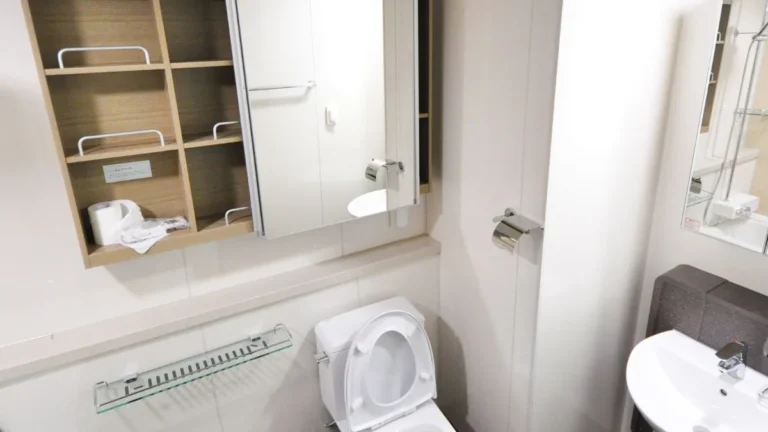 Over-the-Toilet Storage Guide: Cabinets, Shelves, Clearance, Weight Limits and MountingThe space above the toilet is the most wasted spot in a small bathroom. It is right there, within reach, and…Read more →
 Toilet Dimensions: Standard Size, Rough-In and Clearance RequirementsA standard toilet is about 28 to 30 inches deep, roughly 20 inches wide and 27 to 32 inches high, and the most…Read more →
 Toilet with Bidet: Built-In vs Bidet Seat, Cost, Power Needs and DrawbacksA toilet with a bidet either has the washing function built into the bowl or uses a bidet seat that replaces…Read more →
 Bathroom Storage Ideas: Over-Toilet Units, Wall Cabinets, Towers, Sizes and AnchoringQuick answer: the easiest way to add bathroom storage is to use vertical space. Over-the-toilet shelves are…Read more →