Ladder Bookshelf Guide: Leaning Angle, Depth, Weight Capacity and Why You Should Anchor It
Quick answer: a ladder bookshelf leans against a wall, with a wide base and narrowing shelves that step back like a ladder. Always anchor it to the wall, ideally with a lag screw into a stud. Measure the overall footprint and angle, not just the bottom shelf, and check each shelf’s limit, because top shelves are often rated far lower than bottom ones.
This article is part of our shelves, bookcases and storage furniture guide, where you can compare related options.
Ladder bookshelves are slim, stylish and good for small rooms. They fit into corners and next to doors, and they display plants and books well. But a tall leaning unit is also a tip-over risk, and its shelves are shallow at the top. This guide explains how ladder shelves work, sizing, weight capacity, anchoring and safety, materials, styling and how to choose. One forum anecdote suggested a low-angle unit needed no anchoring, but that is not a safety standard, and I do not recommend skipping anchoring. This is not safety certification advice.
How a Ladder Bookshelf Works
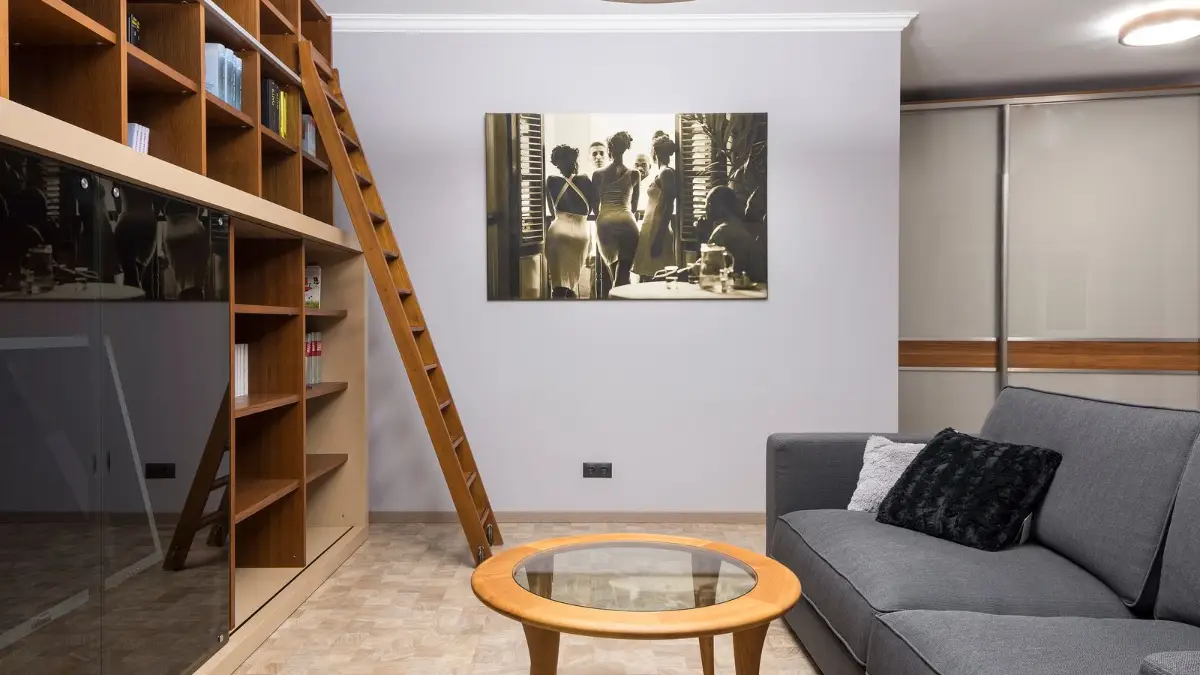
A ladder shelf leans on a wall at an angle. Its two rails form a ladder shape, and shelves are fixed between them. Shelf depth shrinks toward the top because of the angle. The wall bears part of the load, so the shelf needs to be anchored.
Types: Wood ladder shelf. Warm and traditional. Industrial ladder shelf. Metal frame and wood shelves. Corner ladder shelf. Fits corners. See the corner bookcase guide. Ladder shelf with desk. A shelf with a built-in desk. Wall-leaning display rack. The Hivvago 5-tier wall-leaning ladder shelf is an example. Ladder shelf with anti-toppling device. Hivvago sells a 4-tier ladder shelf with an anti-toppling device.
Sizes and Angle
Sizes vary. Examples: a 69-inch 5-tier unit and a 72-inch 5-tier unit. Guides stress measuring overall footprint and angle, not just the bottom shelf. One notes that measuring only the depth of the bottom shelf while ignoring the overall angle of the unit is a common mistake. A forum thread says the leaning angle and the height of the units work together to determine the depth of the shelves.
Measure:
- Height.
- Width.
- Base depth (floor to the wall, not the shelf depth).
- Top depth.
- Space needed behind for the lean.
- Clearance for baseboards.
A steeper lean saves floor space but takes less depth on shelves. A shallower lean takes more floor space and offers more shelf depth. Lazada publishes a guide to choosing the size of a ladder shelf for small rooms.
Weight Capacity
Ratings vary widely. Per-shelf figures in the listings range from about 10 pounds to 55 pounds, and some units list 250 pounds total. Examples: Flora Home’s 5-shelf corner ladder: top shelf 2 pounds, the second 5 pounds and so on, up to 20 pounds at the bottom. A Beliani ladder unit: 10 kilograms per shelf.
Guides advise that overloading the upper, shallower shelves can compromise stability, and that if no clear rating exists, you should reserve that unit for lighter, decorative storage. Place heavy books on the lowest shelves.
Anchoring and Tip-Over Safety
One buying guide says leaning ladder shelves should always be anchored to the wall to prevent accidental tip-overs. A product page recommends fixing the top bracket into a wood stud, since a lag screw driven into a wood stud provides far greater resistance than any hollow-wall anchor. One reviewer found the included wall-anchor screws too short and replaced them with longer ones.
Steps:
- Find a stud at the height of the top bracket.
- Attach the bracket or strap to the shelf’s upper frame.
- Drive a lag screw into the stud.
- Check tightness and re-check now and then.
- Place heavy items low.
A forum poster reported that a unit with a 7 degree base angle and a base about 12 inches from the wall was stable enough not to need any anchoring. That is a single anecdote, not a safety standard, and I would not rely on it. Children, pets and bumps can topple a shelf. Never let children climb on a ladder bookshelf.
See the tall dresser, white bookshelf and bookcase with doors guides for more on anchoring.
One Confusing Listing Claim
One listing says the shelves lean at a 90 degree angle. That wording is confusing and inconsistent with the rest of the sources, because a 90 degree lean would be vertical. Check the actual frame geometry before relying on a listing.
Materials
Key points: solid wood or engineered wood shelves; metal frames (steel). Check finish and welds; MDF with laminate; bamboo; glass shelves (less common).
Check the thickness of shelves, rail strength and joint quality. Cheap units can wobble.
Where to Use a Ladder Bookshelf
Key points: living room corner or wall; home office. See the wood desk guide; bedroom as a display shelf; bathroom for towels, if moisture-resistant; entry for baskets and shoes; kids’ room, with anchoring and light loads.
Styling
Key points: mix books with plants and baskets; put larger items at the bottom and small items at the top; leave space between objects; use matching baskets; use warm lighting.
What are the main strengths and weaknesses?
On the plus side: space-saving and slim; open, airy look; easy to assemble; works in many rooms. On the downside: must be anchored; shallow top shelves; limited capacity; leaning angle takes floor space.
How to Choose a Ladder Bookshelf
Measure the wall and floor space including the lean. Check shelf depth at each level. Check per-shelf weight limits. Check anchoring hardware, and replace short screws. Choose material and finish. Check stability and joints. Decide on books or decor. Plan anchoring into studs. Read reviews. Check the return policy.
What mistakes should you avoid?
A few common mistakes are worth avoiding: skipping the wall anchor; measuring only the bottom shelf; overloading top shelves; using hollow-wall anchors for heavy loads; relying on a forum anecdote for safety; letting children climb.
Frequently Asked Questions
Do ladder bookshelves need to be anchored?
Yes. A guide says they should always be anchored.
What is the best way to anchor?
A lag screw into a wall stud, per one product page.
How much weight can they hold?
Per-shelf ratings range from about 10 to 55 pounds. Top shelves may hold only 2 pounds.
How do I measure a ladder shelf?
Measure overall footprint and angle, not just the bottom shelf.
Are ladder bookshelves good for heavy books?
Only on the bottom shelves, within the rating.
Can I skip anchoring if the angle is low?
A forum anecdote said so, but it is not a safety standard. Anchor anyway.
Conclusion
A ladder bookshelf is a slim, stylish way to add storage. Measure the footprint and angle, check each shelf’s limit, anchor the top into a stud and keep heavy items low.
Do not skip anchoring because of internet anecdotes. A secure ladder shelf is a safe and attractive addition.
Related guides
 White Bookshelf Guide: Shelf Depth, Weight Capacity, Anchoring, Finishes and StylingQuick answer: a good white bookshelf matches its shelf depth to your books (about 15 to 20 centimeters for…Read more →
 Rotating Bookshelf Guide: Sizes, Clearance, Weight Capacity and How to ChooseA rotating bookshelf lets you spin your books around to find the one you want. It stores a lot of books in a…Read more →
 Small Bookshelf Guide: Sizes, Materials, Anchoring and Ideas for Tight SpacesA small bookshelf can do a lot in a small home. It holds your favorite books, fills an awkward corner and adds…Read more →
 Rocker Recliner: Rocker vs Glider, Swivel Options and Whether It Suits a NurseryA rocker recliner combines a rocking or gliding motion with a reclining back and footrest. Rockers move in an…Read more →