L Shape Desk Guide: Sizes, Left vs Right Return, Corner Placement and Clearance
Quick answer: an L shape desk has a main work surface and a shorter side piece called a return. The main wing is usually 60 to 72 inches wide and the return 36 to 48 inches. Pick a left or right return based on where your wall, door and outlets are, and leave at least 36 inches behind the chair.
This article is part of our home office desk guide, where you can compare related options.
An L shape desk gives you two connected work surfaces in a corner. One side holds the monitor and keyboard, and the other holds a laptop, printer, papers or a second screen. It is a favorite for home offices, gaming setups and shared workspaces. But it takes more floor space than a straight desk, and picking the wrong return side is a common mistake. This guide explains sizes, left vs right returns, placement, clearance, ergonomics, storage and cable management. Always check the actual product and measure your room.
What Is an L Shape Desk?
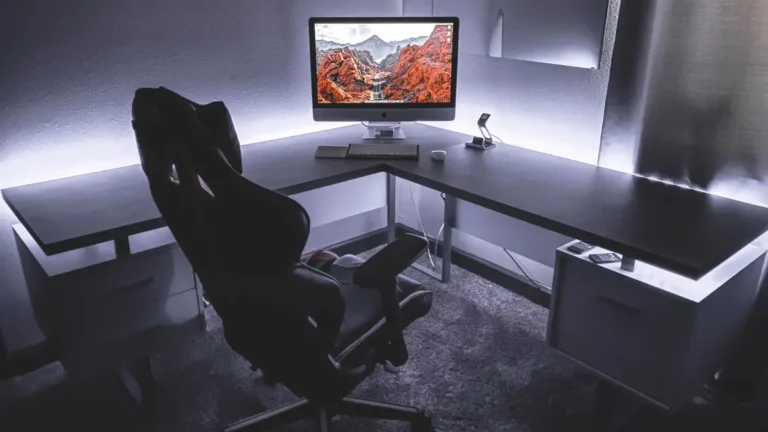
An L shape desk is made of two work surfaces joined at a right angle. The longer surface is the main desk. The shorter surface is the return (also called the wing). Some have a built-in corner and others are two desks joined together. Variations include: l shape desk with drawers or a pedestal; l shape desk with a hutch or shelves; reversible L shape desk, where the return can attach on either side; standing or adjustable-height L shape desk; corner desk with a wider angle.
See the writing desk, small desk and desk with drawers guides for straight-desk options.
Typical Sizes
One guide gives a main wing of 60 to 72 inches and a return wing of 36 to 48 inches. Another says the primary surface typically runs 60 to 72 inches wide. Because of the return, the footprint is larger than a straight desk.
| Part | Typical size |
|---|---|
| Main wing | 60 to 72 inches wide |
| Return wing | 36 to 48 inches |
Depth varies and was not given in the sources. Measure the product listing. Consider whether you need space for two monitors, a keyboard tray, a printer or a gaming setup.
Left Return vs Right Return
The return is the shorter leg, and the side is defined from the seated position. A retailer guide describes a left return as the wing reaching to the user’s left, and suggests choosing it when the wall or window sits on the right. Its placement table lists a left return as preferred when a wall or door is on the user’s right, and a right return when the wall is on the left.
Some desks have reversible returns, and others are fixed. Check before ordering. Getting it wrong means the desk will not fit your room as planned or will face the wrong way.
Other factors: Handedness. A guide notes right-handed users often pick a right return so notes sit beside their writing hand. Outlets. The side affects cable routing to outlets. Nearby furniture. It affects how drawers or shelves align. Light. Place the desk so the monitor does not face a window glare.
Corner Placement
Many L shape desks are designed for corner placement, which uses room space well while giving two connected work surfaces. Confirm the corner side: the return must point toward open space instead of into a wall.
Options: Corner of the room. The classic placement. The desk wraps around you with two walls behind. Against one wall. The main wing touches the wall and the return extends into the room. Floating in the room. Needs a finished back. Use as a divider. Facing a window. Place the monitor to the side of the window to avoid glare.
Clearance
One guide advises that you subtract at least 36 inches from each wall edge for clearance behind the chair before deciding what will fit. A UK-focused guide suggests about 80 to 100 centimeters behind the desk for your chair and to move around. That is about 31 to 39 inches. Leave enough space to roll your chair and stand up. Also leave space for door and drawer swing.
Quick check: draw the desk’s footprint on the floor with painter’s tape and sit in your chair.
Ergonomics
An L shape desk can be comfortable or awkward depending on setup.
Place your main monitor in the center of the main wing at about an arm’s length. See the monitor stand guide. Use the return for secondary tasks, like a laptop, notes or a printer. Avoid long reaches. Frequently used items belong within easy reach. Keep your elbows about at desk height and wrists straight. Adjust your chair to your height. Take breaks and change posture. Ask a professional if you have pain.
Standard desk height is about 29 to 30 inches, as noted in the front desk guide for seated surfaces. Adjustable desks vary.
Storage and Organization
Key points: a pedestal drawer under the return; shelves or a hutch above the main wing; cable trays under the surface; desk organizers on top; wall shelves above the return; file cabinet beside the desk.
Keep the corner usable. A corner can become dead space, so place a lamp, printer or plant there.
Cable Management
Key points: choose a desk with grommet holes; use a power strip under the desk; use cable ties and clips; route cables along the back edge; plan outlet access before you pick the side.
Materials and Build
Key points: engineered wood (MDF or particleboard) with laminate: affordable, check the weight rating; solid wood or veneer: sturdy and premium; metal frame: stable and slim; glass top: modern but shows fingerprints.
Check stability. L shape desks can wobble at the joint. Look for a corner brace or support leg. Tighten bolts after assembly.
Assembly and Moving
L shape desks come in several heavy pieces. Plan for two people to assemble. Measure doors and stairs for delivery. Keep the instructions, since you may need to take it apart if you move.
What are the main strengths and weaknesses?
On the plus side: lots of work surface; uses the corner well; separates tasks; good for multiple monitors. On the downside: needs a large footprint; left/right choice can be a mistake; can wobble if cheaply made; heavy and bulky.
How to Choose an L Shape Desk
Measure the room, corner and walls. Decide the return side from walls, doors, outlets and handedness. Check whether it is reversible. Choose main wing and return sizes (60 to 72 inches and 36 to 48 inches are typical). Leave 36 inches behind the chair. Plan monitors and equipment. Choose storage. Check materials and stability. Plan cables and outlets. Read reviews for assembly and wobble.
What mistakes should you avoid?
A few common mistakes are worth avoiding: ordering the wrong return side; forgetting chair clearance; not measuring doors and stairs; ignoring outlet locations; choosing a desk too large for the room; placing the monitor against a window glare.
Frequently Asked Questions
How big is an L shape desk?
The main wing is typically 60 to 72 inches wide and the return 36 to 48 inches.
Should I get a left or right return?
Choose based on where your walls, door and outlets are. A left return suits a wall on your right, and a right return suits a wall on your left.
How much space do I need behind the chair?
At least 36 inches, or about 80 to 100 centimeters.
Is an L shape desk good for a small room?
Only if the footprint fits. A straight or small desk may be better.
Are reversible L shape desks better?
They give flexibility if you move or rearrange.
Can I use an L shape desk in the middle of a room?
Yes, if it has a finished back panel.
Conclusion
An L shape desk gives you room to work, but it needs space and planning. Check the wing sizes, choose the return side carefully, leave chair clearance and plan your cables.
Measure first, draw the footprint on the floor and read reviews. Then your corner becomes a productive workspace.
Related guides
 L-Shaped Desk: Sizes, Left vs Right Return and How to ChooseAn L-shaped desk gives you a lot of work surface without taking over the whole room. It wraps around a corner,…Read more →
 L Shaped Standing Desk Guide: Size, Height Range, Weight Capacity, Dual Motors and StabilityQuick answer: an L shaped standing desk is an L-shaped desktop on a motorized frame that raises and lowers.…Read more →
 Desk Shelf Guide: Clamp-On Shelves, Risers, Hutches, Sizes and Weight CapacityQuick answer: a desk shelf adds a second level to your desk for a monitor, books or supplies. Main types are…Read more →