Small Couch Guide: Apartment Sofa Sizes, Fitting Through Doors and Choosing
A small couch can make a small room work. It seats people without crowding the floor, fits through narrow doors and leaves room for a table, a chair or a walkway. But “small” can mean many things, and a couch that fits in the room might still not fit through the door.
This article is part of our sofa and couch buying guide, where you can compare related options.
A small couch is a compact sofa, usually between about 58 and 80 inches wide. The main types are loveseats, apartment-size sofas and compact three-seaters. They’re made for studios, apartments, dens, offices and bedrooms.
This guide explains small couch sizes, how to measure the room and the entry path, what arm, leg and depth styles help in tight spaces and how to choose. You’ll also find a size table, a checklist and answers to common questions. See the love seat guide for more on two-seaters.

Small Couch Sizes
Overlapping ranges, so check each product.
| Type | Width | Depth |
|---|---|---|
| Loveseat | About 58 to 72 inches | About 32 to 36 inches |
| Apartment-size sofa | About 68 to 80 inches | About 32 to 37 inches |
| Standard three-seater | About 78 to 88 inches | Varies |
A Sierra Living Concepts table lists apartment-size sofas at about 68 to 76 inches wide, 32 to 35 inches deep and 30 to 33 inches tall, versus 78 to 88 inches wide for a standard three-seater. Another reference table gives apartment sofas as 68 to 80 inches long and 33 to 37 inches deep, and loveseats as 58 to 72 inches long and 32 to 36 inches deep.
Depth affects how the couch fits, but the seat depth is smaller than the outer depth, because the actual depth of the seating area is reduced by the arms and the back.
How Big Should the Couch Be for the Room?
A common guideline is the two-thirds rule: your sofa should be about two-thirds of the length of your main wall for optimal proportions. In a small room, this keeps the couch from dominating.
Other points: Leave walkways. One source recommends between 12 and 18 inches from the wall in a small space. With a coffee table, leave 12 to 18 inches between the couch and the table for legroom. Leave room for doors, vents and windows. Tape the couch outline on the floor to see how it feels.
In rooms around 130 square feet or smaller, a loveseat or an apartment-size 3-seater, around 60 to 75 inches wide, usually works best, according to one source. See the living room furniture guide for layout tips.
Will It Fit Through the Door?
This is the part many people forget. Measure the narrowest point on the route, not just the front door.
Doors. Compare the door width with the sofa’s dimensions. Hallways and corners. Check tight turns. Stairs and landings. Check headroom and width. Elevators. If elevator use is necessary to reach your apartment or condo, you will need to measure the elevator doorway and interior as well.
What matters: Height can be the limiting factor. One guide notes the most important dimension when squeezing a sofa through a doorway is actually the sofa’s height. Another says a sofa about 38 inches deep and 34 inches high can usually pass through a 30-inch doorway if the path is straight, but it was a tight fit. Depth is less important. One calculator notes that depth ideally does not have much effect on your ability to get it into your apartment. Diagonal. A Sterling Home guide says the doorway’s width must be greater than the sofa’s height and diagonal depth, with some room for movement on each side. Removable legs and arms. Some sofas come apart.
If you aren’t sure, ask the seller for the package size and whether the sofa can be taken apart. Modular and boxed sofas are easier to move.
Arms, Legs and Shape
Small couches work best with certain design choices.
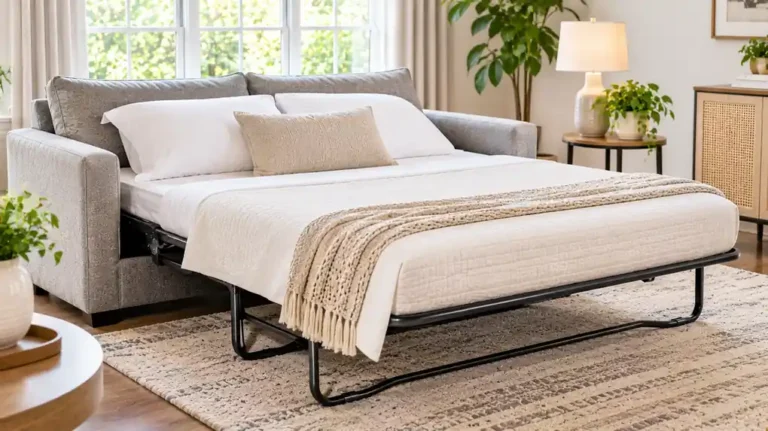
Narrow arms: narrow arms add seat room. One guide says depth and arm width are shaved to fit tighter rooms without losing comfort. Raised legs: raised legs help a small room look less crowded. They let light pass underneath, which keeps the room from feeling weighed down. They also make it easy to vacuum. Low or no back: some compact sofas have lower backs, which feel open. Rounded corners: soft edges are easier to move around. Armless or one-arm styles: save width, but are less comfortable for leaning. Light colors: make the room feel brighter. Storage: some small couches have storage under the seat. Sleeper or daybed: some small sofas convert into beds. See the sleeper sofa and day bed guides.
Types of Small Couches
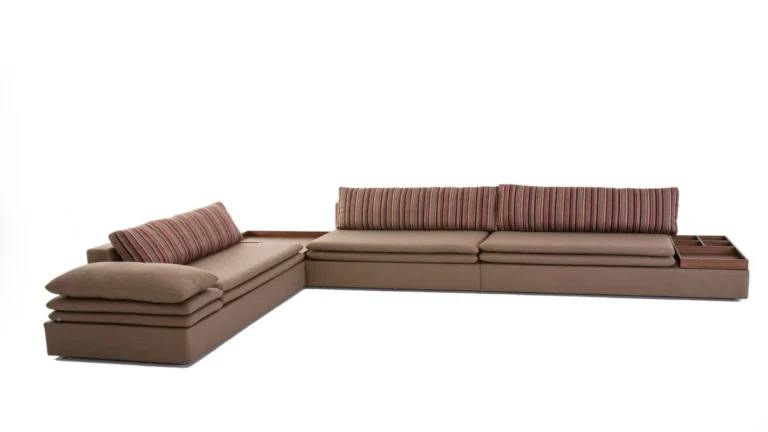
Loveseat: two seats. Apartment sofa: a compact three-seater. Settee: a small, decorative sofa. Mini sectional: an L-shape in a small footprint. See the L-shaped couch guide. Chaise sofa: combines seat and lounge. Futon or sofa bed: for small spaces needing a guest bed. See the futon bed guide. Boneless or floor couch: low and light. See the boneless couch guide.
Comfort in a Small Couch
A small couch should still be comfortable.
Key points: seat depth. Try to sit comfortably with your back supported; seat height. Your feet should reach the floor; cushion firmness. High-density foam holds up; back support. Check that you’re not slouching; frame. A hardwood frame lasts longer.
Try the couch if you can, or choose a seller with a good return policy. Test how it feels when you sit upright and when you recline.
Fabric Choices
Choose fabric for your lifestyle. Microfiber and performance fabrics suit pets and kids. Leather wipes clean. Light colors open up a room but show stains. Textured fabrics add warmth without adding bulk.
How to Choose a Small Couch
Measure the room and the main wall. Apply the two-thirds rule. Measure the entry path: doors, halls, stairs and lifts. Pick the type. Loveseat or apartment sofa. Choose narrow arms and raised legs. Check the depth and height. Test comfort. Pick the fabric. Check the frame and cushions. Read reviews and check the return policy.
What mistakes should you avoid?
A few common mistakes are worth avoiding: measuring the room but not the path (the couch gets stuck); choosing a couch that’s too deep (it eats floor space); ignoring height (it may not fit through doors); forgetting walkways (leave space to move); buying a couch that’s too small (it can look lost in a bigger room); skipping comfort tests (small doesn’t mean uncomfortable).
Frequently Asked Questions
What size is a small couch?
Often 58 to 80 inches wide. Loveseats are about 58 to 72 inches, and apartment sofas are about 68 to 80 inches.
How do I know if a couch will fit through my door?
Measure the door and the sofa’s height and diagonal depth. Check halls, stairs and elevators too.
What is the two-thirds rule?
Your sofa should be about two-thirds of the length of your main wall.
Are raised legs good for small rooms?
Yes. They let light pass under the couch and make the room feel less crowded.
How much space should I leave around a small couch?
About 12 to 18 inches from the wall in a small space and 12 to 18 inches between the couch and a coffee table, according to sources.
Is a loveseat the same as a small couch?
A loveseat is a type of small couch that seats two.
Conclusion
A small couch lets you have comfortable seating without overwhelming a small room. Look for apartment-size sofas or loveseats, narrow arms and raised legs, and use the two-thirds rule to check proportions.
Measure the entry path as carefully as the room, paying attention to height and diagonal depth. With careful planning, a small couch can be a comfortable centerpiece.
Related guides
 Fainting Couch: What It Is, Real History, Myths and How to Use One TodayA fainting couch is a long, narrow couch with a raised end, made for reclining with the legs up. It was popular…Read more →
 Deep Couch: Seat Depth (23-27+ Inches), Who It Suits and How to ChooseA deep couch has a seat that measures about 23 inches or more from front to back. One retailer guide puts…Read more →
 Small Sofa Guide: Loveseat and Apartment Sofa Sizes (48 to 84 Inches), Arms, Depth and Fit for Small RoomsQuick answer: a small sofa can be a compact loveseat (about 48 to 58 inches wide and 30 to 34 inches deep) or…Read more →
 Small Bookshelf Guide: Sizes, Materials, Anchoring and Ideas for Tight SpacesA small bookshelf can do a lot in a small home. It holds your favorite books, fills an awkward corner and adds…Read more →